
Compiled from public reports
Looking ahead to 100 with expert care | Beijing Chao-Yang Hospital successfully performs complex minimally invasive colorectal cancer surgery on a 96-year-old retired employee
A deep vein clot was found in the patient’s leg before rectal cancer surgery. After a joint review, the team addressed the risk of pulmonary embolism before proceeding with laparoscopic surgery.
Compiled by SinoCareHub · Information checked: 2026-11-13
Patient overview
96-year-old man · China · Beijing · Placement of an inferior vena cava filter followed by laparoscopic rectal cancer resection
- Treatment in China:
- Placement of an inferior vena cava filter followed by laparoscopic rectal cancer resection
- Outcome at the reported stage:
- The patient met discharge criteria one week after surgery and subsequently went home.
Hospital report
Led by Chief Physician Han Jiagang, the Gastrointestinal Surgery team at Beijing Chao-Yang Hospital’s General Surgery Center overcame a series of challenges and delivered precisely planned treatment, successfully performing laparoscopic radical resection of a malignant rectal tumor in a 96-year-old retired hospital employee. The patient had deep vein thrombosis in a lower limb before surgery. The hospital convened a multidisciplinary consultation and first placed an inferior vena cava filter to avert the risk of a fatal pulmonary embolism. With meticulous perioperative management and care, the patient recovered steadily without complications and was discharged, setting a new hospital record for minimally invasive surgery for complex gastrointestinal tumors in patients of very advanced age.
The 96-year-old patient had worked at the hospital for decades before retiring. He had witnessed its development over the years and placed deep trust in its medical and nursing teams. He recently developed changes in bowel habits and abdominal discomfort. A systematic evaluation confirmed a malignant rectal tumor. Cancer treatment already carries considerable risk for someone approaching 100, and the presence of lower-limb deep vein thrombosis posed a second challenge.
Surgery in patients of very advanced age has long been a challenge. At 96, the patient had diminished organ function, reduced tissue healing capacity and low tolerance for surgery. His risk of complications such as intraoperative or postoperative bleeding, infection, anastomotic leakage and cardiopulmonary failure was substantially higher than in the general patient population. Lower-limb deep vein thrombosis posed a hidden and potentially fatal threat. Surgical manipulation, changes in position and postoperative activity could dislodge the clot and trigger an acute pulmonary embolism, which can become life-threatening within a short time. The patient’s baseline heart and lung function was also poor. The rectum lies deep in the pelvis, with little room to operate and important blood vessels and nerves close by. These factors made radical surgery difficult and placed exceptionally high demands on surgical precision, teamwork and perioperative management throughout the course of care.
To protect the patient’s life as fully as possible, remove the tumor with curative intent and preserve his quality of life in later years, the hospital immediately activated its multidisciplinary team (MDT) approach. Gastrointestinal Surgery led the joint consultation with Vascular Surgery, the Anesthesia and Operating Center, the Critical Care Medicine Center, Cardiology, Nutrition and the nursing team. The specialists assessed the patient’s age, tumor characteristics, clot-related risk and baseline health. After carefully weighing the need for radical tumor resection against the risk of thromboembolism and holding several rounds of discussion, they settled on an individualized, stepwise plan: address the clot-related risk first, then operate using a minimally invasive approach and provide carefully managed rehabilitation. They would first place an inferior vena cava filter by an interventional procedure, then perform laparoscopic radical resection with standard lymph node dissection while minimizing surgical trauma.
Following the MDT plan, the team successfully placed the inferior vena cava filter before surgery to guard against embolization. During radical resection, the anesthesia team provided close, precise monitoring and coordinated with the surgeons throughout. Drawing on established minimally invasive techniques and experience treating complex cases in older patients, the Gastrointestinal Surgery team used low-pressure pneumoperitoneum, carefully dissected along tissue planes, performed standard regional lymph node dissection and securely completed the bowel anastomosis. The operation took two hours, with blood loss of only 10 mL. The team removed the lesion completely.
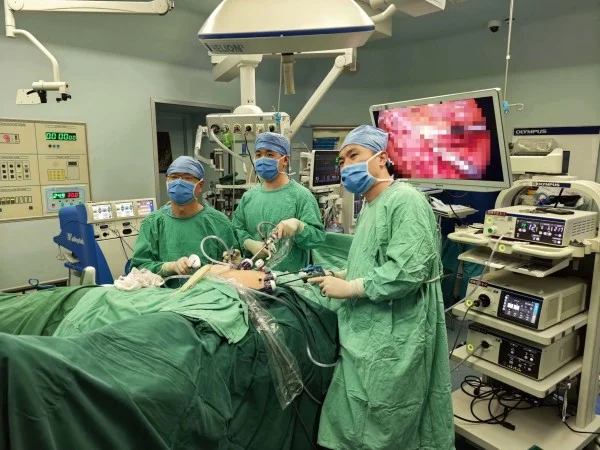
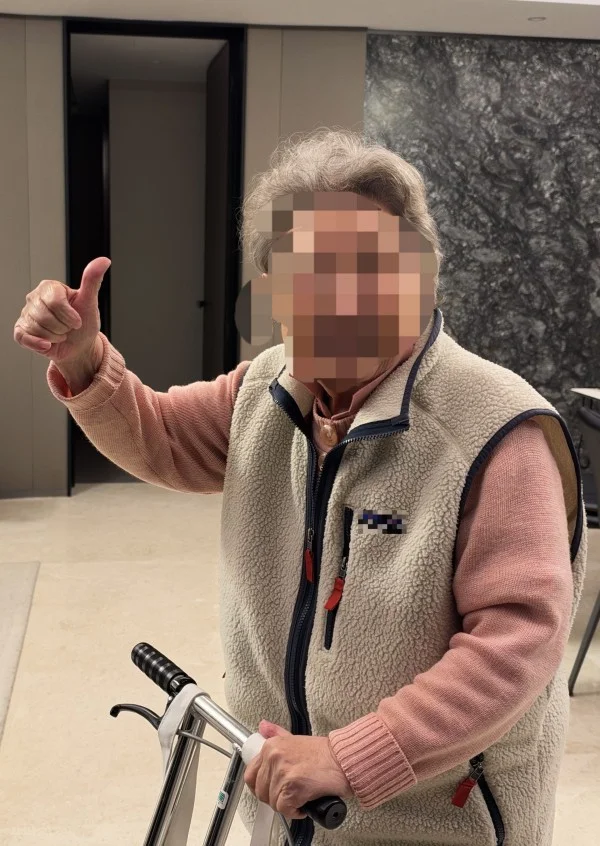
Postoperative rehabilitation is a crucial part of care for patients of very advanced age. The nursing team tailored early in-bed exercises and helped the patient gradually resume activity out of bed. These measures helped prevent complications of prolonged bed rest, including pressure injuries, hypostatic pneumonia and recurrent venous thrombosis. The team also provided dietary guidance and psychological support. The patient had no postoperative complications such as embolism, bleeding, infection or anastomotic leakage and met the discharge criteria one week after surgery.
At discharge, the patient and his family praised and thanked the Gastrointestinal Surgery team for its clinical skill, dedication and compassionate service. They expressed their appreciation for the hospital’s enduring commitment and progress in medical care over the decades, which they said had brought hope to critically ill older patients.
The successful operation demonstrates the ability of the Gastrointestinal Surgery team at Beijing Chao-Yang Hospital’s General Surgery Center to manage complex, high-risk gastrointestinal tumors in patients of very advanced age. It highlights the hospital’s coordinated approach to multidisciplinary care, precise minimally invasive treatment and safety management throughout treatment. The team will continue to develop its expertise in complex and critical cases, refine minimally invasive techniques and improve care pathways for older patients. Through precision medicine and compassionate care, it aims to meet more of the challenges faced by seriously ill older patients and safeguard public health.
Sources and scope
- [1] Rectal cancer and a leg blood clot in a 96-year-old patient
Beijing Chao-Yang Hospital ·
Image source: Beijing Chao-Yang Hospital · Surgical team pictured in the Beijing Chao-Yang Hospital report
Plan care in China
Ask about medical records and contacting hospitals.
Related doctors and hospitals

More patient stories
- Multidisciplinary collaboration at the General Surgery Center | Gastrointestinal Surgery successfully performs simultaneous curative resection for rectal cancer with liver metastasis
- Esophageal cancer and severe coronary disease: how a team planned two operations
- Treating septic shock after uterine perforation in a patient with cervical cancer