
Compiled from public reports
Treating septic shock after uterine perforation in a patient with cervical cancer
A uterine perforation led to septic shock in an adult with advanced cervical cancer. At Beijing Chaoyang Hospital’s Shijingshan campus, Chen Chen’s gynecology team and other specialties coordinated shock treatment, surgical drainage and postoperative infection care. The patient left hospital after more than 40 days of treatment.
Compiled by SinoCareHub · Information checked: 2026-11-07
On this page
- 1.Patient overview
- 2.The emergency team found shock, then located the source of infection in the abdomen
- 3.The team planned both shock treatment and surgical drainage
- 4.The team adjusted treatment as markers of infection continued to rise
- 5.The infection came under control and the patient left hospital after more than 40 days
Patient overview
An adult patient · China · Beijing Chaoyang Hospital, Shijingshan campus · Treatment for septic shock and abdominal drainage
- Treatment in China:
- Resuscitation, surgical exploration and drainage, followed by postoperative infection care
- Outcome at the reported stage:
- The infection came under control after more than 40 days of treatment. The patient left hospital after the wound healed.
The emergency team found shock, then located the source of infection in the abdomen
Emergency personnel brought the patient to Beijing Chaoyang Hospital. She was already in shock, with blood pressure of 90/55 mmHg and a markedly fast heart rate and breathing. The initial assessment was septic shock with acute peritonitis, bowel obstruction and metabolic acidosis, with a risk of multiple organ failure.
Further assessment found a uterine perforation in the patient, who had advanced cervical cancer. The hospital recorded more than 1,200 mL of pus in the pelvic and abdominal cavities.
The team planned both shock treatment and surgical drainage
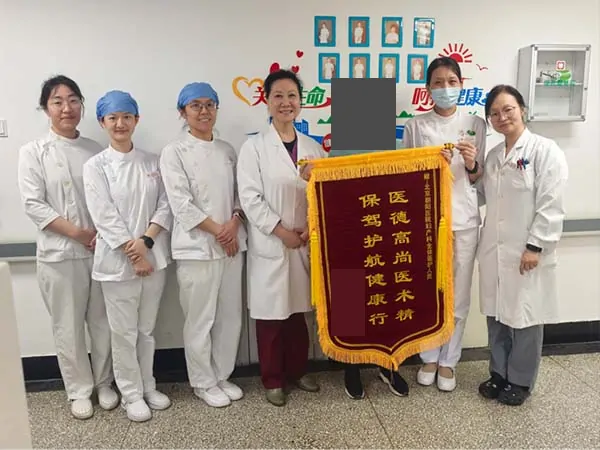
Chen Chen’s gynecology team at the Shijingshan campus consulted emergency medicine, intensive care, gastrointestinal surgery, urology, imaging, interventional medicine and anesthesia. They decided to treat the shock and surgically explore the abdomen to address the source of infection.
During the operation, doctors found pus in several areas and marked adhesions, where tissues had stuck together. With support from anesthesia, the surgical team completed exploration and drained the pus.
The team adjusted treatment as markers of infection continued to rise
After surgery, the patient’s infection markers kept rising. She also developed low protein levels, anemia and impaired heart function. The team adjusted antimicrobial treatment as her condition changed and placed five drainage tubes to remove fluid. Nurses managed abdominal irrigation, infusions and the drains, while supporting nutrition, prevention of complications and emotional well-being.
The infection came under control and the patient left hospital after more than 40 days
The hospital recorded four multidisciplinary reviews during the admission. After more than 40 days of treatment, the infection was controlled, the drains were removed in stages, and the patient left hospital after the wound healed. The report ended at discharge and gave no details of subsequent cervical cancer treatment or long-term outcomes.
Plan care in China
Ask about medical records and contacting hospitals.