
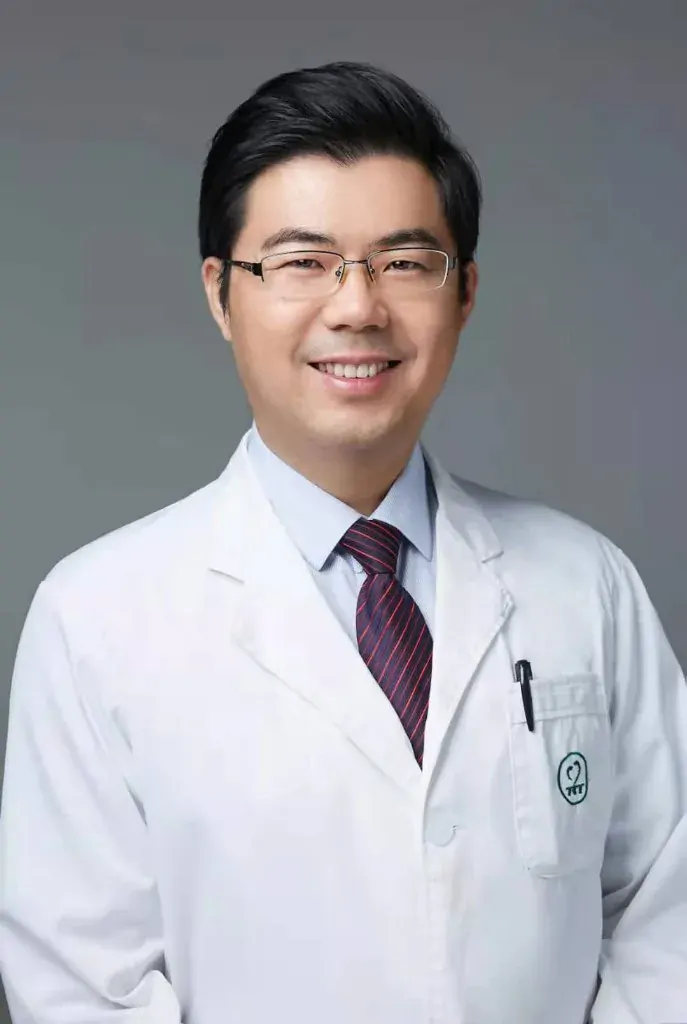
Liu Changqing, MD, PhD
Chief Physician · Professor / PhD Supervisor
Clinical focus Refractory Epilepsy · Parkinson's Disease · Trigeminal Neuralgia
Original video. Reposting or use without permission is prohibited. Unauthorized use may result in legal action.
About the doctor
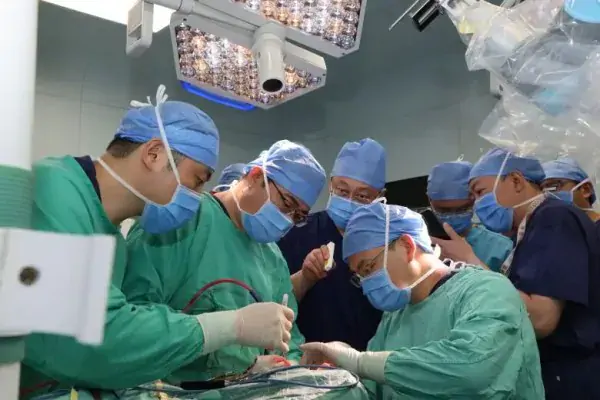
Liu Changqing, MD, PhD, is a Chief Physician and Professor of Neurosurgery at Beijing Chaoyang Hospital, Capital Medical University, and a master's and PhD supervisor in Surgery (Neurosurgery) at Capital Medical University, with a research focus on functional neurosurgery. His clinical scope includes surgical care for epilepsy, intracranial tumors, Parkinson's disease, trigeminal neuralgia, hemifacial spasm, post-stroke hemiplegia, paraplegia, dystonia, tremor, refractory pain, and chronic disorders of consciousness. He has nearly 20 years in functional neurosurgery, care for more than 2,500 patients with brain functional disorders, and participation in more than 1,500 resective and neuromodulation procedures, with visiting scholar training at Cleveland Clinic (2013) and the Montreal Neurological Institute (2014). Diagnosis, surgical indication, and the treatment plan must be confirmed by the hospital after reviewing the complete medical record and an in-person assessment.
Clinical areas
Recurrent seizures despite multiple antiseizure medicines, with questions about further assessment
Organize EEG records (including ictal video-EEG when available), brain imaging, and medication history. The neurosurgery team confirms whether further preoperative assessment and which pathway may be appropriate.
Parkinson's disease or dystonia with inadequate medication control, with questions about neuromodulation assessment
Bring prior clinical records and medication history for consultation. The treating team assesses whether neuromodulation options such as deep brain stimulation may be appropriate.
Trigeminal neuralgia or hemifacial spasm with limited drug effect or intolerance, with questions about surgical assessment
Organize the symptom history, prior treatment, and imaging. Minimally invasive, decompression, or other approaches are confirmed only after in-person assessment by the treating team.
Post-stroke hemiplegia, spasticity, or refractory pain after a rehabilitation plateau, with questions about neuromodulation assessment
Submit rehabilitation history, imaging, and functional assessments for the hospital to determine whether further specialist evaluation is appropriate.
A chronic disorder of consciousness, with family questions about arousal-related assessment pathways
Organize the clinical course, consciousness assessments, and prior treatment records. Whether neuromodulation assessment is appropriate is determined individually by the hospital.
Patient stories
Professional highlights
- 01Deputy Director, Chief Physician, and Professor of Neurosurgery at Beijing Chaoyang Hospital
- 02Master's and PhD supervisor in Surgery (Neurosurgery) at Capital Medical University; research focus on functional neurosurgery
- 03Nearly 20 years in functional neurosurgery and participation in 1,500+ resective and neuromodulation procedures
- 04Visiting scholar at Cleveland Clinic (2013) and the Montreal Neurological Institute (2014)
- 05Principal investigator of multiple national and provincial projects; peer-reviewed publications in SCI and core journals
- 06Youth Committee Member, Neurosurgery Branch, Chinese Medical Doctor Association
- 07Vice Chair, Pain Physician Branch, Beijing Medical Doctor Association
Professional experience
2000–2005
Bachelor's degree, Qingdao University Medical College
2005–2008
Master's degree, Tongji Medical College, Huazhong University of Science and Technology
2009–2012
PhD, Capital Medical University
2012–2023
Deputy Director, Sanbo Brain Hospital, Capital Medical University
2013
Visiting scholar, Cleveland Clinic, USA
2014
Visiting scholar, Montreal Neurological Institute, Canada
2023.12–至今
Deputy Director of Neurosurgery, Chief Physician, Professor, and PhD Supervisor, Beijing Chaoyang Hospital, Capital Medical University
Hospital and department
Beijing Chaoyang Hospital, Capital Medical University.
Neurosurgery provides surgical care related to epilepsy, Parkinson's disease, trigeminal neuralgia, hemifacial spasm, post-stroke hemiplegia, and chronic disorders of consciousness among the clinical scope.
Before you seek care
Records to prepare
Consider preparing EEG records (including ictal video-EEG when available), brain MRI/CT (and PET if available), medication history, neuropsychological or consciousness assessments when available, and prior operative records. The hospital confirms the final list.
Appointment arrangements
Schedules, campus, and appointment availability are subject to the hospital's latest arrangements.
- Acute cerebral hemorrhage, severe traumatic brain injury, or other conditions requiring emergency neurosurgery need immediate local emergency care.
- This page cannot determine suitability for functional neurosurgery or neuromodulation and does not replace in-person consultation and preoperative assessment by the treating team.