
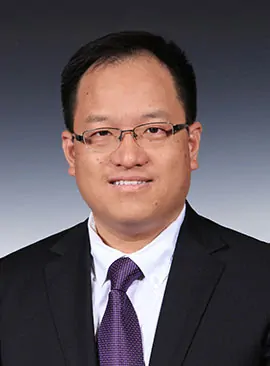
Lei Zhang
Chief Physician · Associate Professor and Master's Supervisor
Beijing
Lei Zhang is a chief physician in oral and maxillofacial surgery at Peking University School and Hospital of Stomatology, an associate professor and a supervisor of master's students. The hospital lists him in its senior specialist category (知名专家). He leads the Medical Records Department and serves as secretary of the department's Party branch. His clinical focus is oral and maxillofacial tumors, reconstruction of defects, and the diagnosis and treatment of salivary gland disease. He trained under Professor Guangyan Yu.
Peking University School and Hospital of StomatologyOral and Maxillofacial Surgery
Clinical focus Oral and maxillofacial tumors · Diagnosis and treatment of salivary gland disease · Reconstruction of maxillofacial defects · Complex tooth extraction
About the doctor
Dr. Lei Zhang is a chief physician in oral and maxillofacial surgery at Peking University School and Hospital of Stomatology, an associate professor and a supervisor of master's students. The hospital lists him in its senior specialist category (知名专家). He leads the Medical Records Department and serves as secretary of the oral and maxillofacial surgery department's Party branch. After graduating from the former Beijing Medical University's Department of Stomatology in 1997, he was recommended for direct admission to a combined master's and doctoral program at Peking University School of Stomatology under Professor Guangyan Yu. He received his medical doctorate in 2002 and has worked at the hospital since then. He focuses on oral and maxillofacial tumors, reconstruction of defects, and the diagnosis and treatment of salivary gland disease. He undertook further training at Osaka Dental University in Japan and spent one year as a visiting scholar in oral and maxillofacial surgery at Guy's Hospital, King's College London, conducting clinical research on functional salivary gland surgery.
Clinical areas
Diagnosis and comprehensive care for oral and maxillofacial tumors, including tongue, inner cheek and gum cancers
Treatment depends on the tumor's pathology, stage and location. It is recommended that you bring a pathology report if you have had a biopsy and imaging such as contrast-enhanced CT or an MRI scan. The doctor will assess how far the tumor extends and discuss surgery, combined treatment and reconstruction after surgery. The treating team determines the individual plan after assessment.
Salivary gland tumors, stones or recurrent painful swelling, including in the parotid or submandibular glands
Salivary gland tumors and stones are managed differently. Explain how long a lump has been present, how quickly it has grown and any other symptoms. It is recommended that you bring ultrasound, CT or salivary gland imaging (sialography) records if available. The doctor will assess the lesion, discuss when observation, minimally invasive treatment or surgery may be appropriate, and pay particular attention to protecting facial nerve function.
Reconstruction after oral, maxillofacial or head and neck surgery
Reconstruction after tumor surgery can involve transferring a flap of tissue. It is recommended that you bring the operative and pathology reports. The doctor will assess the size of the defect and the timing and method of reconstruction. The treating team will assess whether complex options such as perforator flaps or microsurgery are feasible.
Difficult impacted or unerupted teeth and other dentoalveolar surgery concerns
The difficulty of removing these teeth depends on their position and the nearby nerves and blood vessels. A panoramic dental X-ray or cone-beam CT (CBCT) is recommended before the visit. The doctor will assess the extraction approach and risks such as nerve injury, then discuss minimally invasive extraction and care after the procedure.
Maxillofacial injuries, fractures or deformities that may need repair
Maxillofacial injuries and fractures can affect the bite and appearance. It is recommended that you bring a description of the injury and any imaging. The doctor will assess the fracture type and whether the bones need to be realigned and stabilized. The treating team determines the timing and method of repair for longstanding deformities.
Professional highlights
- 01Chief physician, associate professor and supervisor of master's students in oral and maxillofacial surgery at Peking University School and Hospital of Stomatology. The hospital lists him in its senior specialist category (知名专家)
- 02Party branch secretary for Oral and Maxillofacial Surgery and head of the Medical Records Department
- 03Clinical focus on oral and maxillofacial tumors, reconstruction of defects, and diagnosis and treatment of salivary gland disease
- 04Research on the clinical use of perforator flaps, endoscope-assisted surgery and digital oral and maxillofacial surgery
- 05Visiting training at Guy's Hospital, King's College London, and Osaka Dental University in Japan
- 06Combined master's and doctoral training under Professor Guangyan Yu
Professional experience
2022
Began serving as head of the Medical Records Department, Peking University School and Hospital of Stomatology
2016
Began serving as Party branch secretary for Oral and Maxillofacial Surgery, Peking University School and Hospital of Stomatology
2014
Promoted to Chief Physician and listed in the hospital's senior specialist category (知名专家)
2010
Promoted to Associate Professor
2008
Promoted to Associate Chief Physician
2007-2008
Visiting scholar in oral and maxillofacial surgery at Guy's Hospital, King's College London, United Kingdom, conducting clinical research on functional salivary gland surgery
2007
Further training at Osaka Dental University, Japan
2002
Received his medical doctorate and remained at the institution, where he continues to work
1997-2002
Combined master's and doctoral training in oral and maxillofacial surgery at Peking University School of Stomatology under Professor Guangyan Yu
1992-1997
Undergraduate studies in stomatology at the former Beijing Medical University
Standing committee member, Maxillofacial and Head and Neck Oncology Committee, Chinese Stomatological Association
Standing committee member, Head and Neck Oncology Committee, China Anti-Cancer Association
Standing committee member, Oral and Maxillofacial Surgery Committee, Beijing Stomatological Association
Committee member, Microsurgery Committee, Chinese Medical Doctor Association
Standing committee member, Skull Base Branch, China International Exchange and Promotive Association for Medical and Health Care
Faculty member, AO CMF
Member of the National Medical Examination Center's expert panel for exam question development
Member of the International Association of Oral and Maxillofacial Surgeons and the Asian Association of Oral and Maxillofacial Surgeons
Participated in more than 10 research projects supported by the National Natural Science Foundation of China, the Ministries of Education, Science and Technology, and Health, and Peking University. Published more than 30 professional articles and contributed to editing and translating 10 monographs
International volunteer medicine
Invited by Project Harar to Ethiopia, where he joined an international team providing oral and maxillofacial surgery to nearly 40 patients and taught local clinicians
Hospital and department
Peking University School and Hospital of Stomatology was founded in 1941. It is a Grade A tertiary specialist hospital for oral and dental care that provides clinical care, teaching and research. It houses the National Clinical Research Center for Oral Diseases.
Founded in 1955, the Department of Oral and Maxillofacial Surgery was among China's earliest departments in this field. According to the hospital's department profile, it is a national key clinical specialty, a national continuing education training base for oral and maxillofacial surgery and an AO CMF training site.
Before you seek care
Records to prepare
It is recommended that you prepare a pathology report if you have had a biopsy, imaging such as contrast-enhanced CT or an MRI scan, previous surgical records and a list of current medications. For dentoalveolar surgery concerns, prepare a panoramic dental X-ray or cone-beam CT (CBCT). Confirm the exact requirements with the hospital.
Appointment arrangements
The doctor's profile on the hospital website does not publish a fixed clinic schedule. Check current appointment availability and clinic times through the hospital's WeChat mini program 北京大学口腔医院医疗服务助手, Beijing's 114 appointment platform or the hospital's official app.
- If an acute mouth, jaw or facial infection is accompanied by a high fever or difficulty opening your mouth, breathing or swallowing, seek care promptly at the nearest emergency department.
- The treating team must assess pathology and imaging before deciding how to treat an oral or maxillofacial tumor. This page cannot assess an individual case or replace an in-person consultation.
- International patients should use the hospital's official channels before their visit to confirm appointment availability, language support in the clinic and what records to bring.