
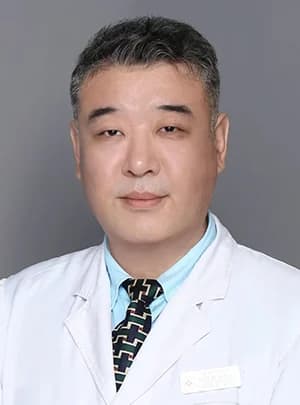
Liu Ruen
Chief Physician · Professor / Doctoral Supervisor / Postdoctoral Supervisor
Specialty focus and care scenarios
Hemifacial spasm, trigeminal neuralgia, or glossopharyngeal neuralgia affecting daily life and requiring further surgical assessment
How the doctor approaches these concerns:Symptoms, medication history, and cranial imaging can be organized for the neurosurgical team to determine whether further tests are needed and to discuss options such as microvascular decompression.
A sellar or cerebellopontine angle tumor requiring assessment of the surgical pathway and neurological risks
How the doctor approaches these concerns:The hospital can review contrast-enhanced MRI, hearing or visual assessments, previous treatment, and current neurological function to plan further evaluation and care.
Recurrent seizures despite medication and a need to understand whether surgical assessment is appropriate
How the doctor approaches these concerns:Seizure records, EEG results, imaging, and a complete medication history can be reviewed by the epilepsy team to decide whether further localization studies or discussion of surgery or neuromodulation is appropriate.
Dystonia or Meige syndrome affecting function and requiring assessment of neurosurgical options
How the doctor approaches these concerns:The hospital needs to review the symptom pattern, previous medication or injection treatment, neurological examination, and imaging before considering neuromodulation or another surgical pathway.
Doctor overview
Dr. Liu Ruen is a Chief Physician, Director of the Neuroscience Medical Center, and Administrative Director of Neurosurgery at Beijing Chaoyang Hospital. His official hospital profile lists surgical care for hemifacial spasm, trigeminal neuralgia, glossopharyngeal neuralgia, sellar and cerebellopontine angle tumors, epilepsy, and dystonia. The hospital must review symptoms, examination findings, imaging, and previous treatment to determine whether surgery is indicated, which approach may be appropriate, and the expected benefits and risks.
Professional highlights
- 01Director of the Neuroscience Medical Center and Administrative Director of Neurosurgery at Beijing Chaoyang Hospital
- 02Chief Physician, Professor, Doctoral Supervisor, and Postdoctoral Supervisor
- 03Chair of the second committee of the Peripheral Nerve Professional Committee of the Chinese Medical Doctor Association
- 04Clinical areas include surgical care for hemifacial spasm, trigeminal neuralgia, glossopharyngeal neuralgia, sellar and cerebellopontine angle tumors, epilepsy, and dystonia
Professional experience
Experience
Completed doctoral training at Tongji Medical University
Experience
Visiting training at the International Neuroscience Institute in Hannover, Germany
至今
Director of the Neuroscience Medical Center, Administrative Director of Neurosurgery, and Chief Physician at Beijing Chaoyang Hospital
Hospital and department
Beijing Chaoyang Hospital, Capital Medical University, is a Grade III Class A general hospital.
The hospital's neurosurgery information lists surgical fields involving cranial nerve disorders, intracranial tumors, epilepsy, and dystonia. The hospital must confirm the applicable service and available technology for each patient.
Before you seek care
- Sudden loss of consciousness, ongoing seizures, acute limb weakness, severe headache with vomiting, or other emergency symptoms require immediate local emergency care. Do not wait for a cross-border appointment.
- This page cannot determine whether surgery is needed or which procedure is appropriate. The neurosurgical team must decide after reviewing the consultation findings, imaging, and overall health.
Submit information for care coordination
The SinoCareHub care coordination team can help clarify your next care steps.
No medical records yet? You can still contact us first; we can help clarify your next step.