
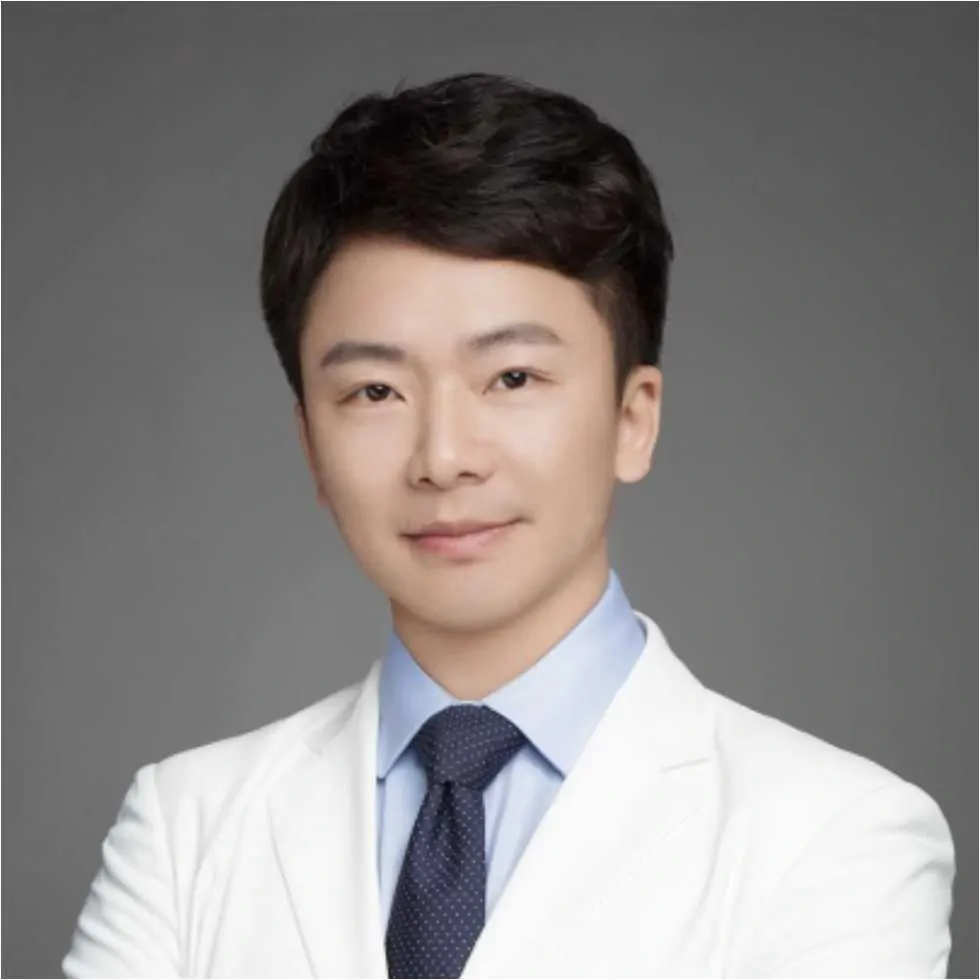
Aiguo Xie
Associate chief physician
Shanghai
Associate chief physician in Plastic and Reconstructive Surgery at Shanghai Ninth People’s Hospital, Shanghai Jiao Tong University School of Medicine. He holds a doctorate in medicine, serves as deputy head of the craniofacial subspecialty and is a council member of the craniofacial branch of the Chinese Association of Plastics and Aesthetics.
Shanghai Ninth People's Hospital, Shanghai Jiao Tong University School of MedicinePlastic and Reconstructive Surgery
Clinical focus Craniofacial contouring · 3D-printed PEEK bone augmentation · Combined eyelid and nasal surgery · Injectable facial rejuvenation
About the doctor
Dr Xie focuses on craniofacial contouring and reconstruction. His work includes mandibular angle reduction, cheekbone and zygomatic arch reshaping, genioplasty and orthognathic surgery. He treats craniofacial deformities, jaw deviation, facial asymmetry and congenital conditions such as craniosynostosis and orbital hypertelorism. His experience with 3D-printed PEEK and other implants includes digital planning, custom implants, placement beneath the periosteum and revision after previous implantation. He also performs combined eyelid and nasal procedures, facial liposuction and fat grafting, and injections of botulinum toxin or hyaluronic acid. He has led and contributed to national research projects and published more than 10 SCI-indexed papers.
Clinical areas
Receding chin or concerns about chin shape.
Bring previous imaging if available. The team reviews bone support, facial proportions, soft tissues and prior surgery to discuss the suitability and risks of genioplasty, conventional implants or custom 3D-printed PEEK implants.
Prominent cheekbones or a wide jaw angle.
Explain the change you hope to achieve. The assessment includes bone structure, bite and nearby nerves and vessels. The team can discuss cheekbone reduction or mandibular angle surgery, expected changes, recovery and risks.
Congenital or post-traumatic facial asymmetry or jaw deviation.
Bring previous assessments, operative records and scans. The extent and cause of the deformity guide discussion of orthognathic surgery, bone contour reconstruction or augmentation.
Nasal fracture, crooked nose or concerns about nasal shape.
Explain when any injury occurred and how it was treated. The team assesses the nasal bones, septum and airflow before discussing fracture reduction or rhinoplasty.
Facial rejuvenation.
Describe concerns such as wrinkles, under-eye bags or volume loss. The team considers age, skin and goals when discussing botulinum toxin, hyaluronic acid, orbital septum release, liposuction or fat grafting.
Professional highlights
- 01Associate chief physician and deputy head of the craniofacial subspecialty at Shanghai Ninth People’s Hospital, with a doctorate in medicine.
- 02Craniofacial contouring and reconstruction, including mandibular angle surgery, cheekbone and zygomatic arch reshaping, genioplasty and orthognathic surgery.
- 03Experience in bone augmentation using 3D-printed PEEK and in bone contour reconstruction, including revision of prior implants.
- 04Council member of the craniofacial branch of the Chinese Association of Plastics and Aesthetics.
- 05Led and participated in national research projects and published more than 10 SCI-indexed papers.
Professional experience
Associate chief physician and deputy head of the craniofacial subspecialty in Plastic and Reconstructive Surgery at Shanghai Ninth People’s Hospital, Shanghai Jiao Tong University School of Medicine. Holds a doctorate in medicine.
Council member of the craniofacial branch of the Chinese Association of Plastics and Aesthetics.
Led and contributed to national research projects, published more than 10 SCI-indexed papers in Chinese and international journals, and received a medical science communication award at Shanghai’s first New Era event.
Reconstruction includes craniofacial deformities, craniosynostosis, orbital hypertelorism, jaw deviation, reverse bite, nasal fractures, facial asymmetry, 3D-printed bone augmentation and treatment of moles and scars.
Aesthetic work includes minimally invasive rejuvenation injections, facial contouring, combined eyelid and nasal surgery, mandibular angle, cheekbone and chin surgery, facial liposuction, implant breast augmentation and correction of abdominal wall laxity.
Hospital and department
Shanghai Ninth People’s Hospital, Shanghai Jiao Tong University School of Medicine, is a tertiary Grade A general hospital. It is known for oral and maxillofacial surgery, plastic and reconstructive surgery, and orthopaedics. Plastic and reconstructive surgery is a nationally designated key discipline, according to the hospital.
The department has a long history and ranks among the larger departments of its kind in China, according to the hospital. It covers craniofacial surgery, aesthetic surgery and comprehensive scar treatment.
Before you seek care
Records to prepare
For contouring and reconstruction, bring facial CT or 3D reconstruction images, prior operation reports and medical records. For cosmetic procedures, explain your goals and bring relevant prior records. Confirm requirements with the hospital.
Appointment arrangements
The profile lists the South and North campuses and the Gaoke specialist clinic. Check the current schedule through the hospital’s official booking channels.
- Seek immediate local emergency care for acute maxillofacial injury with bleeding, difficulty breathing or altered consciousness.
- Contouring and reconstructive operations have specific indications and risks. Suitability requires an in-person examination and imaging. The treating team provides the assessment.
- International patients should confirm appointment availability, the campus (South, North or Gaoke specialist clinic), language support and required records through the hospital’s official channels.