Cancer care in China

Why China?

Before traveling to China for treatment, first check whether the target hospital can provide a plan suited to your condition, then confirm the international department budget, schedule and continuation of care after returning home. Hospital size, research results and policy pathways each have a specific scope of relevance.

SinoCareHub helps you organise medical records, contact Chinese hospitals and confirm language and travel needs, giving you a clear next step in preparing for care.

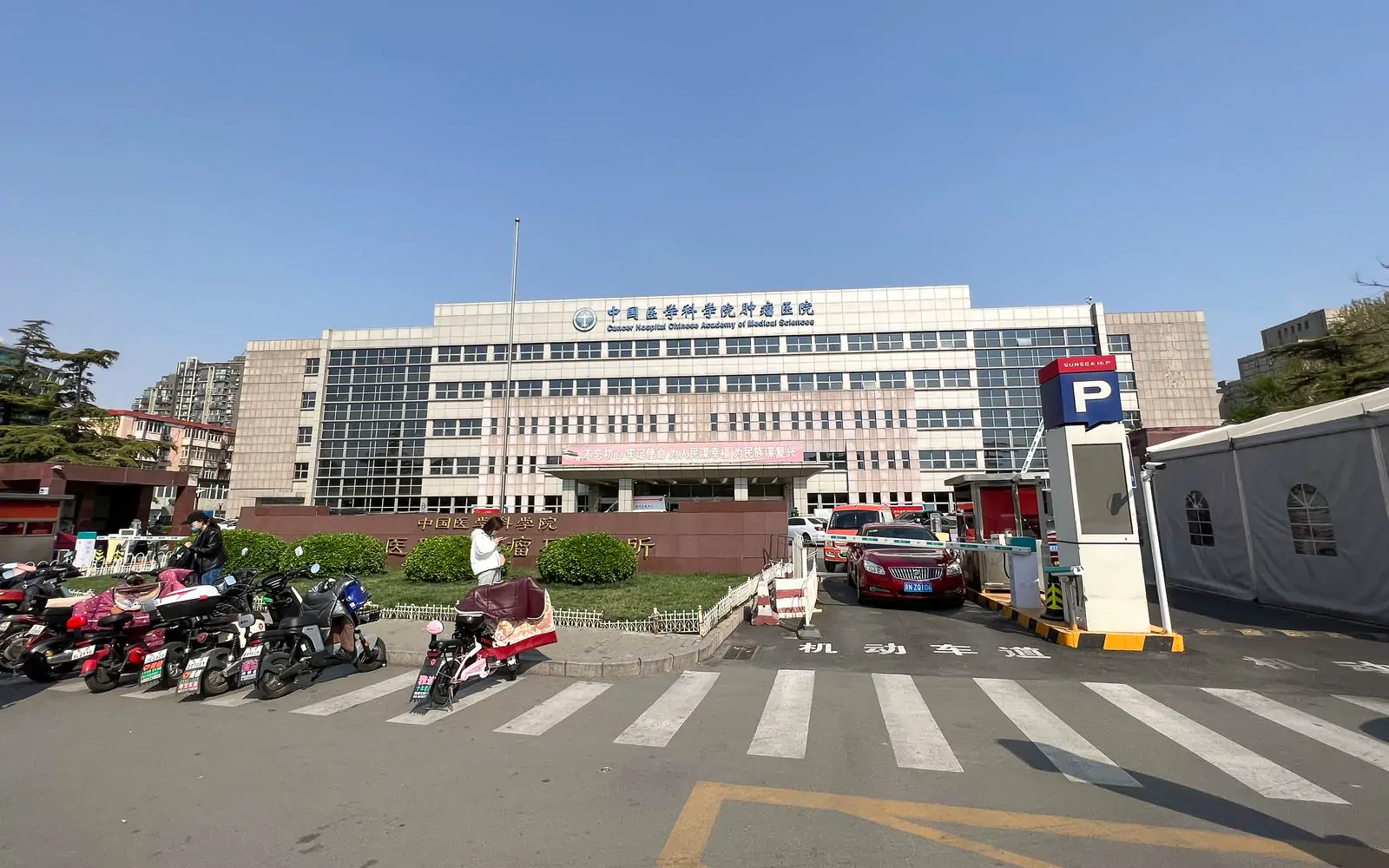
Cancer Hospital, Chinese Academy of Medical Sciences · Photograph of the building
Cancer Hospital, Chinese Academy of Medical Sciences · Photograph of the buildingPhotography: N509FZ · Original image · CC BY-SA 4.0

1.1 · Policy and regulation

What policy pathways exist for care in China?

China includes cancer prevention and control in long-term health goals and has regional policies for international care and clinically urgently needed imports in Boao Lecheng. After the zone's 2013 establishment, the 2019 plan further supported medical resources and product access, while 2025 biomedical technology rules added clinical translation requirements. Overseas patients can understand the pathway for treatment, then confirm patient acceptance with eligible hospitals.

  1. February 2026Latest

    Medical and health services entered the encouraged service imports directory in 2026

    In February 2026, the Ministry of Commerce and six other departments published a new Catalogue of Encouraged Service Imports. Its 'medical and health services' category includes major disease medical services, care and rehabilitation. The directory encourages service imports, including eligible foreign-invested institutions and foreign nationals providing medical care in China. Individual hospitals still confirm overseas patient acceptance and treatment eligibility.

  2. Effective February 2025

    Dedicated rules for clinical translation of new technologies

    Rules effective from 1 February 2025 distinguish medicine and device registration from approval of clinical translation of other new biomedical technologies. They require risk disclosure and informed consent.

  3. September 2019

    The four-department plan develops special-access medicine and device pathways

    The 2019 National Development and Reform Commission and three other departments' plan extended policy for small quantities of clinically urgently needed imports to eligible institutions within the zone and supported real-world clinical data in registration applications. It also proposed conditionally allowing patients to take reasonable quantities of imported medicines for personal use outside the zone, based on registered patient undertakings. When continued medication is needed, the receiving institution confirms eligible products, quantities and procedures, alongside subsequent supply and follow-up.

  4. October 2016

    Cancer prevention and control is a long-term policy goal

    Healthy China 2030, published in 2016, proposed increasing overall five-year cancer survival by 15% by 2030. This public health target is not a promise of efficacy for a treatment.

  5. Established in 2013

    The Hainan Boao Lecheng pilot began in 2013

    The State Council approved the Hainan Boao Lecheng International Medical Tourism Pilot Zone in 2013. The 2019 four-department plan further developed its policies. For patients needing special-access imports, the key is confirming that the target hospital and product meet conditions.

The scope is a specific area and eligible institutions. Hospitals still confirm patient acceptance and treatment.

1.2 · Clinical scale and experience

Clinical scale and specialist experience: from demand to team experience

China's estimated 5.1506 million new malignancies in 2024 create substantial care demand. Published outpatient, surgery and radiotherapy figures from major specialist hospitals help explain resource scale and division of specialties. Ask the target team about experience with the same subtype and stage, especially complex recurrence, metastasis or multiple previous treatment lines.

Estimated new malignant tumour cases nationwide in 2024
5,150,600
Grade III-A hospitals nationwide at the end of 2024 · All specialties
1,876 hospitals
Sun Yat-sen University Cancer Center outpatient visits in 2023
1.84 million+
Surgical volume at Sun Yat-sen University Cancer Center in 2023
45,492 operations

Clinical scale at large specialist cancer hospitals

Fudan University Shanghai Cancer Center reports 2.3 million outpatient visits, 170,000 admissions, 76,000 operations and 410,000 radiotherapy attendances in 2024. Sun Yat-sen University Cancer Center's 2023 outpatient and operation figures are above. The hospitals' statistical years differ; outpatient visits, admissions and treatment attendances cannot be added as unique patients. These figures help explain resource scale.

Annual clinical particle treatment records are available

Fudan University Shanghai Cancer Center's 2024 introduction reports 1,211 patients discharged after proton or heavy-ion treatment that year. Beyond patient volume, ask whether the team has experience with your cancer, lesion location and previous radiotherapy, and whether it recommends particle treatment.

Distinguish hospital numbers from cancer specialty capabilities

China had 1,876 Grade III Class A hospitals at the end of 2024. This includes different hospital types. Choosing a hospital also requires checking its relevant cancer specialty, team experience and patient acceptance capacity.

Estimated new cancer cases nationwide in 2024

The National Cancer Center published an estimated 5.1506 million new malignancies in 2024: 2.6720 million in men and 2.4786 million in women, including 1.1759 million lung cancers. Case numbers reflect disease burden, not one hospital's care volume or experience ranking.

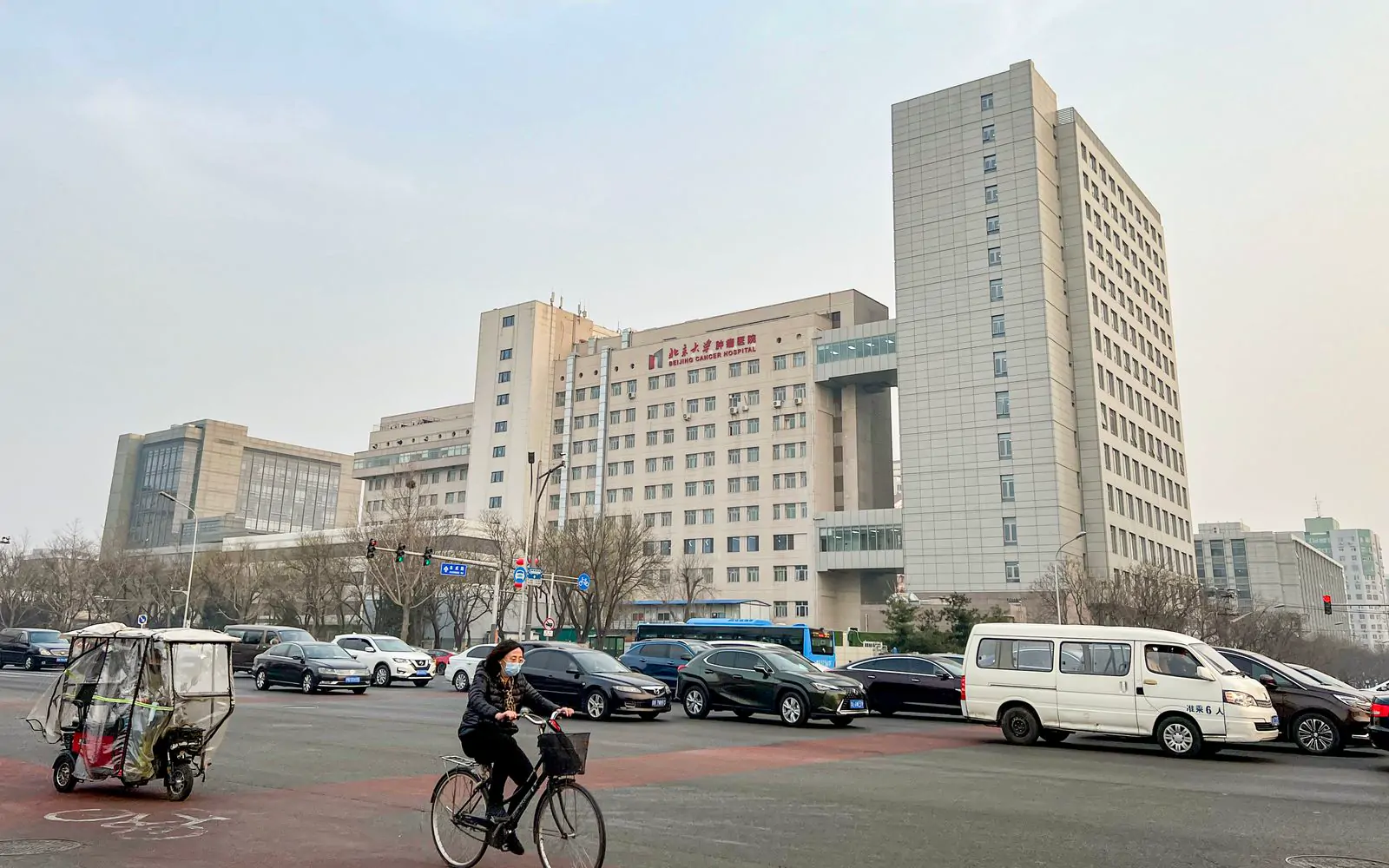
Peking University Cancer Hospital · Photograph of the building
Peking University Cancer Hospital · Photograph of the buildingPhotography: N509FZ · Original image · CC BY-SA 4.0

Visits are not unique patient counts. Clinical scale cannot directly predict individual efficacy.

1.3 · Treatment quality

Treatment quality: how much has long-term survival improved?

Overall age-standardised five-year relative cancer survival in China rose from 30.9% in 2003–2005 to 43.7% in 2019–2021, a 12.8-percentage-point difference. National registries show population trends, while hospital outcomes and individual treatment studies provide more specific information. These are listed separately below. Note populations and indicator definitions, then seek results close to your condition.

2003–2005

30.9%

Overall age-standardised 5-year relative cancer survival rate

2019–2021

43.7%

Overall age-standardised 5-year relative cancer survival rate

+12.8

percentage points · Difference between the two periods

Research supports long-term change

The 2003–2005 study included 17 cancer registries and reported age-standardised five-year relative survival of 30.9%. When comparing newer studies, note changes in registry coverage and analytical methods.

Long-term improvement: 30.9% to 43.7%

Overall age-standardised five-year relative survival differed by 12.8 percentage points between 2003–2005 and 2019–2021. Registry coverage, early diagnosis, cancer mix and changes in care all affect statistics. This change cannot be wholly attributed to one technology.

Specialty research · Read separately from population statistics

Progress in cancer prevention, early diagnosis and treatment

A November 2023 National Health Commission briefing reported yearly declines in standardised oesophageal, gastric and liver cancer incidence, expanding screening and early diagnosis and treatment coverage, and a national cancer care quality control system. These concern population prevention and standardised care. Incidence, mortality and survival measure different issues; an incidence reduction cannot be treated as benefit after treatment.

Nasopharyngeal cancer: one combined radiotherapy study

A single-center Shanghai Proton and Heavy Ion Center analysis included 69 non-metastatic nasopharyngeal cancer patients, with median follow-up of 31.9 months. It reported three-year overall survival of 94.9% and local control of 96.9%, using photon IMRT with a carbon-ion boost. These three-year results for this regimen cannot establish five-year survival for all particle treatments.

Fudan cancer center reports five-year survival of 71.8%

Fudan University Shanghai Cancer Center's 2024 website introduction reports overall five-year survival of 71.8% among patients with malignancies. It does not give complete stage mix, enrolment period or statistical methods. This cannot be directly compared with national age-standardised relative survival or used to predict an international patient's prognosis. Ask about data for the same cancer and stage.

Ruijin pancreatic cancer: published long-term hospital results

Shanghai Jiao Tong University School of Medicine reported in March 2024 that Ruijin Hospital's pancreatic team had completed comprehensive treatment for more than 20,000 pancreatic cancer cases, with overall five-year survival of 21.2% and five-year survival after radical surgery of 35.3%. These are published institutional results; the report lacks full cohort information for standardised international comparison. Overall and post-radical-surgery populations must also be read separately. Individual prognosis needs resectability, stage and previous treatment information.

Read hospital results by cancer, stage and treatment population

Hospital inpatients may differ from national registry populations in stage, health and treatment choice. For complex cancers such as pancreatic cancer, ask the team to explain resectability, prior treatment and research eligibility, and outcomes close to your condition. Overall survival in different populations cannot directly compare national treatment standards.

These are population statistics, not a hospital success rate, and cannot predict your treatment outcome.

1.4 · Eligibility for new medicines and devices

New medicine and device access: domestic approval, special imports and clinical research

When options are limited, patients often ask whether medicines and devices used abroad are available in China. Check domestic products against approval information. Some overseas-marketed but not domestically marketed clinically urgently needed products can be requested through eligible Boao Lecheng institutions. Trials have separate enrolment. Real-world research has supported some registration evaluations, but access pathways and evidence requirements need separate understanding.

01 · Access pathway

Approved in China

Check the specific product, indications and hospital conditions of use.

02 · Access pathway

Specially authorised medical imports in Hainan Boao Lecheng

Apply for urgently needed medicines and devices through eligible medical institutions.

03 · Access pathway

Clinical research

Assess enrolment criteria and research risks according to the trial protocol.

Special-access products cover several specialties

A June 2026 Hainan government report states that Hainan Boao Lecheng had permission to introduce more than 560 innovative medicines and devices. These span different diseases; they do not represent more than 560 cancer treatment options.

Approved products and research projects need separate confirmation

China has approved CAR-T products. For example, ciltacabtagene autoleucel is used in adult relapsed or refractory multiple myeloma meeting approval conditions. One product's indication cannot extend to other tumours.

Real-world data supported marketing approval for 26 products

An April 2026 Hainan medicine and device review service center explanation reported 48 products in the real-world research pilot and 26 approved with Boao Lecheng real-world evidence supporting clinical evaluation. These figures cover different diseases. Real-world research requires scientific design, ethics review and quality assessment; not every special-access use automatically becomes registration evidence.

Check Chinese innovative treatments by product and indication

CAR-T, targeted medicines, immunotherapy, bispecific antibodies and ADCs cannot be compared as one universal anticancer medicine class. List the generic name, target, pathological type, prior treatment and approved indication, then have the hospital confirm suitability and supply. Explore specific treatments in the directory. Each option needs product- and condition-specific confirmation; total product counts cannot determine your choices.

Clinical research offers another assessment pathway

Fudan University Shanghai Cancer Center reports 588 newly started trials in 2024 across different treatment areas. Ask the study center about recruitment, international patients, previous treatment requirements and costs. Participation needs eligibility review and informed consent. Trial counts alone cannot establish access to a particular treatment.

Special access, domestically approved treatment and clinical trials are different pathways and cannot replace one another.

1.5 · Technology and treatment options

When may these treatments be appropriate?

Some Chinese centers provide particle radiotherapy, CAR-T and special-access imported products, while areas such as oncolytic viruses remain in clinical research. The five treatment groups below show Chinese access pathways and verifiable international regulatory information. They apply to different conditions and may have different evidence maturity. Use this to prepare questions and discuss standard and other options with a doctor.

Sun Yat-sen University Cancer Center lists surgery, radiotherapy, chemotherapy, interventional and immune treatment, and reports robotic surgical equipment. Any additional benefit from advanced equipment needs comparison with standard treatment suitable for you.

Clarify the treatment question before exploring technologies

These treatments differ in applicable conditions, evidence stage and access pathways. Select a technology below to view conditions of use in China and international evidence. The hospital must assess a specific plan using pathology, stage and previous treatment.

Illustration of cancer treatment options showing radiotherapy equipment, a pathology microscope and medicines

Specialist hospital care

Proton and heavy-ion radiotherapy

Access pathways and assessment requirements in China

Shanghai Proton and Heavy Ion Center mainly provides particle radiotherapy. Proton and heavy-ion treatments offer different options. The hospital plans around tumour location, normal tissue protection and prior radiotherapy. Ask what additional benefits and risks are expected compared with appropriate conventional radiotherapy, then confirm the course and costs.

International evidence and the basis for comparison

Protons and heavy ions are different particle radiotherapy types. When comparing international resources, verify equipment configuration licences and actual center operation separately. Cost comparison needs the same lesion, plan and treatment scope included in quotes.

A technology name cannot replace indication assessment. Confirm the campus, equipment and patient acceptance capacity separately.

View technology guides and search medicines and devices

1.6 · Costs and budgeting

How do you calculate a full international department budget?

Obtain an itemised estimate from the intended international department first, then calculate coordination and travel costs. International comparison needs the same records and scope. Medicine quotes use the specific product, quantity and course. Update the budget if the plan changes.

2025-06-04 · Published individual International Medical Center charges

Specialist outpatient consultation / visit
USD 90 - 300
Standard single-room bed / day
USD 180 - 220

The University of Hong Kong-Shenzhen Hospital International Medical Center publishes individual charges by doctor grade and room type. Tests, medicines and treatment are additional; bed charges exclude inpatient consultations. Conversion uses the 2026-10-12 reference rate of USD 1 = CNY 6.6928, rounded to USD 10. USD amounts are budgeting references only. The hospital charges in its settlement currency; payment-time exchange rates and transaction fees are additional.

Check the full budget

  • Treatment and medicines
  • Tests and pathology
  • Hospital stay and follow-up visits
  • Interpretation and appointment accompaniment
  • Accommodation and transport
  • Insurance coverage

Use the same records and ask hospitals to quote for the same treatment phase, medicines and room type, stating additional charges, validity and change conditions. The insurer confirms covered items in writing.

CAR-T: directory inclusion differs from insurance payment

The National Healthcare Security Administration published basic insurance and commercial health insurance innovative medicine directories in 2025, effective 1 January 2026. The commercial directory is a reference for commercial insurance and others, not automatic coverage for any patient. Ask separately about CAR-T product, collection, manufacture, conditioning, inpatient monitoring and complication costs. The insurer then confirms payment under the policy. Overseas patients' actual out-of-pocket costs depend on written quotes and specific coverage.

PD-1 and other medicines: calculate by course and payment eligibility

Chinese-developed PD-1 and other medicines can be compared for costs, but confirm the generic name and approved indication before calculating quantities, administration frequency and expected courses. Combination medicines may change the budget; request separate test, infusion and side-effect management charges. Negotiated insurance payment information applies only to eligible patients and covered uses. International patients need their own self-pay quotes.

Individual published charges are not a cancer treatment package. Post-reimbursement out-of-pocket amounts cannot directly serve as international department quotes.

1.7 · Care coordination efficiency

How do you plan time from consultation to treatment?

Cross-border treatment connects record review and tests before consultation and treatment. Some Chinese hospitals provide MDT services and Boao Lecheng has special-access approval procedures. Ask the relevant institution about the process. Before departure, obtain expected dates for each stage and confirm pathology review, product ordering and admission preparation. This establishes what one trip can accomplish.

  1. 1Submit medical records
  2. 2Hospital review and assessment
  3. 3Confirm the plan and schedule
  4. 4Check costs and travel arrangements

Review records before confirming consultation arrangements

West China Hospital's process includes specialist referral or patient application, record review and MDT clinic booking. Record completeness and review findings affect scheduling; confirm before booking flights.

Approval time is not time to treatment

Lecheng special-access approval, product transport, record review and treatment scheduling are separate stages. Even with faster approval for some applications, pathology review, tests and pre-treatment assessment follow actual circumstances. Approval days cannot represent completion of testing or treatment initiation. Confirm actual hospital scheduling before departure.

Organise multidisciplinary discussion within a trip

An MDT brings surgery, medical oncology, radiotherapy, pathology and imaging together for complex cases. Submit complete records first and confirm departments, additional materials, appointment date and any pre-treatment tests still needed after consultation. Trials require separate enrolment assessment.

Specialist hospitals include MDT in their care services

Fudan University Shanghai Cancer Center describes multidisciplinary clinics and wards and full-course patient management. Before departure, ask whether your cancer has an MDT, what pathology and imaging are needed, and how tests and treatment follow consultation. Planning around hospital-confirmed stages can reduce additional submissions and repeated trips.

Illustration of three clinicians reviewing imaging and medical records in a multidisciplinary consultation

Consultation requires hospital review. Tests, beds and treatment preparation cannot have universally promised timelines.

1.8 · Entry and language arrangements

Location, entry and language: align travel with treatment needs

A care destination needs accessible travel, lawful stay and effective hospital communication. Hainan's regional visa-free policy covers eligible short-term medical visits and Lecheng has an international medical tourism service center. Flights and language resources differ between cities. Choose entry arrangements for the actual course and plan reassessment and follow-up after returning home. Patients and accompanying relatives need separate entry eligibility checks.

Hainan's regional visa-free policy includes short-term medical visits. Suitability for your trip depends on passport, destination and treatment duration.

The National Immigration Administration's August 2026 policy limits activities to Hainan and requires entry and exit through its open ports. For other provinces or a longer stay, check separate entry arrangements. Confirm hospital communication language and interpreting needs as well.

Entry eligibility

240-hour visa-free transit requires an onward itinerary

The August 2026 policy covers ordinary passport holders from 57 countries. It requires onward tickets with confirmed dates and itinerary through China to a third country or region and limits ports and permitted areas. It is not visa-free access for every medical trip.

Language and services

International services exist, but language still needs confirmation

Lecheng's international medical tourism service center opened on 29 May 2026, connecting resources from more than 40 institutions and providing foreign-language hotlines, visa enquiries and cross-border referrals. Confirm responsibilities of the center and receiving hospital separately, and whether the hospital can explain plans, consent and return records in your language. Check airport transfers, accommodation, accompaniment and follow-up individually when booking.

Travel and length of stay

Flights and stay duration depend on the city

When comparing destinations, check flights, connections and ground transport to the receiving city, including repeated treatment and follow-up trips in the budget. If treatment exceeds visa-free stay or needs a campus outside Hainan, check the applicable visa and residence procedures in advance.

International medical tourism has actual inbound visits

A June 2026 Hainan government report states that Lecheng received nearly 10,000 inbound medical tourist visits from 14 countries and regions in 2025. This covers medical tourism, not unique overseas cancer patients or completed treatments. It shows cross-border service experience; your care, interpreting and subsequent treatment still require institution-specific arrangements.

Visa-free duration does not mean treatment finishes within that period. Confirm language services when booking.

Care in China · Coordination services

How can SinoCareHub help you?

After exploring care resources in China, start by organizing your existing records. As an international medical coordination service, SinoCareHub helps you prepare for hospital communication and arrangements before travel.

Organise records for care

Organise medical records, test reports and questions to prepare for contacting hospitals.

Help with hospital communication

Contact hospitals to confirm record requirements, care acceptance and scheduling.

Coordinate needs before travel

Confirm language support and travel arrangements to clarify the preparations needed.

Ask about hospitals and care arrangements

Ask about Chinese medical and pharmaceutical policies, treatment resources and preparation before travel: hello@sinocarehub.com. The hospital determines the care plan, patient acceptance and scheduling.

Reference sources

  1. National Development and Reform Commission · Hainan Boao Lecheng implementation plan · 2019-09-16 (opens in a new window)
  2. Ministry of Commerce · Catalogue of Encouraged Service Imports · 2026-02-10 (opens in a new window)
  3. Hainan Provincial People's Congress · Provisions promoting new biomedical technologies · Adopted 2024-11-29; effective 2025-02-01 (opens in a new window)
  4. Chinese government website · Healthy China 2030 outline · 2016-10-25 (opens in a new window)
  5. Hainan provincial government · Introduction to the Boao Lecheng pilot zone administration · 2025-06 (opens in a new window)
  6. Sun Yat-sen University Cancer Center · Hospital introduction · 2024-05 (opens in a new window)
  7. Fudan University Shanghai Cancer Center · 2024 hospital introduction · 2024 data; verified 2026-10-10 (opens in a new window)
  8. National Health Commission · 2024 statistical bulletin · 2025-12 (opens in a new window)
  9. County cancer prevention and treatment center construction assessment project · National Cancer Center data release · 2026-06-15 (opens in a new window)
  10. Journal of the National Cancer Center · Original population survival study · 2024 (opens in a new window)
  11. Cancer Hospital, Chinese Academy of Medical Sciences · Population survival research · 2015-05-19 (opens in a new window)
  12. Journal of the National Cancer Center · Cancer epidemiology and survival trends · 2025 (opens in a new window)
  13. National Health Commission · Cancer prevention and control action briefing · 2023-11-15 (opens in a new window)
  14. Frontiers in Oncology · Original nasopharyngeal cancer study · 2021 (opens in a new window)
  15. Shanghai Jiao Tong University School of Medicine · Ruijin pancreatic cancer care and research · 2024-03-25 (opens in a new window)
  16. Hainan provincial government · International medical tourism service center · 2026-06-01 (opens in a new window)
  17. National Medical Products Administration · Ciltacabtagene autoleucel approval · 2025-02-19 (opens in a new window)
  18. Hainan medicine and device review service center · RWD guideline explanation · 2026-04-30 (opens in a new window)
  19. Shanghai human resources and social security authority · Proton and heavy ion hospital introduction · 2026-04-23 (opens in a new window)
  20. National Healthcare Security Administration · New medical technology pricing policy · 2026-05-08 (opens in a new window)
  21. National Healthcare Security Administration · 2025 dual-directory notice · 2025-12-07 (opens in a new window)
  22. Sumitomo Heavy Industries · Hainan BNCT treatment launch announcement · 2026-04-15 (opens in a new window)
  23. STELLA PHARMA · Japanese medicine and device approval announcement · 2020-03-25 (opens in a new window)
  24. Beijing Tsinghua Changgung Hospital · Histotripsy introduction · 2026-05-09 (opens in a new window)
  25. US FDA · Edison System K233466 · 2024-03-13 (opens in a new window)
  26. ClinicalTrials.gov · VRT106 liver cancer study NCT07589244 · 2026-05-15 (opens in a new window)
  27. The University of Hong Kong-Shenzhen Hospital International Medical Center · Published international medical charges · 2025-06-04 (opens in a new window)
  28. West China Hospital, Sichuan University · MDT services and application · 2025-07-02 (opens in a new window)
  29. National Immigration Administration · Regional visa-free entry policy · 2026-08-20 (opens in a new window)
  30. National Immigration Administration · Visa-free transit policy · 2026-08-20 (opens in a new window)
Contact Us