
Visit preparation
Bow-legged knee wear: osteotomy or replacement?
Medial wear with shifted alignment and relatively healthy lateral cartilage may warrant osteotomy assessment; severe damage across several compartments calls for replacement assessment.
Why assess the whole leg?
An outward curve of the knees that looks bow-legged is called knee varus. If weight falls mainly on the inner side, the already worn joint surface continues to bear more pressure. High tibial osteotomy (HTO) cuts and adjusts the angle of the bone below the knee, shifting some load to the relatively healthy side. It preserves the native joint and primarily addresses load distribution.[1]
Local knee X-rays show where wear occurs; full-length images help assess alignment throughout the leg. A 2026 study by the team at Nantong First People's Hospital used standing full-length X-rays of both lower limbs to measure the relationship between leg alignment and the tibial plateau and monitor osteotomy healing.[5] Ask the orthopedic team whether existing images are sufficient or further imaging is needed. Photographs of leg shape cannot replace these measurements.
A preserved joint space does not mean worn cartilage has recovered. After osteotomy, loading on the damaged side and the apparent joint space on imaging may change. Hospital patient education identifies mechanical correction, rather than direct repair of joint structures, as its core purpose.[1] Ask which pain the surgeon expects correction to address, rather than simply asking for a wider gap on the X-ray.
What other factors matter?
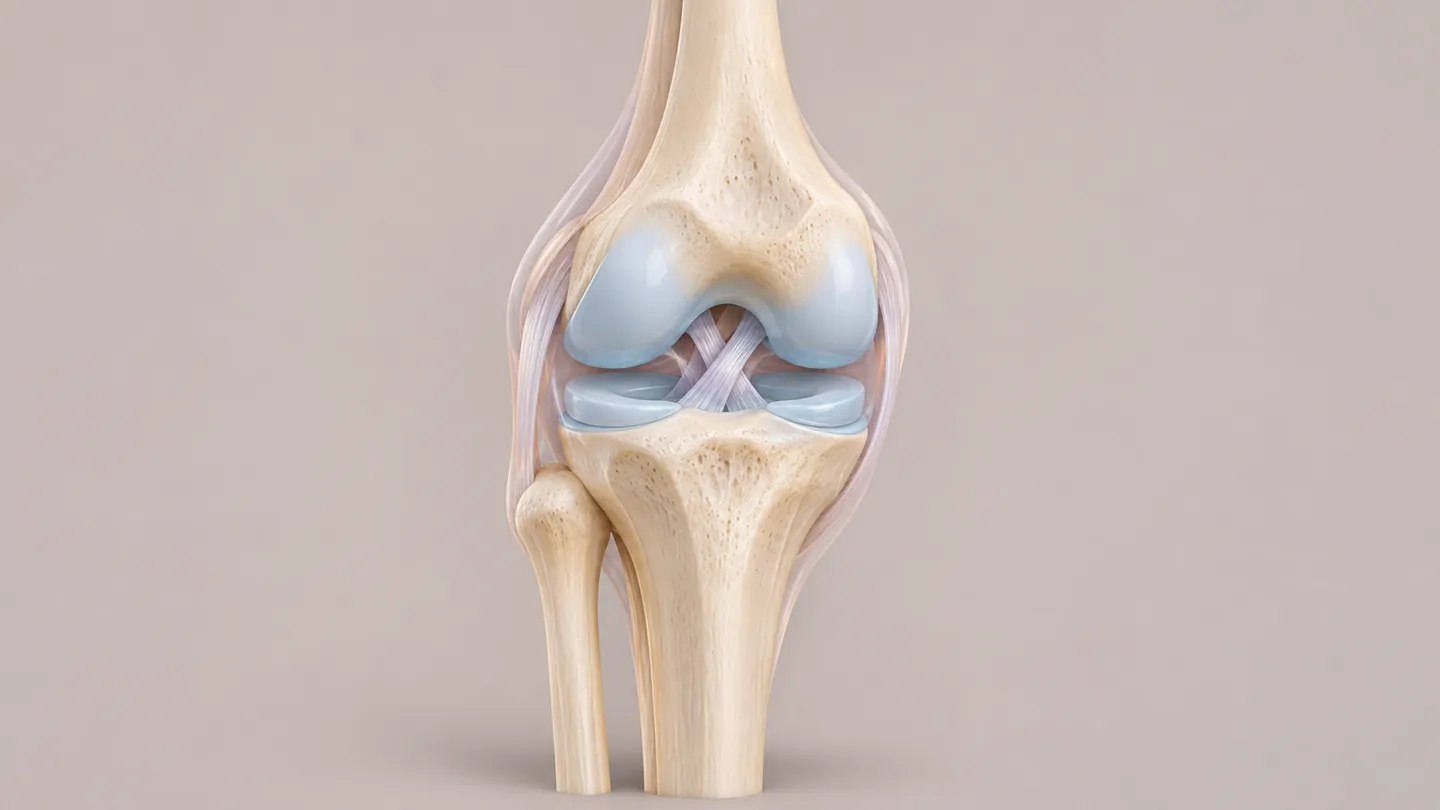
Whether lateral cartilage can take the redistributed load is central to considering osteotomy for medial disease. A 2025 technical explanation from the affiliated hospital of Shandong Medical and Pharmaceutical University includes osteoarthritis in the affected compartment, varus or valgus deformity, and cartilage in the opposite compartment in suitability assessment.[1] If several compartments are severely damaged, moving pressure to the other side cannot be expected to solve the problem.
The knee also has a patellofemoral compartment: the joint surface between the kneecap and thighbone. Whether pain is concentrated medially and whether there are problems laterally or behind the kneecap requires imaging and physical examination to corroborate each other. Partial knee replacement particularly requires localized disease; marked stiffness or ligament damage can affect suitability.[2]
Age is only part of assessment. Explain whether you can straighten the knee, whether bending is limited, whether it gives way, and which activities you hope to resume. AAOS patient education on osteotomy includes preoperative range of motion among its criteria; its partial replacement guidance also calls for checking range of motion and ligament quality.[2,3] Do not select yourself on the basis that being young means osteotomy or being older means only total replacement.
What do the three operations change?
Even with the same medial pain, surgery may target different structures. Osteotomy changes load distribution; unicompartmental replacement replaces one damaged compartment; total knee replacement is considered when joint surfaces need more extensive reconstruction. AAOS explains that pain throughout the knee warrants further assessment for total replacement rather than treatment of one side alone.[2]
| Comparison | High tibial osteotomy | Unicompartmental replacement | Total knee replacement |
|---|---|---|---|
| Main change | Corrects bony alignment and shifts load | Replaces damaged surfaces in a localized compartment | Replaces damaged surfaces more extensively |
| Assessment focus | Abnormal alignment and whether the opposite surface can bear load | Localized disease, ligament condition and range of motion | Widespread pain, damage and overall functional limitation |
| Structures preserved | Native joint surfaces | Other healthy compartments and suitable ligaments | Depends on the implant and surgical plan |
| Later considerations | Bone healing, fixation and progression of weight-bearing | Other compartments may still degenerate | Implant-related risks and long-term follow-up |
The table draws on hospital osteotomy information and AAOS patient education.[1–3] Use it to compare the reasons your surgeon gives.
What about recovery and later replacement?
Osteotomy requires bone healing. AAOS notes that immediate weight-bearing may not be possible and recovery often takes longer than after partial or total replacement. Risks include infection, blood clots, stiffness and failure of the osteotomy to unite.[3] Starting exercises does not mean you can already walk without protection or are ready to travel home immediately.
A Beijing Hospital of Integrated Traditional Chinese and Western Medicine case published by the Beijing Administration of Traditional Chinese Medicine in May 2026 described a patient with knee varus and medial overload undergoing osteotomy, bone grafting and titanium plate fixation, followed by rehabilitation.[4] This reports actual use in a Chinese hospital, but only early recovery; it cannot establish whether replacement will still be unnecessary years later.
Osteotomy may also make future total knee replacement technically more difficult.[3] Discuss together at your visit how ongoing pain or degeneration in other compartments would be assessed next, and how fixation hardware and the previous correction could affect subsequent surgery. Joint preservation may aim to delay replacement; it is not a lifetime guarantee.
When preparing to compare options in China, bring previous images, reports, surgical records and the results of treatments already tried. Ask the orthopedic team to identify exactly what would be preserved or replaced and specify weight-bearing, repeat imaging and rehabilitation after returning home. For record preparation or hospital communication, use medical consultation. SinoCareHub helps coordinate; the treating team decides the operation and fitness to travel home. If it is not yet clear whether you need surgery, read knee wear and replacement assessment.
Frequently asked questions
Can a planned partial replacement for medial knee wear become a total replacement during surgery?
Yes. If cartilage or ligaments found during surgery do not meet partial replacement requirements, the surgeon may change the plan. Discuss alternatives and the scope of consent before surgery.[2]
Could another operation be needed if the bone does not heal after knee osteotomy?
Yes. Some patients need another operation if the osteotomy does not unite. Abnormal follow-up findings should not be met by simply increasing exercise under the original plan.[3]
Need help?
Tell us about your situation and needs. Incomplete records are welcome.
Related reading
Sources and references
- Affiliated hospital of Shandong Medical and Pharmaceutical University: knee-preserving high tibial and distal femoral osteotomy, 2025-07-30
- AAOS: Unicompartmental (Partial) Knee Replacement; no update date shown
- AAOS: Osteotomy of the Knee; no update date shown
- Beijing Administration of Traditional Chinese Medicine: Beijing Hospital of Integrated Traditional Chinese and Western Medicine high tibial osteotomy case, 2026-05-06
- Chinese Journal of Reparative and Reconstructive Surgery: early outcomes and finite element analysis of high tibial osteotomy for middle-aged and older patients with knee varus and medial meniscus posterior root tear, April 2026, section 1.4