
Visit preparation
Parkinson's medication wearing off sooner: should you consider DBS?
If medication still relieves symptoms but no longer covers enough of the day, or causes troublesome involuntary movements, an assessment for deep brain stimulation may be worth discussing before medicines stop helping altogether. A public case from Suzhou also shows why implantation, activation and later programming need to be planned together when considering treatment in China.
First, establish what medication improves
Mr Long (a pseudonym), aged 70, had lived with Parkinson's disease for more than ten years. In a report published by Suzhou Kowloon Hospital in February 2026, he became stiff and struggled to move before his medication took effect, then developed involuntary twisting movements after it started working. Following assessment, the team implanted a brain stimulator; it was activated and programmed about a month later.[1]
Deep brain stimulation (DBS), sometimes described as a brain pacemaker, uses electrodes implanted in the brain and a stimulator beneath the skin of the chest. Electrical pulses sent to specific brain areas help control symptoms.[3]
When medication still improves slow movement or stiffness but the benefit of each dose lasts less and less time, an assessment for DBS may be worth discussing. Medication-induced dyskinesia, or involuntary movements that affect daily life, may be another reason for assessment. Adjusting medication remains a treatment option; a shorter response does not mean surgery must happen straight away.[2][4]
The distinction is between which symptoms medication improves and how long that improvement lasts. Movement symptoms that respond well to levodopa are often among those more likely to improve with DBS. Most symptoms that respond poorly to medication should not be expected to resolve through surgery on that basis. Tremor can be an exception: some tremor that is difficult to control with medication may still benefit and needs separate assessment.[2]
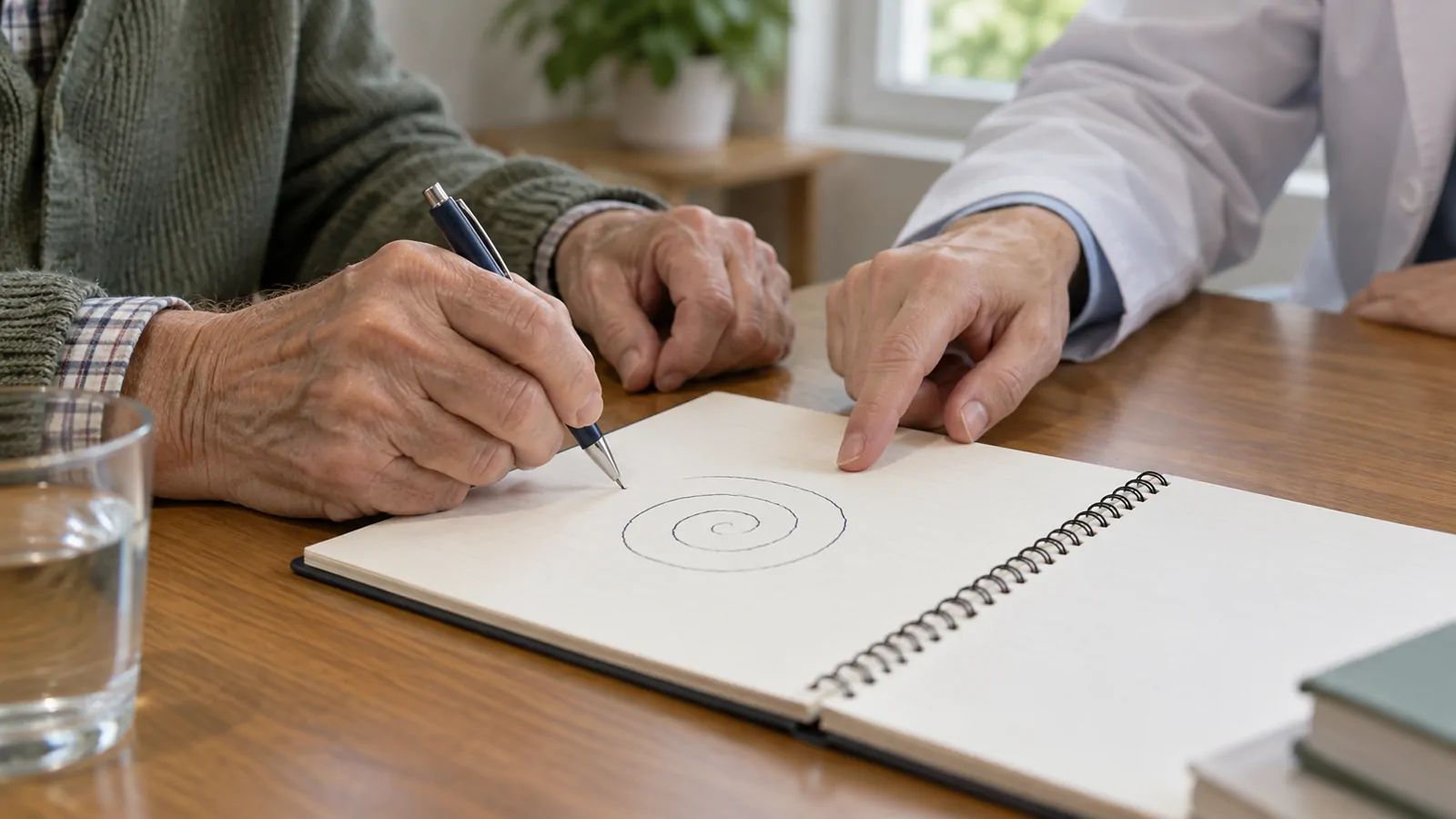
What happened in the Suzhou case?
The hospital report describes implantation after multidisciplinary assessment, followed by activation and programming about 30 days after surgery, with improvements in walking and tremor then observed. It does not state whether complications occurred or provide long-term follow-up, standardised scores or the postoperative medication dose. It cannot establish how much another patient would improve.[1]
Weigh the benefits alongside the risks
DBS cannot cure Parkinson's disease, and medication is often still needed afterwards. Speech, balance or cognitive problems should not simply be included among the expected benefits. Severe cognitive or emotional difficulties may also affect suitability for surgery.[2][4]
Surgery carries risks including bleeding in the brain and infection. Stimulation itself may cause speech, balance or mood-related difficulties; some require changes to the settings.[3] If falls or difficulty speaking are the patient's main concern, these need to be listed separately during assessment, rather than judging the treatment only from a case video showing less hand tremor.
Plan programming before travelling to China
Programming means the clinician sets and adjusts the device's parameters. Tsinghua University Yuquan Hospital's public information explains that the timing of first activation varies between hospitals and later adjustments depend on changes in the person's condition.[5] The roughly one-month interval in the Suzhou case cannot be treated as the hospital stay or length of stay in China for every patient.
When comparing plans from Chinese hospitals, establish where first activation would take place, who would handle later programming, and which team could continue managing that particular device after you return home. The battery may also need replacement; its lifespan depends on use and settings.[3] These arrangements affect the burden of ongoing care, so the comparison needs to extend beyond a single operation.
For assessment, the case summary can describe current medication, how long improvement lasts after each dose, when stiffness or involuntary movements return, and the symptoms the patient most wants to improve. Existing records can be organised using the Medical records and imaging preparation guide. The receiving team decides whether further tests are needed.
Need help?
Tell us about your situation and needs. Incomplete records are welcome.
Related reading
Sources and references
- Suzhou Kowloon Hospital: Brain-computer interface treatment helps a patient with Parkinson's regain mobility (hospital publication 9 February 2026; repost from Yinlibo; case, assessment and activation about 30 days after implantation) Accessed 30 October 2026.
- Parkinson's Foundation: Frequently Asked Questions (printed pages 30–31; PDF pages 32–33; DBS and candidate assessment) Accessed 30 October 2026.
- Mayo Clinic: Deep brain stimulation (17 March 2026; overview, risks and care after the procedure) Accessed 30 October 2026.
- NHS: Parkinson's disease—Treatment (medication and surgery) Accessed 30 October 2026.
- Tsinghua University Yuquan Hospital, Neuroelectrophysiology Unit: Postoperative programming (publication date not shown; definition, activation timing and later adjustments); this article does not adopt the booking, medication-dose or programming-frequency figures on that page. Accessed 30 October 2026.