
Visit preparation
Multiple lung cancer lesions: can more lung tissue be preserved?
When lesions affect both lungs, treatment must address the tumours while considering the lung function that remains. A public case from Shanghai East Hospital illustrates staged ablation as one approach beyond resection; suitability still depends on the individual lesions and the patient's condition.
How was this patient treated?
Andrew Car, a 57-year-old British patient, had more than ten nodules in both lungs. In a report published by Shanghai East Hospital in April 2025, the team first treated six lesions in his left lung, with treatment of the other lung planned a few months later.[1]
He underwent pleuroscopy-assisted ablation. For patients with confirmed lung cancer who are concerned about losing lung tissue when several lesions are removed, this case is worth understanding: local ablation may also enter the treatment discussion. It cannot be applied directly to multiple nodules found at a check-up whose nature has not yet been established.
On 21 March 2025, the team ablated six nodules in the left lung over four hours. Treatment involved general anaesthesia, a small incision between the ribs and chest drainage. It was not a procedure without an incision or tissue injury.[1]
At the first follow-up described in the report, the doctors assessed the CT scan as showing complete ablation of those six lesions; further treatment of the right lung remained planned. The report did not provide this patient's subsequent long-term recurrence outcomes or confirm that treatment of the other lung had been completed.[1]
The case therefore illustrates one way to address several lesions. It does not show that a single procedure resolved all lesions in both lungs.
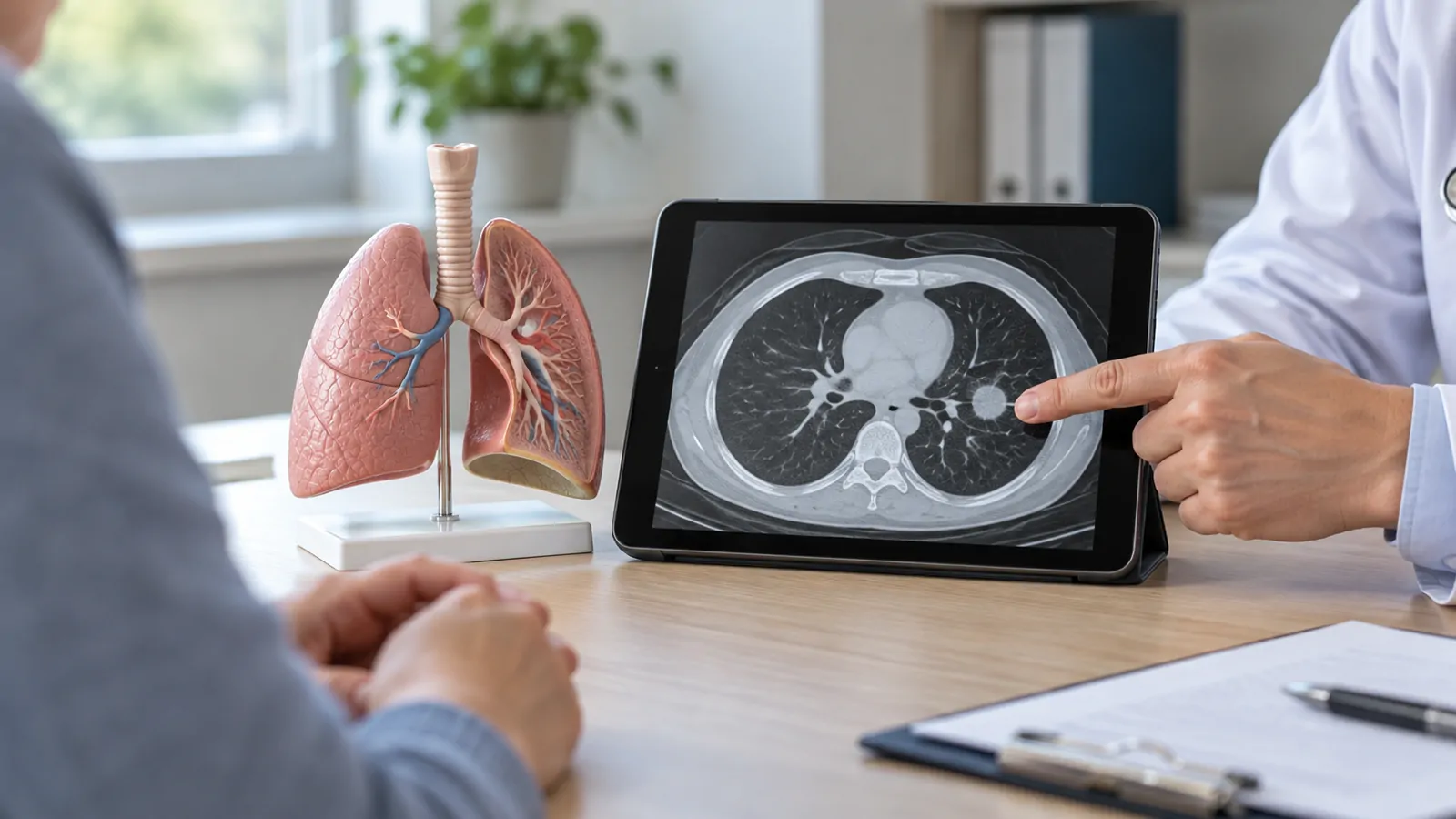
How does ablation differ from resection?
Resection removes the part of the lung containing the lesion. Ablation uses heat or cold to destroy tissue locally, aiming to preserve the rest of the lung.[2][3] For a patient with several lesions, the useful comparison is how much lung tissue the whole plan would sacrifice, whether it can cover the lesions requiring treatment, and which treatment options would remain afterwards.
However, ablation is not one fixed procedure. The Shanghai case above used pleuroscopic assistance; UCLH's patient information describes image-guided ablation through the skin. These reach the lesion by different routes. Risk figures, hospital stays and recovery times from one route cannot be transferred to the other.[1][2]
UCLH describes lung ablation for some small lung cancers or limited numbers of lung metastases, including consideration for patients unsuitable for surgery. It also lists pneumothorax, bleeding and infection as risks.[2] Preserving lung tissue is a treatment aim, not a guarantee of no complications, nor proof that ablation is better than resection or radiotherapy.
Compare the plan lesion by lesion
Having lesions in both lungs is not enough to determine treatment. The type of lung cancer, lesion locations, spread elsewhere and general health all influence the plan.[3] Multiple nodules must not all be treated as lung cancer without assessment.[4]
If the doctor proposes resection or ablation, ask the team to explain the plan at the level of individual lesions:
1. Which lesions have pathological evidence, and which still need assessment? Why treat these first?
2. For resection, which lung tissue would be removed? For ablation, which access route would be used, and are there locations it cannot cover or that carry higher risk?
3. How will the remaining lesions be managed? Which follow-up findings would change the next step?
Preparing your own records
These details reveal more about the differences between plans than incision size alone. The Shanghai case involved staged treatment; whether something similar is appropriate for another patient depends on their own imaging, pathology and lung function. Existing records can be organised using the Medical records and imaging preparation guide so that the specialist team can compare plans.
Need help?
Tell us about your situation and needs. Incomplete records are welcome.
Related reading
Sources and references
- Shanghai East Hospital: Expat hails 'Shanghai solution' lung cancer treatment (30 April 2025; hospital repost of China Daily, case and first follow-up)
- UCLH: Lung Tumour Ablation (percutaneous ablation information; update date not shown)
- NHS: Treatment for lung cancer (reviewed 20 August 2026)
- American Thoracic Society: What is a Lung Nodule? (update date not shown)