
Visit preparation
Still tired after cancer treatment: could acupuncture help?
If you are still exhausted after cancer treatment, ask your oncology team about supportive options, including acupuncture. The first step is to assess factors such as anaemia, pain, sleep and medication. Acupuncture studies have found mixed results. Whether it is worth trying depends on what may be causing the fatigue, bleeding or infection risk, and what you most want to be able to do again.
Tell your oncology team how fatigue affects your day
Cancer-related fatigue can persist after rest and feel out of proportion to what you did that day. Perhaps you need to sit down after walking downstairs, or you now need help to finish a meal you used to cook on your own. These changes give your clinician more to work with than simply saying you feel worn out. China's guideline on integrative care for cancer-related fatigue lists tools such as the Brief Fatigue Inventory to record fatigue severity and its effect on everyday activities. [1,2]
At follow-up, describe when the fatigue began, whether it has persisted or recently worsened, whether rest helps, and whether you have pain, changes in sleep or a poor appetite. Your oncology team can review your condition, past treatment and current medicines and consider causes such as anaemia, nutritional problems, sleep disorders, pain or medication side effects. These causes need different approaches. Fatigue alone cannot tell you whether cancer has returned. [1,2]
What did acupuncture studies compare?
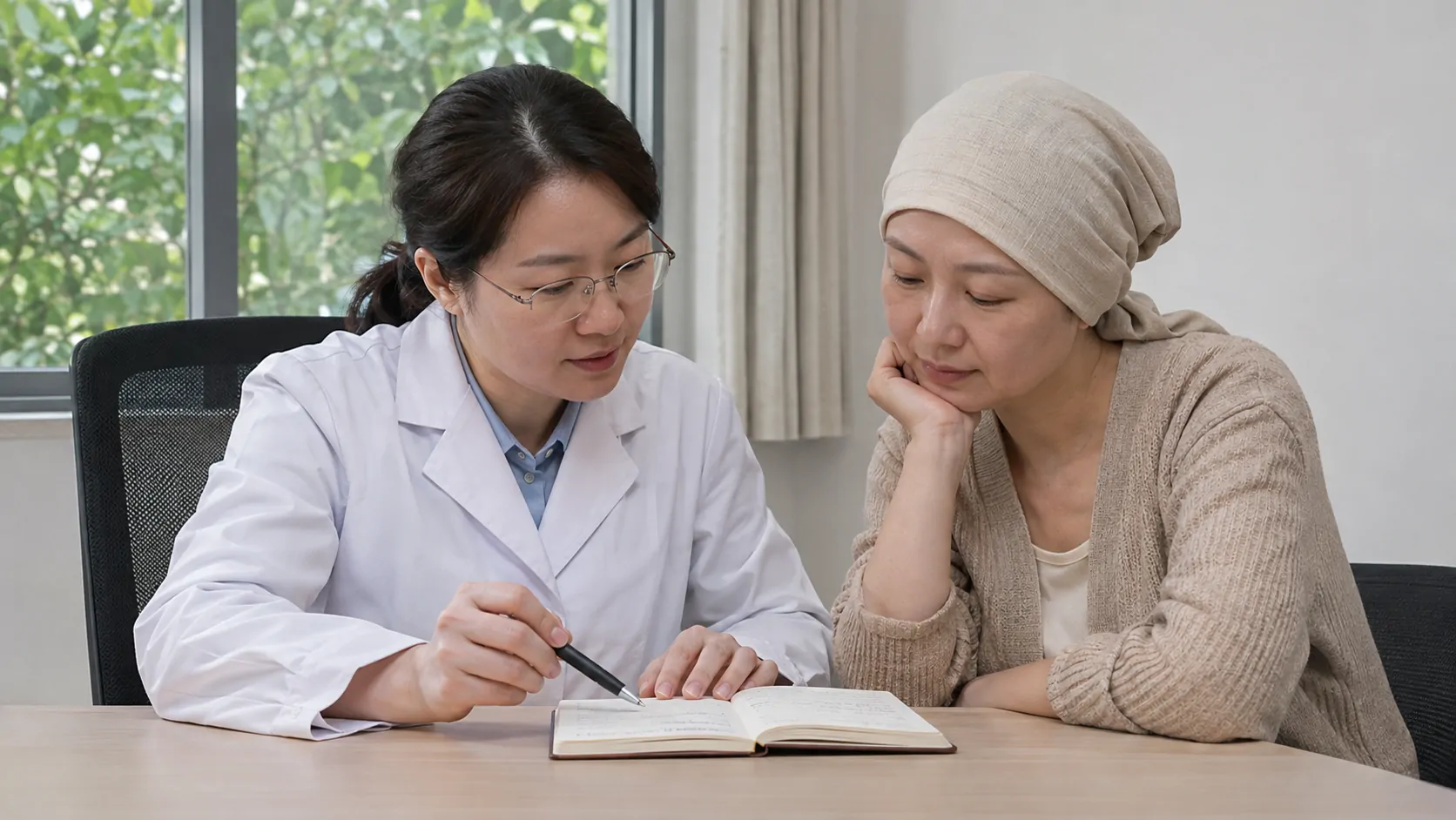
In one trial, people with persistent fatigue after breast cancer treatment reported more improvement with acupuncture than with usual care alone. Studies using sham acupuncture as a comparison have produced mixed results. In their 2024 guideline update, ASCO and SIO found insufficient evidence to make a clear recommendation on acupuncture after cancer treatment. Acupressure, discussed separately in the guideline, applies pressure with the hands or a tool. Acupuncture involves inserting needles through the skin, and the evidence for the two methods should be considered separately. [2]
After primary treatment, the guideline supports exercise, cognitive behavioural therapy and mindfulness-based programmes suited to your circumstances. Ask your oncology team which options fit your current limitations. Someone who tires after a short walk and wakes often at night may have different priorities from another patient. [2]
What to share with the team if you want to try acupuncture in China
If you seek an assessment at a traditional Chinese medicine oncology, integrative medicine or acupuncture clinic, bring your recent cancer treatment records, any recent complete blood count results and a medication list. Tell the team if you are still on systemic treatment, have bleeding or infection concerns, or take an anticoagulant. The team can assess whether acupuncture is suitable and what precautions are needed. A qualified practitioner should use sterile needles. [1,3]
If your clinician thinks acupuncture is an option, agree on a concrete goal in advance, such as finishing your usual walk or spending less time lying down in the afternoon. At follow-up, compare your progress with how you were doing before treatment. Keep your oncology appointments. If you are seeing a different hospital, use the guide to preparing medical records to organise your treatment history and reports.
Need help?
Tell us about your situation and needs. Incomplete records are welcome.
Related reading
Sources and references
- Chinese expert working group including the National Cancer Center: Guideline on integrative Chinese and Western care for cancer-related fatigue · 2025-09-20
- ASCO–SIO: Management of Fatigue in Adult Survivors of Cancer, 2024 guideline update · 2024-05-16
- US National Cancer Institute: Acupuncture, clinical evidence summary · 2024-11-01