
On this pageHow is a condition like mine usually treated?
- 1.How is a condition like mine usually treated?
- 2.Which records affect the plan?
- 3.Treatment options and timing
- 4.When to discuss a second opinion or MDT
- 5.New medicines and other treatment options
- 6.Continence, sexual function and long-term androgen suppression
- 7.International department costs and budgeting
- 8.Which records to organise first
- 9.Common patient questions
- 10.How SinoCareHub can help
- 11.Sources and scope
01
How is a condition like mine usually treated?
First find the situation closest to your existing diagnosis. This section describes common treatment approaches; an individual plan also depends on pathology, tests and treatments already received.
Lower-risk disease confined to the prostate
Some patients can have active surveillance, reassessing as planned and treating relevant changes; surgery or radiation may also be discussed. Surveillance has clear criteria and is not neglect after diagnosis.
Intermediate- or high-risk localised disease
Compare radical surgery, radiation and other choices. Radiation may need a shorter or longer endocrine course. After surgery, final pathology and PSA determine additional treatment.
Locally advanced or regional node involvement
Several treatments often need coordination. Teams assess local control, medicines and side effects and explain the sequence.
Metastasis, recurrence or progression despite androgen suppression
Distinguish current endocrine response, then assess metastatic burden, testosterone, prior medicines and symptoms. Raised PSA, bone metastases and castration resistance are different diagnoses.
02
Which records affect the plan?
Read PSA, Gleason score and imaging together
PSA alone cannot determine severity. Keep primary and secondary Gleason patterns: 3+4 and 4+3 both total 7 but mean different grades. MRI, positive core counts and extent also affect risk.
- Records to check
- Serial dated PSA, complete biopsy and grade, original MRI and available staging tests.
- Questions for your doctor
- Which risk group am I in? Is the evidence complete, and which choices does it change?
Existing urinary and sexual function affect comparison
Surgery and radiation may differently affect urination, erections and bowel function. Explain pre-existing leakage, weak stream or erectile difficulty. Equipment or minimally invasive labels cannot determine recovery.
- Records to check
- Urinary symptoms, previous prostate or urethral surgery, medicines and your main functional concerns.
- Questions for your doctor
- How does each option affect continence and sexual function? What rehabilitation and further management are planned?
Recurrence needs prior treatment and testosterone results
PSA after surgery and radiation has different interpretations. Progression during endocrine treatment needs appropriate testosterone level and imaging or other evidence checks. One PSA cannot justify deciding a medicine has failed yourself.
- Records to check
- Surgical pathology, radiation summary, androgen-suppression injections and oral medicines, PSA and testosterone trends and metastatic images.
- Questions for your doctor
- What type of progression is this? Is localisation needed, and what is the next goal?
03
Treatment options and timing
These regimens explain treatment components and timing; they are not individual prescriptions. A cycle includes recovery and assessment time and cannot be directly treated as the number of days in hospital or in China.
Active surveillance and watchful waiting
They have different purposes and populations, assessed by risk, health and preference.
Active surveillance and watchful waiting
They have different purposes and populations, assessed by risk, health and preference.
- Treatment details
- Active surveillance preserves curative treatment when needed and monitors progression. Watchful waiting focuses more on management when symptoms arise. They are not one plan.
- Cycles and timing
- China's 2022 guideline examples include PSA at least every six months, annual rectal examination, MRI and necessary repeat biopsy. Personal plans need dates and treatment-start criteria.
Surveillance brings ongoing tests and possible repeat sampling. After one China assessment, arrange local continuation. Absence of symptoms is not a reason to stop checks.
Radical prostatectomy
Assessed localised or selected other operable situations, balancing cancer control and function.
Radical prostatectomy
Assessed localised or selected other operable situations, balancing cancer control and function.
- Treatment details
- Remove the prostate and appropriate tissues. Nerve preservation and node dissection depend on disease. Open, laparoscopic and robotic approaches cannot guarantee erections or freedom from incontinence.
- Cycles and timing
- Arrange admission, catheter use and removal, pathology, continence recovery and PSA separately. Discharge is not full activity recovery or proof no further radiation or medicines are needed.
Ask about continence rehabilitation, catheter care and nerve preservation criteria. Final pathology and PSA may change the plan; explain additional treatment estimates in the budget.
Definitive or post-operative radiotherapy
Appropriate localised or locally advanced disease, post-operative recurrence risk or salvage care.
Definitive or post-operative radiotherapy
Appropriate localised or locally advanced disease, post-operative recurrence risk or salvage care.
- Treatment details
- Compare external beams and other suitable methods, with fields and fractions set by radiation staff. Androgen suppression depends on risk, not identical durations for everyone.
- Cycles and timing
- China's 2022 androgen suppression examples include 4 - 6 months for some intermediate risk and 2 - 3 years for high-risk or locally advanced disease. Confirm radiation sessions, simulation and planning separately. Years of medicines are not years staying in China.
Discuss urinary frequency, bowel reactions and late effects. Submit previous radiation or surgery for repeat-treatment safety assessment.
Androgen deprivation therapy (ADT) and combinations
Appropriate metastatic disease or combinations with local treatment, after checking phase.
Androgen deprivation therapy (ADT) and combinations
Appropriate metastatic disease or combinations with local treatment, after checking phase.
- Treatment details
- Reduce androgen effects with medicines or other methods. Some need newer endocrine agents or chemotherapy. Interactions, health and prior medicines affect choice.
- Cycles and timing
- Injection and oral schedules differ, with PSA, testosterone and side-effect monitoring. Metastatic disease usually needs continuing management; one admission is not complete treatment.
Include hot flushes, fatigue, sexual, bone and metabolic effects in long-term care. Check injection dates, home supply and monitoring before travel. Do not stop medicines or extend intervals yourself.
Chemotherapy, molecular targeted and selected radionuclide treatments
Assessment by metastatic or castration-resistant phase, medicines, molecular or imaging results and health.
Chemotherapy, molecular targeted and selected radionuclide treatments
Assessment by metastatic or castration-resistant phase, medicines, molecular or imaging results and health.
- Treatment details
- Discuss docetaxel or other chemotherapy; some tests correspond to targeted options. Distinguish radionuclide products, targets and indications. Bone metastasis treatments are not all the same.
- Cycles and timing
- China's 2022 docetaxel examples include dosing every 3 weeks. Total cycles and continuation depend on regimen and efficacy. Screening, blood tests, monitoring and bone pain care are additional.
Provide all endocrine and chemotherapy records, checking current Chinese indications and patient acceptance. Bone protection may need dental, calcium and kidney assessment according to the team plan.
04
When to discuss a second opinion or MDT
Surveillance or starting treatment?
Request pathology and image review, clarifying risk, health and reliable monitoring across countries. Ask whether criteria are met and which changes require treatment.
Compare the full burden when surgery and radiation opinions differ
Request urology, radiation and relevant teams together. Include tumour control, continence, sexual function, medicine duration, visits and later salvage options, not only one admission.
Rising PSA: localisation or a medicine change first?
Submit serial PSA, testosterone and all treatment so the hospital assesses progression type, tests and salvage opportunities. Not every PSA rise immediately needs the same systemic regimen.
05
New medicines and other treatment options
PSMA imaging does not establish PSMA treatment eligibility
Prostate-specific membrane antigen (PSMA) imaging addresses localisation and some treatment screening. Uptake alone cannot establish radionuclide suitability. Check prior care, organs, Chinese indications and acceptance.
Genetic targeting and focal ablation need evidence and limits
BRCA and other results may affect medicines or genetic counselling. Full reports are more useful than 'a mutation'. Focal ablation cannot replace surgery or radiation by a minimally invasive label. Ask scope, long-term evidence, follow-up and retreatment.
06
Continence, sexual function and long-term androgen suppression
Obtain catheter and continence instructions before discharge
Follow catheter instructions and obtain removal, follow-up and activity plans. Teams guide pelvic floor rehabilitation. Ask about further assessment if continence recovery is poor rather than copying exercise intensity.
Raise sexual function and fertility directly
Explain current function, fertility wishes and important changes. Disease limits nerve preservation. Later medicines or rehabilitation need assessment. Platform communication can help accurately relay questions.
Long-term medicines also need bone and activity management
Obtain bone, weight, blood pressure and glucose monitoring and report fatigue, falls or pain. New marked back pain with weakness, numbness or bladder or bowel control changes needs prompt care without waiting for routine enquiries.
07
International department costs and budgeting
This page uses self-pay pricing for international departments / international medical services at Chinese hospitals. A verifiable published total price for a full course of care for Prostate cancer has not yet been obtained. Ordinary outpatient, standard ward or insurance settlement amounts cannot be used as substitutes.
Available international department itemised charges
The following charges come from the International Medical Center at The University of Hong Kong-Shenzhen Hospital, published on 2025-06-04, using the amounts converted on 2026-10-12. They are references for itemizing a budget, do not represent prices at all hospitals and are not a package for Prostate cancer.
| Item and scope | Reference amount (USD) |
|---|---|
| Specialist outpatient consultationPer consultation, with fees varying by doctor category. Tests, medicines and treatment are charged separately. | USD 90 - 300 |
| Adult inpatient consultationDaily consultation charge only. Beds, surgery, medicines and other charges are separate. | USD 150 - 220 |
| Single standard room bedPer bed per day, corresponding to Standard Room 1 and Standard Room 2 in the published schedule. Inpatient consultations and treatment are excluded. | USD 180 - 220 |
Converted using the reference exchange rate on 2026-10-12: USD 1 = CNY 6.6928, rounded to USD 10. Dollar amounts are for budgeting only. The hospital bills in its actual settlement currency; exchange rates and payment fees are separate.
Does surgery include robotics, admission and later care?
List procedure, devices, anaesthesia, pathology, nodes, rooms and catheter arrangements for the international department. Explain rehabilitation, complications and added radiation boundaries separately.
Quote radiation and long-term androgen suppression separately
Radiation includes simulation, planning, sessions, necessary materials and reassessment. Injections and oral medicines use names, strengths, intervals and duration. Include medicines continuing after irradiation.
Estimate recurrence or metastasis by current phase
List medicines, infusion, screening, bone protection and reassessment separately, updating with image or symptom changes. New medicines, genetic tests or radionuclide assessment are not mandatory for everyone; explain their purpose first.
SinoCareHub helps obtain an itemised estimate from the prospective receiving international department, specifying the plan, date, validity period, included items and separately charged items. Hospital medical charges, platform coordination fees and third-party costs such as transport and accommodation are explained separately. The budget is updated if the treatment plan changes.
08
Which records to organise first
- Full biopsy or surgical pathology, Gleason patterns, grade, positive cores, margins and nodes.
- Serial dated PSA and available testosterone after androgen suppression.
- Original prostate MRI and completed bone scans, CT, PSMA or other tests; do not repeat all tests yourself for travel.
- Surgery, radiation and every medicine line, injection dates, responses and side effects, with urinary and sexual issues.
First submit the records you already have and identify anything missing. The prospective receiving hospital decides whether additional tests or borrowing slides or paraffin blocks are needed for this assessment.
09
Common patient questions
Can androgen medicines stop when PSA is very low?
Do not stop yourself. PSA is one assessment component alongside phase, plan and testosterone. Obtain medication and monitoring arrangements before discussing changes.
Can robots guarantee no leakage and preserved erections?
No. Previous function, extent, nerve preservation, surgery and rehabilitation affect outcomes. Ask about risks for your condition rather than deciding solely by equipment.
Must I remain in China for active surveillance?
Surveillance usually should not mean continuous admission. The key is completing tests and submitting them promptly across countries. Each visit depends on assessment or treatment need.
Does PSA failing to reach zero immediately after radiation mean failure?
Not directly. The prostate remains after radiation, so interpretation differs from surgery. The team uses serial results, timing and other evidence.
10
How SinoCareHub can help
SinoCareHub helps contact hospitals, organise records and coordinate care arrangements. The hospital is responsible for diagnosis and treatment decisions. The specific coordination services and fees are explained to you beforehand.
Organise PSA, grade and medicines
SinoCareHub helps organise serial PSA, biopsy and surgical pathology, imaging and injections, following hospital original-record, review and translation requirements.
Request a urological oncology MDT or second opinion
Contact hospitals about monitoring, surgery versus radiation or recurrence; coordinate applications and follow departments, format, fees and written opinions. Hospitals confirm risk and advice.
Connect visits and long-term costs
Follow assessment, surgery, radiation or medicine appointments and actual travel timing. Separate one treatment from medicines continuing at home, and medical, coordination and third-party costs.
Record rehabilitation and handover between countries
Coordinate interpreting and accompaniment as agreed, helping record catheter, rehabilitation, medication and monitoring. Follow summaries and doctor contacts for local teams.
Submit an inquiry about care for Prostate cancer
Describe your existing diagnosis, previous treatments and the question you want to address. You can submit an inquiry even if your records are incomplete. We will contact you to follow up on hospital assessment and care arrangements.
11
Sources and scope
Information checked: 2026-10-13. Treatment information identifies the guideline version; the hospital checks new drug indications and availability against current information. Costs use published international department itemised charges with clearly stated dates.
View medical references and image sources
- National Health Commission · Prostate cancer diagnosis and treatment guideline (2022) ↗ (opens in a new window)National Health Commission / Cancer Hospital, Chinese Academy of Medical Sciences · 2022
- NCI · Prostate Cancer Treatment ↗ (opens in a new window)National Cancer Institute
- The University of Hong Kong-Shenzhen Hospital · International Medical Center consultation and bed charges (published 2025-06-04) ↗ (opens in a new window)The University of Hong Kong-Shenzhen Hospital
- Investing.com · USD/CNY historical rates (conversion uses 6.6928 on 2026-10-12) ↗ (opens in a new window)Investing.com
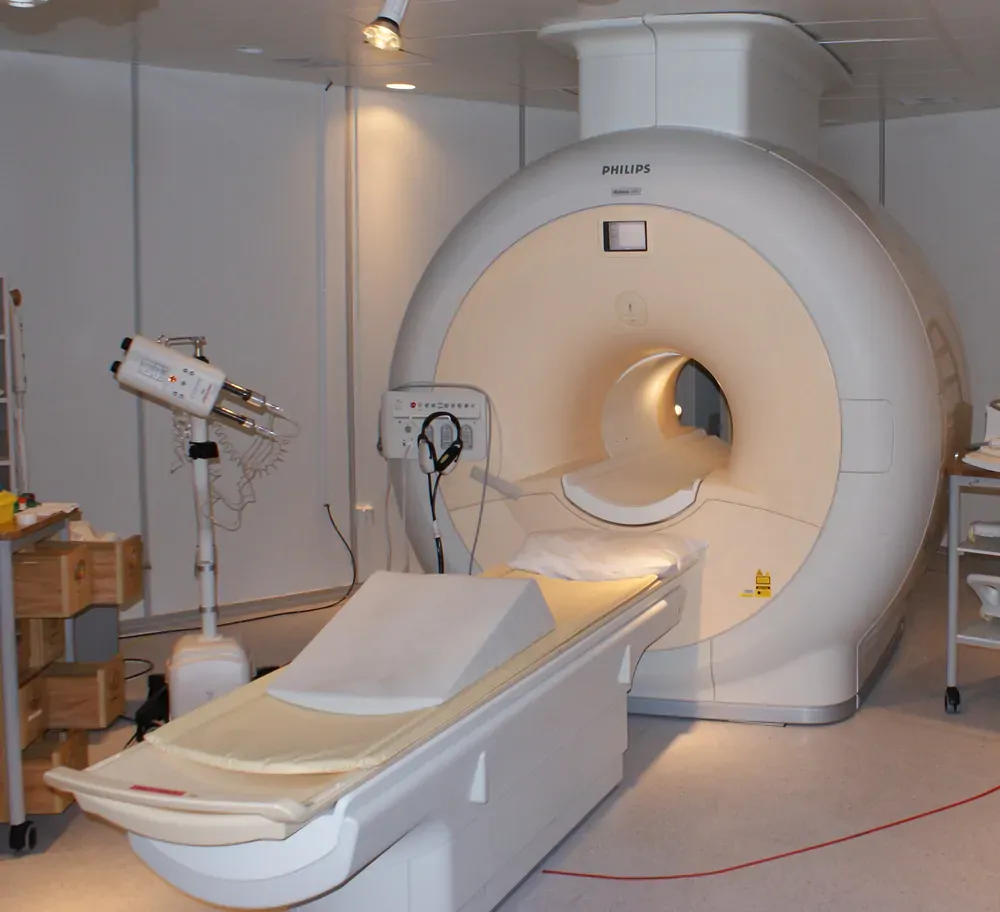
Photography: Jan Ainali / Wikimedia Commons · CC BY 3.0. Compressed and resized to illustrate a testing environment. It does not depict a SinoCareHub service location or the equipment at a prospective receiving hospital.
This page was compiled by SinoCareHub and does not claim review by an external medical expert. General information cannot replace individual diagnosis, prescriptions or emergency care. If an acute change occurs, contact a local medical institution without waiting for a platform response.