
On this pageHow is a condition like mine usually treated?
- 1.How is a condition like mine usually treated?
- 2.Which records affect the plan?
- 3.Treatment options and timing
- 4.When to discuss a second opinion or MDT
- 5.New medicines and other treatment options
- 6.Pancreatic enzymes, glucose, pain and drain care
- 7.International department costs and budgeting
- 8.Which records to organise first
- 9.Common patient questions
- 10.How SinoCareHub can help
- 11.Sources and scope
01
How is a condition like mine usually treated?
First find the situation closest to your existing diagnosis. This section describes common treatment approaches; an individual plan also depends on pathology, tests and treatments already received.
Resectable
Surgeons assess complete removal; some high-risk patients discuss medicines first. Adjuvant chemotherapy and long-term reassessment are often still needed. Include them in budgets and travel.
Borderline resectable
Relationships to major vessels can complicate immediate complete removal, often prompting treatment first. Experienced teams should explain vessel management and surgical timing.
Locally advanced and currently unresectable
Systemic medicines are usually discussed first, sometimes followed by radiation or other local procedures. Reassess resectability after treatment.
Metastatic or recurrent
Compare systemic care, symptoms and research. Pain, wasting, jaundice and digestive problems may need simultaneous management. Intensity depends on tolerance.
02
Which records affect the plan?
Imaging must show vessels and distant disease clearly
Head versus body or tail location and portal or mesenteric vessel relationships affect surgery. Provide full original images for surgical and radiology review. A screenshot or 'no metastases' statement cannot replace resectability assessment.
- Records to check
- Original contrast pancreatic CT/MRI, chest and other staging records and previous comparisons.
- Questions for your doctor
- What is my resectability category? What limits surgery, and how is reassessment planned?
Pathology, genes and CA19-9 serve different purposes
Pathology determines ductal adenocarcinoma care. Some molecular or hereditary results may affect medicines and research. Obstruction can affect CA19-9; it cannot diagnose alone or establish efficacy from one rise or fall.
- Records to check
- Full pathology, completed tumour or hereditary tests, serial CA19-9 and corresponding bilirubin or other results.
- Questions for your doctor
- Is review or further sampling needed? Do tests answer this medication question?
Jaundice, nutrition and pain may change the start date
Drainage before treatment depends on infection, symptoms, surgery and medicines; not everyone needs a stent first. Recent weight loss, diarrhoea, diabetes and pain medicines also affect tolerance and care.
- Records to check
- Bilirubin, liver function, stents or drains, weight, intake, glucose and all medicines.
- Questions for your doctor
- What must be addressed before anticancer care? Who follows drainage and nutrition?
03
Treatment options and timing
These regimens explain treatment components and timing; they are not individual prescriptions. A cycle includes recovery and assessment time and cannot be directly treated as the number of days in hospital or in China.
Pancreatic resection
Assessed complete resectability and adequate health.
Pancreatic resection
Assessed complete resectability and adequate health.
- Treatment details
- Head lesions may need pancreaticoduodenectomy (Whipple surgery). Body and tail resections differ and may involve the spleen. Explain resection, reconstruction, vessel work and intraoperative unresectability arrangements beforehand.
- Cycles and timing
- Separate assessment, admission, drains, eating recovery, pathology and adjuvant chemotherapy. Pancreatic fistulas or other complications extend care. Fixed discharge days cannot promise travel or chemotherapy starts.
Ask about fistulas, bleeding, infections, digestion and glucose changes. Successful removal does not eliminate recurrence. Later treatment needs post-operative records.
Pre-operative treatment and resectability reassessment
Some borderline or high-risk resectable cases after team discussion.
Pre-operative treatment and resectability reassessment
Some borderline or high-risk resectable cases after team discussion.
- Treatment details
- China's 2022 examples include gemcitabine with nab-paclitaxel or mFOLFIRINOX, matching intensity to health. Specify reassessment, surgery review and alternatives if ineffective.
- Cycles and timing
- The guideline's mFOLFIRINOX example repeats every 2 weeks and includes about 46 hours of continuous infusion. The hospital determines total cycles. Recovery and reassessment precede surgery; last administration day alone cannot schedule it.
Confirm lines, carrying pumps and disconnection. Blood counts, infection, diarrhoea, neurotoxicity and nutrition can cause delays or adjustments.
Post-operative adjuvant chemotherapy
Recovered patients without relevant contraindications, planned by pathology and previous care.
Post-operative adjuvant chemotherapy
Recovered patients without relevant contraindications, planned by pathology and previous care.
- Treatment details
- Discuss gemcitabine- or fluorouracil-based regimens. Fitter patients may have combinations; poorer tolerance needs separate intensity and support assessment.
- Cycles and timing
- China's 2022 guideline recommends starting within 12 weeks where possible and continuing about 6 months. Recovery, complications and hospital assessment are prerequisites. This does not require everyone to stay in China continuously for 6 months.
Provide prior pre-operative medicines, recovery, pancreatic enzymes and glucose care together. Home continuation needs both doctors' plan and monitoring handover.
Medicines for locally advanced or metastatic disease
Choice by health, medicines, tests and personal goals.
Medicines for locally advanced or metastatic disease
Choice by health, medicines, tests and personal goals.
- Treatment details
- Discuss gemcitabine with nab-paclitaxel, FOLFIRINOX or modified regimens. Those unsuitable for stronger combinations may use single agents or focus on support. Some tests correspond to targeted choices, not for everyone.
- Cycles and timing
- Regimens may have 2- or 3-week intervals and different administration days. Check the actual plan individually. Efficacy and tolerance determine continuation, maintenance, reduction or change, not universal cycle counts.
Without a suitable target, a precision-treatment label cannot justify unsupported medicines. Next-line discussion needs previous medicines, progression and stopping reasons, with current Chinese indication checks.
Radiotherapy, drainage and pain management
Assessed local lesions or symptoms requiring care.
Radiotherapy, drainage and pain management
Assessed local lesions or symptoms requiring care.
- Treatment details
- Radiation considers adjacent gastrointestinal structures and prior treatment. Drains or stents address relevant obstruction. Pain may use medicines or suitable nerve blocks. Local procedures cannot replace systemic assessment.
- Cycles and timing
- Time simulation, treatment, device care and reassessment separately. Drainage or pain procedures may still need long-term care and anticancer treatment. One intervention does not complete arrangements.
Jaundice with fever and chills, severe abdominal pain or significant bleeding needs prompt local care, without waiting for China. NanoKnife and similar procedures need indication and evidence explanation; they are not direct substitutes for radical resection.
04
When to discuss a second opinion or MDT
Hospitals disagree about surgery
Submit full contrast imaging and pathology for pancreatic surgery, radiology and oncology to explain their reasoning. Ask about vascular reconstruction, reassessment after initial care and alternatives if unresectable.
Should treatment continue if imaging changes little?
Compare imaging, markers, bilirubin, pain, weight and effects together. Shrinkage is not the only criterion. The team uses all changes to explain continuation, local treatment or surgical assessment.
What remains when strong combinations are intolerable?
Explain how admission, infection, diarrhoea or fatigue affects life, discussing reduction, alternatives and support. Stronger is not automatically better suited. Symptom care does not mean stopping all medical help.
05
New medicines and other treatment options
Match BRCA results to treatment conditions
Some germline BRCA findings may affect platinum or maintenance discussions alongside prior care and progression. Tumour and hereditary tests are different. Specialists explain counselling and family testing.
Immune medicines, ablation and studies need corresponding evidence
Immune choices usually require relevant molecular features, not copied other-cancer regimens. Check Chinese access, recruitment and follow-up for new drugs or research, including routine costs and care after failed screening.
06
Pancreatic enzymes, glucose, pain and drain care
Assess diarrhoea or wasting after eating
Pancreatic function and post-operative absorption can change. Record weight, food and stools for enzyme or nutrition assessment. Do not copy doses and timing yourself.
Hand over glucose and pain medicines together
Provide existing diabetes care and glucose changes; surgery or medicines may need adjustments. Pain plans should specify routine treatment, breakthrough pain and effects. Do not stop medicines for travel yourself.
Arrange local stent or drain care before return
Obtain device type, date, care and follow-up, confirming blockage management or replacement locally. Fever, chills, abdominal pain or worsening jaundice needs prompt care. Routine platform contact does not provide emergency monitoring.
07
International department costs and budgeting
This page uses self-pay pricing for international departments / international medical services at Chinese hospitals. A verifiable published total price for a full course of care for Pancreatic cancer has not yet been obtained. Ordinary outpatient, standard ward or insurance settlement amounts cannot be used as substitutes.
Available international department itemised charges
The following charges come from the International Medical Center at The University of Hong Kong-Shenzhen Hospital, published on 2025-06-04, using the amounts converted on 2026-10-12. They are references for itemizing a budget, do not represent prices at all hospitals and are not a package for Pancreatic cancer.
| Item and scope | Reference amount (USD) |
|---|---|
| Specialist outpatient consultationPer consultation, with fees varying by doctor category. Tests, medicines and treatment are charged separately. | USD 90 - 300 |
| Adult inpatient consultationDaily consultation charge only. Beds, surgery, medicines and other charges are separate. | USD 150 - 220 |
| Single standard room bedPer bed per day, corresponding to Standard Room 1 and Standard Room 2 in the published schedule. Inpatient consultations and treatment are excluded. | USD 180 - 220 |
Converted using the reference exchange rate on 2026-10-12: USD 1 = CNY 6.6928, rounded to USD 10. Dollar amounts are for budgeting only. The hospital bills in its actual settlement currency; exchange rates and payment fees are separate.
Quote Whipple or body-tail resection by actual extent
List resection, reconstruction, possible vascular work, anaesthesia, supplies, pathology, admission and nutrition. State clearly whether drainage, ICU care, management of pancreatic fistula or other complications, and extended admission incur additional charges.
Chemotherapy budgets include continuous infusion and reassessment
Check names, manufacturers, strengths, amounts and days, adding lines, pumps, disconnection, blood tests and imaging. Pre-operative, adjuvant and metastatic cycles differ; estimate separately rather than multiplying one package.
Jaundice, pain and nutrition add costs
Stents, drains, supplies, pain relief, enzymes, glucose and nutrition may recur. Estimate the current plan then update recovery or treatment changes, separating home medicines and third parties.
SinoCareHub helps obtain an itemised estimate from the prospective receiving international department, specifying the plan, date, validity period, included items and separately charged items. Hospital medical charges, platform coordination fees and third-party costs such as transport and accommodation are explained separately. The budget is updated if the treatment plan changes.
08
Which records to organise first
- Complete contrast pancreatic CT/MRI and reports, existing distant staging and comparisons.
- Full pathology, tumour or hereditary tests, serial CA19-9 and bilirubin or other results.
- Surgery, reconstruction, chemotherapy dates and regimens, radiation summaries, responses and stopping reasons.
- Stents or drains, weight, intake, glucose, pain and all current medicines.
First submit the records you already have and identify anything missing. The prospective receiving hospital decides whether additional tests or borrowing slides or paraffin blocks are needed for this assessment.
09
Common patient questions
Why is a small mass considered inoperable?
Vessels, distant lesions and health also limit complete resection. Ask for specific reasons and reassessment criteria rather than judging surgery by diameter alone.
Does very high CA19-9 always mean worsening cancer?
Interpret it with biliary obstruction, other tests and trends. Report same-date bilirubin and symptoms. Do not stop or change medicines from one number yourself.
Does resolving jaundice mean the tumour is cured?
Drains or stents may improve bile passage but do not mean tumour removal. Continue medicines, surgery assessment or care according to the whole condition, with device follow-up.
Is NanoKnife better suited than chemotherapy or surgery?
Purposes and populations differ. Minimally invasive labels cannot compare them alone. Ask about local extent, nearby structures, systemic control and evidence. Ablation is not a radical option for everyone.
10
How SinoCareHub can help
SinoCareHub helps contact hospitals, organise records and coordinate care arrangements. The hospital is responsible for diagnosis and treatment decisions. The specific coordination services and fees are explained to you beforehand.
Organise imaging and resectability records
SinoCareHub helps collect images, pathology, markers and timelines, noting jaundice, pain and eating issues, and follows review and translation. Hospitals make medical judgements.
Arrange pancreatic second opinions or MDTs
Contact relevant teams about surgery, sequence or intolerance, coordinating submissions and checking format, time, costs and written views, with subsequent bookings.
Check phased budgets and care
Obtain international department surgery, chemotherapy, drainage and support estimates, following hospital, continuous-infusion and care appointments. Explain hospital, platform and third-party charges separately.
Connect drains, medicines and cross-border follow-up
Arrange interpreting and accompaniment as agreed, helping record enzyme, glucose, pain and device instructions. Follow summaries, device records and reassessment for local teams.
Submit an inquiry about care for Pancreatic cancer
Describe your existing diagnosis, previous treatments and the question you want to address. You can submit an inquiry even if your records are incomplete. We will contact you to follow up on hospital assessment and care arrangements.
11
Sources and scope
Information checked: 2026-10-13. Treatment information identifies the guideline version; the hospital checks new drug indications and availability against current information. Costs use published international department itemised charges with clearly stated dates.
View medical references and image sources
- National Health Commission · Pancreatic cancer diagnosis and treatment guideline (2022) ↗ (opens in a new window)National Health Commission / Cancer Hospital, Chinese Academy of Medical Sciences · 2022
- NCI · Pancreatic Cancer Treatment ↗ (opens in a new window)National Cancer Institute
- The University of Hong Kong-Shenzhen Hospital · International Medical Center consultation and bed charges (published 2025-06-04) ↗ (opens in a new window)The University of Hong Kong-Shenzhen Hospital
- Investing.com · USD/CNY historical rates (conversion uses 6.6928 on 2026-10-12) ↗ (opens in a new window)Investing.com
- NCI · Clinical trial participation, costs and safety ↗ (opens in a new window)National Cancer Institute
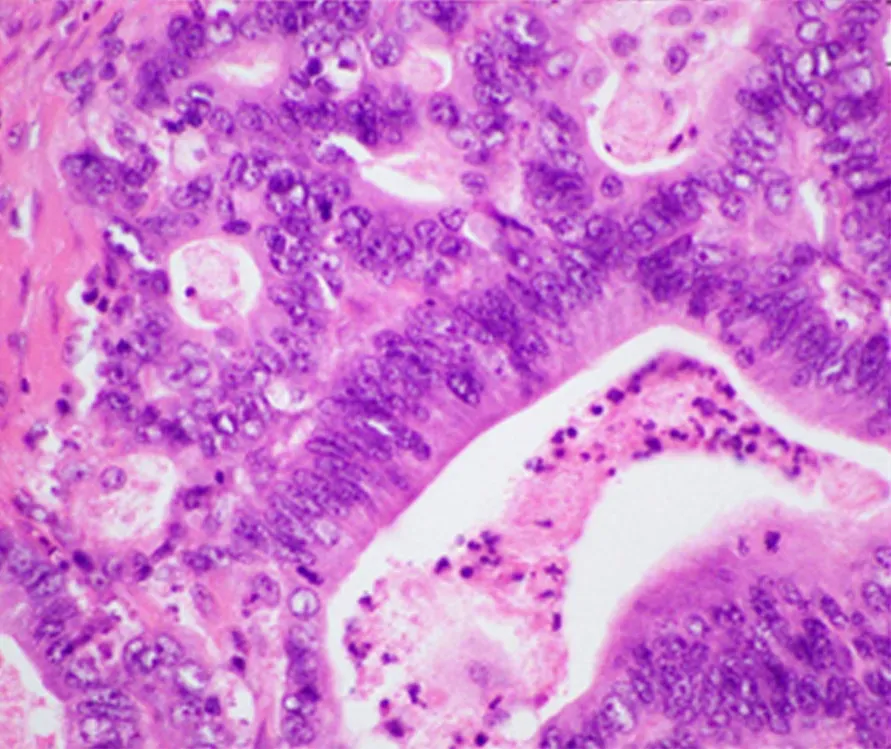
Micrograph: Singh, Tayao, Andrici et al. / PLOS ONE (2016) / Wikimedia Commons · CC BY 4.0. The original image was resized and compressed to illustrate pathology testing. It is not used to assess an individual's condition.
This page was compiled by SinoCareHub and does not claim review by an external medical expert. General information cannot replace individual diagnosis, prescriptions or emergency care. If an acute change occurs, contact a local medical institution without waiting for a platform response.