
On this pageHow is a condition like mine usually treated?
- 1.How is a condition like mine usually treated?
- 2.Which records affect the plan?
- 3.Treatment options and timing
- 4.When to discuss a second opinion or MDT
- 5.New medicines and other treatment options
- 6.Liver medicines, nutrition and follow-up continuity
- 7.International department costs and budgeting
- 8.Which records to organise first
- 9.Common patient questions
- 10.How SinoCareHub can help
- 11.Sources and scope
01
How is a condition like mine usually treated?
First find the situation closest to your existing diagnosis. This section describes common treatment approaches; an individual plan also depends on pathology, tests and treatments already received.
Lesions amenable to local treatment with adequate liver function
Compare resection and ablation. Tumour number, location, vessels and remaining liver function affect choice. A small lesion is neither automatically suitable for needle ablation nor necessarily an indication for resection.
Multiple lesions currently unsuitable for resection
Discuss arterial intervention, possibly combined with ablation or medicines. Explain goals, first reassessment and findings that would prompt a change of plan beforehand.
Vascular tumour thrombus or extrahepatic metastasis
Systemic medicines and suitable local treatment are often discussed. Liver surgeons and other specialties assess whether treatment may allow resection, using specific imaging, liver function and health.
Substantially impaired liver function or very poor physical condition
Tolerance of anticancer treatment may decrease. Manage liver disease, ascites, nutrition and pain together. Balance tumour control and liver injury rather than copying treatment intensity for good liver function.
02
Which records affect the plan?
Hepatocellular carcinoma or another liver lesion?
Primary liver cancer includes different pathological types. Colorectal and other liver metastases still follow the primary cancer. Some hepatocellular cancers can be clinically diagnosed by qualifying typical contrast imaging. Atypical imaging or diagnostic uncertainty leads the hospital to assess other tests or sampling.
- Records to check
- Original contrast-enhanced liver CT/MRI, reports, available pathology and previous cancer diagnoses.
- Questions for your doctor
- Is the diagnosis adequately supported? Is sampling needed, and which choice would it change?
Liver function and remaining liver determine tolerance
Cirrhosis, portal hypertension, ascites and viral hepatitis affect safety. China's CNLC stage combines tumour findings, physical condition and liver function; it cannot be mechanically matched to staging describing tumour extent alone. Surgeons also assess expected remaining liver volume and function.
- Records to check
- Liver and kidney function, coagulation, blood counts, hepatitis tests, available liver function classification, and cirrhosis, ascites or bleeding records.
- Questions for your doctor
- Which treatments does my liver function limit? What needs management first?
Location and vessels may explain the plan better than diameter
Lesions near bile ducts, gastrointestinal structures or major vessels may need different ablation or resection. Portal vein tumour thrombus, lesions across several segments and extrahepatic metastases also affect medicines first, intervention or combinations.
- Records to check
- Complete multiphase contrast imaging, previous comparison images, and intervention and ablation records.
- Questions for your doctor
- Why recommend this method? Which lesions does it address, and how are others managed?
03
Treatment options and timing
These regimens explain treatment components and timing; they are not individual prescriptions. A cycle includes recovery and assessment time and cannot be directly treated as the number of days in hospital or in China.
Liver resection
Resectable lesions with adequate liver reserve and predicted remaining liver, and health sufficient for surgery.
Liver resection
Resectable lesions with adequate liver reserve and predicted remaining liver, and health sufficient for surgery.
- Treatment details
- Remove lesions while preserving usable liver. Laparoscopic, robotic or open approaches depend on location, extent and team assessment. Some patients need other treatment before resectability is reassessed.
- Cycles and timing
- Plan surgical admission, liver recovery, pathology and reassessment separately. China's 2024 guideline lists first post-operative follow-up at 1 - 2 months. Individual recovery and travel need separate assessment.
Long-term recurrence and underlying liver disease monitoring remain necessary. Quotes should specify resection extent, anaesthesia, pathology, admission and possible additional treatment, not only the operative procedure.
Radiofrequency or microwave ablation
Some assessed early hepatocellular cancers; number, location, liver function and safe margins affect choice.
Radiofrequency or microwave ablation
Some assessed early hepatocellular cancers; number, location, liver function and safe margins affect choice.
- Treatment details
- Image-guided local heat or other techniques treat the tumour. China's 2024 guideline examples include one lesion no larger than 5 cm, or 2 - 3 lesions with a maximum of 3 cm, with additional requirements including no relevant invasion or metastasis and appropriate liver function.
- Cycles and timing
- Time pre-procedure assessment, ablation, observation and imaging confirmation separately. Reassessment establishes whether treatment was complete. Residual or location-limited lesions may need additional or combined treatment.
A minimally invasive label does not necessarily mean lower risk or greater suitability than surgery. Near bile ducts and gastrointestinal structures, discuss safety, alternatives and the possibility of retreatment especially carefully.
Transarterial chemoembolisation (TACE)
Appropriate disease and liver function, with vessel conditions and contraindications assessed by an interventional team.
Transarterial chemoembolisation (TACE)
Appropriate disease and liver function, with vessel conditions and contraindications assessed by an interventional team.
- Treatment details
- A catheter delivers medicines and embolic material to tumour-supplying arteries. This is not systemic intravenous chemotherapy or treatment automatically completed after fixed sessions. It may connect with ablation, medicines, radiation or later surgery.
- Cycles and timing
- China's 2024 guideline generally recommends contrast CT/MRI and laboratory reassessment 4 - 6 weeks after first TACE. Further treatment and intervals depend on response, liver function and fitness, not a mandatory monthly package.
Manage fever, pain and nausea according to hospital instructions and monitor liver and kidney injury. Include materials, medicines, admission and every reassessment in the budget, updating it when session counts change.
Immune, targeted or other systemic medicines
Appropriate unresectable or metastatic hepatocellular cancer, with liver function, previous treatment and indications checked.
Immune, targeted or other systemic medicines
Appropriate unresectable or metastatic hepatocellular cancer, with liver function, previous treatment and indications checked.
- Treatment details
- China's 2024 guideline examples include immune medicines with antiangiogenic medicines and regimens such as lenvatinib. Combinations differ in bleeding risk, monitoring and conditions. New medicine names are not personal prescriptions.
- Cycles and timing
- Oral medicines may continue; infusion visits follow specific intervals. Reassessment determines continuation or adjustment. Budget to the current phase and next assessment without inventing a universal end date.
Medicines, blood tests, blood pressure monitoring and underlying liver treatment need continuity. Provide gastrointestinal bleeding, varices, immune disease or transplant history beforehand for assessment.
Radiotherapy and other local treatment
Assessed liver lesions, vascular tumour thrombi or selected metastases, sometimes for symptom control.
Radiotherapy and other local treatment
Assessed liver lesions, vascular tumour thrombi or selected metastases, sometimes for symptom control.
- Treatment details
- Discuss stereotactic or other radiotherapy. Planning considers normal liver, gastrointestinal tissues and prior radiation. Proton or other equipment names alone do not establish suitability.
- Cycles and timing
- Calculate simulation, respiratory motion assessment, planning and irradiation separately. Obtain actual sessions and visits from radiotherapy staff. Liver function and combinations may change arrangements.
Check the target and expected effect. Local control does not mean every lesion is treated. Liver transplantation is a different, strictly assessed pathway, not care the platform can promise to book directly.
04
When to discuss a second opinion or MDT
How to compare feasible resection and ablation
Ask surgery and ablation teams to explain resection extent, liver function loss, local control, possible retreatment and recovery burden together. List recovery time and subsequent treatment for each option before comparing budgets.
After repeated TACE, when should methods change?
Submit every intervention record, before-and-after contrast imaging and liver function changes. Ask the MDT about continued benefit, residual or new lesions, and switching or combining treatment. AFP decline alone is insufficient.
Could shrinkage after medicines allow surgery?
This requires reassessment after conversion treatment. Review all lesions, vessel relationships and remaining liver again, clarifying medicine cessation, surgical timing and later care. Shrinkage alone cannot guarantee resection.
05
New medicines and other treatment options
HAIC, TACE and radioembolisation differ
Hepatic arterial infusion chemotherapy (HAIC) focuses on arterial medicine delivery; TACE also embolises; radioembolisation involves nuclear medicine and radioactive materials. Eligibility, preparation, admission and follow-up differ. Ask for specific names rather than one 'intervention' quote.
Check conditions for combinations and trials first
New medicines or combinations require current Chinese indication, liver function, prior medicine and monitoring checks. For trials, ask which items are covered, whether screening and routine care are self-pay, and arrangements after non-enrolment.
06
Liver medicines, nutrition and follow-up continuity
Manage anticancer and liver treatment together
With underlying hepatitis B or other liver disease, submit current medicines and viral results, and obtain antiviral and liver monitoring plans. Do not stop existing medicines after intervention or surgery yourself. Tell doctors about supplements and herbal medicines too.
Ascites, appetite and pain belong in the plan
Record weight, intake, distension, fitness and pain changes, involving liver, nutrition and supportive teams when needed. Adapt diet and activity to health rather than copying strict food restrictions or supplementation from others.
Reassessment imaging must allow comparison
Keep original images, intervention or ablation records, medicine names and dates and liver function changes. Establish who performs and receives reassessment before returning home. Vomiting blood, black stools, sudden severe abdominal pain or altered consciousness needs prompt care, without waiting for the platform.
07
International department costs and budgeting
This page uses self-pay pricing for international departments / international medical services at Chinese hospitals. A verifiable published total price for a full course of care for Liver cancer has not yet been obtained. Ordinary outpatient, standard ward or insurance settlement amounts cannot be used as substitutes.
Available international department itemised charges
The following charges come from the International Medical Center at The University of Hong Kong-Shenzhen Hospital, published on 2025-06-04, using the amounts converted on 2026-10-12. They are references for itemizing a budget, do not represent prices at all hospitals and are not a package for Liver cancer.
| Item and scope | Reference amount (USD) |
|---|---|
| Specialist outpatient consultationPer consultation, with fees varying by doctor category. Tests, medicines and treatment are charged separately. | USD 90 - 300 |
| Adult inpatient consultationDaily consultation charge only. Beds, surgery, medicines and other charges are separate. | USD 150 - 220 |
| Single standard room bedPer bed per day, corresponding to Standard Room 1 and Standard Room 2 in the published schedule. Inpatient consultations and treatment are excluded. | USD 180 - 220 |
Converted using the reference exchange rate on 2026-10-12: USD 1 = CNY 6.6928, rounded to USD 10. Dollar amounts are for budgeting only. The hospital bills in its actual settlement currency; exchange rates and payment fees are separate.
Quote resection and ablation by actual extent
International department estimates should include anaesthesia, surgical or ablation materials, pathology, rooms and necessary reassessment. Multiple lesions, approaches or additional ablation can change costs. One procedure item is insufficient for comparison.
Quote intervention by session and assessment point
List angiography, catheters and embolic materials, medicines, admission, laboratories and contrast imaging. Estimate the first phase, then update later counts and budgets after reassessment. Fixed session counts are not necessarily required treatment.
Separate long-term medicines and underlying liver care
Calculate names, manufacturers, strengths, quantities and the current phase, plus monitoring, antivirals and supportive care. Explain platform coordination, interpreting, accompaniment and travel separately from hospital quotes.
SinoCareHub helps obtain an itemised estimate from the prospective receiving international department, specifying the plan, date, validity period, included items and separately charged items. Hospital medical charges, platform coordination fees and third-party costs such as transport and accommodation are explained separately. The budget is updated if the treatment plan changes.
08
Which records to organise first
- Complete original contrast liver CT/MRI and reports from different dates for comparison.
- Available pathology, tumour markers, liver and kidney function, coagulation, blood counts and hepatitis results.
- Surgery, every TACE or HAIC, ablation, radiotherapy and each medication line, with responses.
- Cirrhosis, ascites, gastrointestinal bleeding or transplant history, current medicines and major adverse reactions.
First submit the records you already have and identify anything missing. The prospective receiving hospital decides whether additional tests or borrowing slides or paraffin blocks are needed for this assessment.
09
Common patient questions
Does falling AFP mean every lesion has been treated?
No. Markers are assessed with contrast imaging, liver function and health changes. They cannot replace assessment of residual or new lesions.
Are more TACE sessions always required after the first?
There is no fixed count. Reassess as instructed, then evaluate viable disease and liver function. Expected counts are estimates, not medical justification for prepaying a full course.
Should colorectal liver metastases use liver cancer medicines?
Do not apply them directly. This remains metastatic colorectal cancer. Plan using the primary cancer, molecular results and metastasis treatment feasibility, with joint colorectal and liver team assessment if requested.
Can transplantation be booked directly through the platform?
Transplantation is not an ordinary surgery booking. The hospital checks diagnosis, medical criteria and acceptance. SinoCareHub can help transfer records and contact institutions, but cannot promise eligibility, a donor or waiting time.
10
How SinoCareHub can help
SinoCareHub helps contact hospitals, organise records and coordinate care arrangements. The hospital is responsible for diagnosis and treatment decisions. The specific coordination services and fees are explained to you beforehand.
Organise imaging and liver function changes
SinoCareHub helps organise original images across dates, every local treatment and medicines, noting liver history and missing records, and follows hospital imaging, pathology and translation acceptance requirements.
Request a liver cancer MDT or second opinion
Contact the intended hospital about resection, ablation, intervention or conversion treatment, coordinate relevant specialties and follow format, dates, charges and written opinions. Hospitals make medical judgements.
Follow phased budgets and scheduling
Connect outpatient visits, procedures and reassessment according to the hospital plan and obtain itemised estimates. When sessions or combinations change, follow new visits, medical budgets and platform service scope.
Connect on-site communication and follow-up between countries
Coordinate interpreting, accompaniment and travel as agreed, helping record explanations. Follow intervention or surgical summaries, discharge medicines and reassessment requirements and organise records for the local doctor.
Submit an inquiry about care for Liver cancer
Describe your existing diagnosis, previous treatments and the question you want to address. You can submit an inquiry even if your records are incomplete. We will contact you to follow up on hospital assessment and care arrangements.
11
Sources and scope
Information checked: 2026-10-13. Treatment information identifies the guideline version; the hospital checks new drug indications and availability against current information. Costs use published international department itemised charges with clearly stated dates.
View medical references and image sources
- National Health Commission · Primary liver cancer diagnosis and treatment guideline (2024) ↗ (opens in a new window)National Health Commission of China · 2024
- NCI · Liver Cancer Treatment ↗ (opens in a new window)National Cancer Institute · 2025-05-08
- The University of Hong Kong-Shenzhen Hospital · International Medical Center consultation and bed charges (published 2025-06-04) ↗ (opens in a new window)The University of Hong Kong-Shenzhen Hospital
- Investing.com · USD/CNY historical rates (conversion uses 6.6928 on 2026-10-12) ↗ (opens in a new window)Investing.com
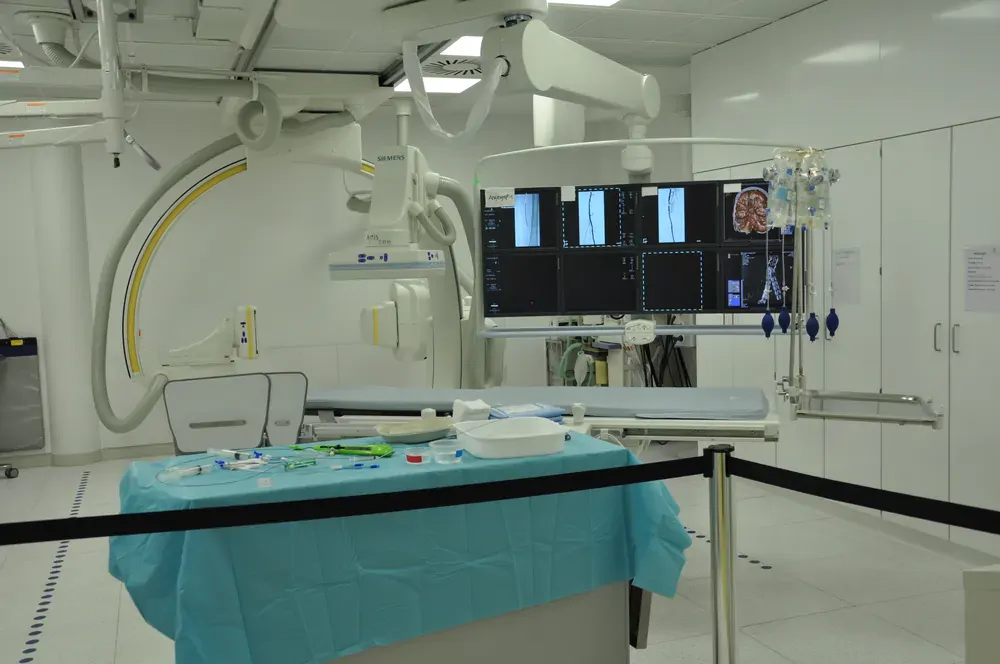
Photography: Andreas Praefcke / Wikimedia Commons · Public Domain. Compressed and resized to illustrate a testing environment. It does not depict a SinoCareHub service location or the equipment at a prospective receiving hospital.
This page was compiled by SinoCareHub and does not claim review by an external medical expert. General information cannot replace individual diagnosis, prescriptions or emergency care. If an acute change occurs, contact a local medical institution without waiting for a platform response.