
On this pageHow is a condition like mine usually treated?
- 1.How is a condition like mine usually treated?
- 2.Which records affect the plan?
- 3.Treatment options and timing
- 4.When to discuss a second opinion or MDT
- 5.New medicines and other treatment options
- 6.Infections, transfusions, lines and long-term medicines
- 7.International department costs and budgeting
- 8.Which records to organise first
- 9.Common patient questions
- 10.How SinoCareHub can help
- 11.Sources and scope
01
How is a condition like mine usually treated?
First find the situation closest to your existing diagnosis. This section describes common treatment approaches; an individual plan also depends on pathology, tests and treatments already received.
Newly diagnosed acute leukaemia
Confirm type, genetics and risk while managing infections or bleeding. Suspected acute leukaemia must not wait for China travel before local assessment. Teams assess stability and transfer conditions first.
Acute leukaemia after remission or with relapse/refractory disease
Remission often needs consolidation or subsequent care. Relapse and refractory disease need renewed medicine, immune, transplant and research comparison. Normal blood counts do not permit stopping treatment.
Chronic myeloid leukaemia (CML)
Often treated long-term with BCR::ABL1-related tyrosine kinase inhibitors (TKIs) and molecular monitoring. Chronic and progressed phases differ. Normal white cells alone are insufficient.
Chronic lymphocytic leukaemia (CLL)
Some without treatment criteria can be observed. When needed, choices use risk, molecular results, other conditions and medicines. High lymphocytes alone do not determine immediate use of one medicine.
02
Which records affect the plan?
Marrow, flow and genetics establish type together
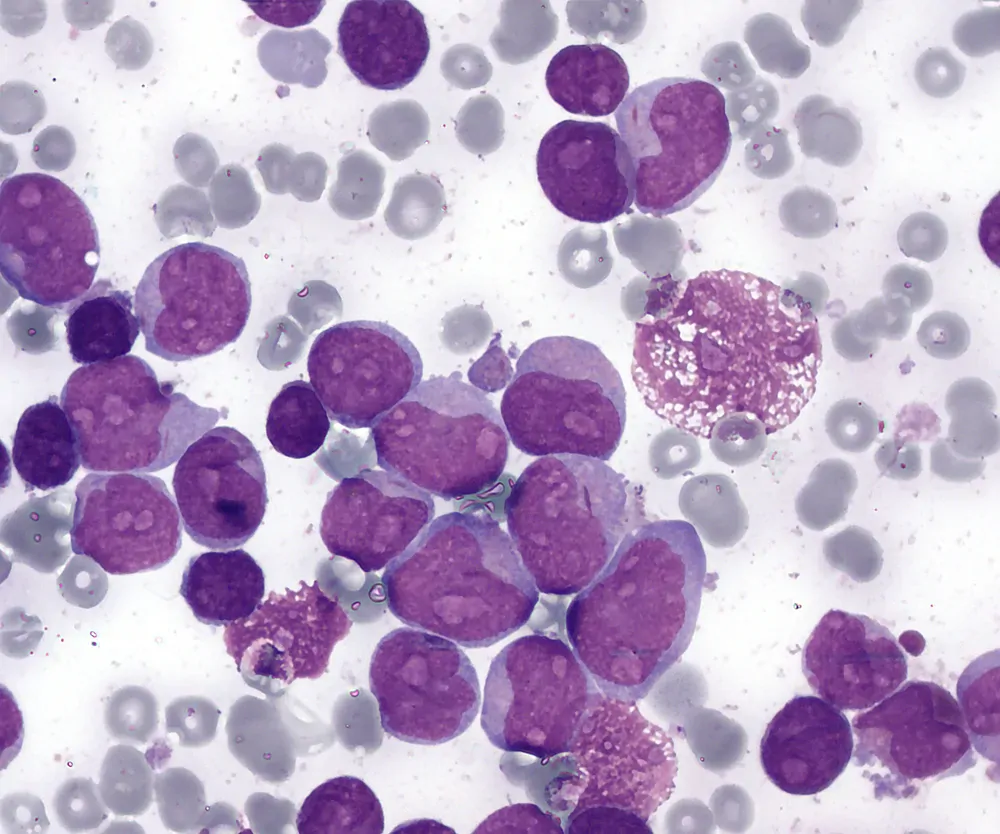
Blood counts identify concerns, but classification usually needs morphology, flow, chromosomes and molecular results. Acute promyelocytic leukaemia (APL) has different care; AML is not one uniform disease.
- Records to check
- Full dated marrow morphology and biopsy, flow, chromosome/FISH and molecular reports.
- Questions for your doctor
- Which type and risk group are confirmed? Which missing findings could change care?
Remission and measurable residual disease differ
Measurable residual disease (MRD) may remain after morphological remission. Specify method, sensitivity and time. CML uses relevant molecular response. Negative findings across different tests are not one rule for stopping medicines.
- Records to check
- Before-and-after marrow, full MRD, or serial CML BCR::ABL1 with methods.
- Questions for your doctor
- Which response is achieved? Does it change consolidation, transplantation or monitoring?
What establishes treatment tolerance?
Beyond age, consider performance, heart, liver, kidneys, infections, prior medicines and goals. Intensive, lower-intensity and supportive care differ in risk; stronger is not necessarily more suitable.
- Records to check
- Infection and organ assessment, transfusion and admissions, current medicines and important effects.
- Questions for your doctor
- What intensity can I tolerate? How will infection, blood count decline and delays be managed?
Transplant assessment includes patient and donor
Transplant decisions use type, risk, response and health. A relative is not automatically a suitable donor. HLA, infection, donor assessment and local follow-up may affect arrangements.
- Records to check
- Previous matching and transplant records, candidate donors, disease response and team summary.
- Questions for your doctor
- Which risk would transplant address? What conditions remain, and how will home monitoring continue?
03
Treatment options and timing
These regimens explain treatment components and timing; they are not individual prescriptions. A cycle includes recovery and assessment time and cannot be directly treated as the number of days in hospital or in China.
AML induction and post-remission treatment
Plan by subtype, risk and health; all AML cannot use one intensity.
AML induction and post-remission treatment
Plan by subtype, risk and health; all AML cannot use one intensity.
- Treatment details
- Treatment usually separates induction and consolidation. Discuss cytarabine-containing chemotherapy, suitable lower-intensity combinations or molecular targeting. APL may use retinoic acid and arsenic regimens and needs timely haematology care.
- Cycles and timing
- After dosing, wait for blood recovery, manage infection and assess marrow. Admission is not merely infusion days. Response and risk determine consolidation, transplantation or maintenance. One induction cannot promise complete treatment.
Transfusion, anti-infective care and close monitoring are actual treatment. Fever, significant bleeding or acute respiratory changes need timely care, not waits for routine enquiry or referral.
Phased ALL care and central nervous system prophylaxis
Plan by B/T type, genetics, age and response.
Phased ALL care and central nervous system prophylaxis
Plan by B/T type, genetics, age and response.
- Treatment details
- May include induction, ongoing post-remission care and central nervous system prevention. Some types need targeted or immune medicines. Intrathecal administration delivers drugs into a cerebrospinal fluid space, not an ordinary vein.
- Cycles and timing
- Medicines, admissions and reassessment differ by phase and may continue for a long time. List marrow, MRD, lumbar punctures and CNS arrangements separately. One cycle is not a complete plan.
Monitor steroids, infections, glucose and other drug risks. Ph positivity affects choices, but medicines and transplant decisions still use the complete condition.
Long-term TKI treatment for CML
Choice by phase, molecular findings, other diseases and prior response.
Long-term TKI treatment for CML
Choice by phase, molecular findings, other diseases and prior response.
- Treatment details
- China's 2022 guideline includes imatinib and response- or tolerance-based adjustment. Check missed doses, interactions and supply. Normal counts cannot replace molecular response.
- Cycles and timing
- Usually long-term oral treatment with regular tests. China's 2022 guideline includes assessment at 3, 6 and 12 months after starting. Teams set individual frequency. Switching or attempting cessation needs new monitoring.
Treatment-free remission is only for some strictly eligible patients with reliable prompt molecular monitoring. One undetectable result cannot justify stopping yourself. Do not interrupt supply for travel.
CLL observation and medicines
Establish treatment indications first, then consider TP53, other illnesses and previous medicines.
CLL observation and medicines
Establish treatment indications first, then consider TP53, other illnesses and previous medicines.
- Treatment details
- Observe when criteria are unmet; otherwise discuss suitable targeting, antibodies and other regimens. Continuous medicines and fixed-duration combinations differ. Quotes need specific drugs and stopping criteria.
- Cycles and timing
- China's 2022 guideline includes 2 - 6-month follow-up for those without treatment indications. Once treated, monitoring, escalation or administration follows each medicine. Observation intervals cannot simply continue.
Assess infection, bleeding, cardiovascular and tumour lysis risks by medicine. New rapid symptoms or masses need review. Lymphocyte counts alone cannot justify adjusting medicines.
Allogeneic haematopoietic stem cell transplantation
Some specialist-assessed patients with potential benefit, suitable donors and health.
Allogeneic haematopoietic stem cell transplantation
Some specialist-assessed patients with potential benefit, suitable donors and health.
- Treatment details
- Assess patient and donor, condition and infuse cells, then monitor engraftment, infection and graft-versus-host disease. Sources and protocols differ. Matching alone cannot promise transplantation.
- Cycles and timing
- Preparation, admission and later monitoring are connected but different phases. Time near the center and return depend on recovery and transplant rules. Discharge is not completed follow-up.
Budget long-term medicines, infection prevention and donor arrangements. Teams decide transplantation and donors. Platform coordination guarantees neither matching, beds nor outcomes.
Immune, targeted and research options for relapse/refractory disease
Assessment by leukaemia type, targets, prior care and current response.
Immune, targeted and research options for relapse/refractory disease
Assessment by leukaemia type, targets, prior care and current response.
- Treatment details
- Some B-cell ALL may discuss immune medicines or CAR-T; some molecular findings correspond to targeting. These do not extend to all AML or chronic disease. Check Chinese indications and center eligibility.
- Cycles and timing
- Separate screening, waiting care, dosing or collection and manufacture, infusion observation and reassessment. Teams decide bridging, transplant connection and maintenance. One drug or infusion day cannot represent the whole pathway.
Regimens may carry infection, cytokine or neurological risks requiring medical monitoring. Explain later treatment and costs if enrolment fails, manufacture changes or disease evolves.
04
When to discuss a second opinion or MDT
Different subtype or risk: review original reports
Submit marrow, flow, chromosomes and molecular records together, identifying sampling before or after care. Keep full reports and ask the risk basis and how review changes next steps.
Is transplantation still needed in remission?
Compare relapse and transplant risks using type, risk, MRD, induction response, donors and health. Normal counts cannot justify refusing subsequent care; not every remission patient needs transplant.
Considering changing or stopping chronic medicines
Provide serial molecular or clinical results, missed doses, side effects and other medicines. Distinguish resistance, intolerance and a wish to stop. Ask whether evidence and monitoring work across countries.
05
New medicines and other treatment options
One effective new medicine does not suit all leukaemias
Check target, phenotype, treatment lines and Chinese indication. Provide full tests and history; ask its purpose, combinations and transplant connection.
Treatment and care continue while waiting for studies
Screening, center review and donor or cell preparation can take time. Ask about control, infections and monitoring while waiting, listing study-covered and self-pay items. Do not stop necessary care for enrolment yourself.
06
Infections, transfusions, lines and long-term medicines
Have an immediate plan for fever and bleeding
Low blood counts can make infection and bleeding urgent. Obtain symptom thresholds, tests and contacts and know where local assessment is available. Platform forms are not emergency channels.
Hand over lines, transfusions and preventive medicines separately
Keep line, transfusion reaction, infection and prevention records; confirm tests, care and supply. Teams decide pauses or adjustment. Leaving a ward does not justify stopping medicines yourself.
Fertility, activity and return depend on phase
Raise fertility before treatment. Follow team activity, diet, vaccination and exposure instructions after intensive treatment or transplant. Frequent reassessment may continue after discharge. Arrange local support before international travel.
07
International department costs and budgeting
This page uses self-pay pricing for international departments / international medical services at Chinese hospitals. A verifiable published total price for a full course of care for Leukaemia has not yet been obtained. Ordinary outpatient, standard ward or insurance settlement amounts cannot be used as substitutes.
Available international department itemised charges
The following charges come from the International Medical Center at The University of Hong Kong-Shenzhen Hospital, published on 2025-06-04, using the amounts converted on 2026-10-12. They are references for itemizing a budget, do not represent prices at all hospitals and are not a package for Leukaemia.
| Item and scope | Reference amount (USD) |
|---|---|
| Specialist outpatient consultationPer consultation, with fees varying by doctor category. Tests, medicines and treatment are charged separately. | USD 90 - 300 |
| Adult inpatient consultationDaily consultation charge only. Beds, surgery, medicines and other charges are separate. | USD 150 - 220 |
| Single standard room bedPer bed per day, corresponding to Standard Room 1 and Standard Room 2 in the published schedule. Inpatient consultations and treatment are excluded. | USD 180 - 220 |
Converted using the reference exchange rate on 2026-10-12: USD 1 = CNY 6.6928, rounded to USD 10. Dollar amounts are for budgeting only. The hospital bills in its actual settlement currency; exchange rates and payment fees are separate.
Acute treatment budgets include blood recovery
Beyond medicines, estimate admission, lines, marrow tests, transfusions, anti-infectives and possible ICU. Recovery and complications change costs. Quotes need phases and additions, not dosing days alone.
Compare chronic monthly medicines and monitoring
Use actual names, manufacturers, strengths and quantities, listing molecular tests, visits and monitoring separately. Fixed courses and continuous oral medicines calculate differently; explain home supply and payment currency.
Break transplantation or cells into the whole pathway
Quote patient and donor assessments, collection and manufacture, conditioning, infusion, isolation admission, and post-discharge medicines and monitoring separately. State infection, rejection, adverse reaction, postponement and cancellation boundaries. Coordination, accommodation and accompaniment are additional.
SinoCareHub helps obtain an itemised estimate from the prospective receiving international department, specifying the plan, date, validity period, included items and separately charged items. Hospital medical charges, platform coordination fees and third-party costs such as transport and accommodation are explained separately. The budget is updated if the treatment plan changes.
08
Which records to organise first
- Full marrow, flow, chromosomes/FISH and molecular findings with dates and methods.
- Before-and-after counts, marrow and serial MRD or molecular monitoring, not only the latest normal count.
- Each phase's medicines, cycles, dates, remission and progression, and transplant or cell summaries.
- Infections, transfusions, lines, organs, all medicines and completed matching and donor results.
First submit the records you already have and identify anything missing. The prospective receiving hospital decides whether additional tests or borrowing slides or paraffin blocks are needed for this assessment.
09
Common patient questions
Is leukaemia staged Ⅰ to Ⅳ?
Not universally. Acute types often use diagnosis, remission, refractory or relapse and risk. CML and CLL have separate staging or assessment. Specify full type and current phase first.
Why test marrow or molecules when blood counts are normal?
Counts, residual disease and molecular response answer different questions. Doctors schedule by type and phase. Normal counts cannot stop all monitoring or care.
Does remission mean cure?
Remission describes current response, not automatic absence of relapse risk. Type, risk and tests determine consolidation, medicines, transplant or monitoring.
Can siblings allow immediate transplantation?
Patient eligibility, matching, donor health and center preparation still need assessment; other sources may be discussed. Relatedness cannot guarantee a fixed date or result.
10
How SinoCareHub can help
SinoCareHub helps contact hospitals, organise records and coordinate care arrangements. The hospital is responsible for diagnosis and treatment decisions. The specific coordination services and fees are explained to you beforehand.
Organise complete records by type and phase
SinoCareHub helps collect marrow, flow, molecules and timelines, notes infection, transfusion and medicines, and follows review, specimens and translation. Local teams manage acute situations first.
Arrange haematology and transplant second opinions
Contact hospitals about subtype, response, transplantation or changes, coordinating specialist or multi-team assessment and following departments, format, dates, charges and written conclusions.
Connect admissions, donor records and itemised costs
Coordinate assessments, admission or collection and records by center plans, checking dosing, recovery, transfusion, anti-infectives and follow-up fees. Separate medical, platform and third parties and follow changes.
Record discharge medicines and cross-border monitoring
Arrange language or accompaniment as agreed, helping record lines, prevention, reassessment and abnormal-symptom care. Follow treatment and transplant summaries and record handover. Teams provide medical monitoring.
Submit an inquiry about care for Leukaemia
Describe your existing diagnosis, previous treatments and the question you want to address. You can submit an inquiry even if your records are incomplete. We will contact you to follow up on hospital assessment and care arrangements.
11
Sources and scope
Information checked: 2026-10-13. Treatment information identifies the guideline version; the hospital checks new drug indications and availability against current information. Costs use published international department itemised charges with clearly stated dates.
View medical references and image sources
- NCI · Stem Cell Transplants in Cancer Treatment ↗ (opens in a new window)National Cancer Institute · 2023-10-05
- NCI · CAR T Cells: Engineering Immune Cells to Treat Cancer ↗ (opens in a new window)National Cancer Institute · 2025-02-26
- NCI · Minimal Residual Disease ↗ (opens in a new window)National Cancer Institute
- National Health Commission · Chronic myeloid leukaemia diagnosis and treatment guideline (2022) ↗ (opens in a new window)National Health Commission / Cancer Hospital, Chinese Academy of Medical Sciences · 2022
- National Health Commission · Chronic lymphocytic leukaemia/small lymphocytic lymphoma diagnosis and treatment guideline (2022) ↗ (opens in a new window)National Health Commission / Cancer Hospital, Chinese Academy of Medical Sciences · 2022
- NCI · Adult Acute Myeloid Leukemia Treatment ↗ (opens in a new window)National Cancer Institute
- NCI · Adult Acute Lymphoblastic Leukemia Treatment ↗ (opens in a new window)National Cancer Institute
- The University of Hong Kong-Shenzhen Hospital · International Medical Center consultation and bed charges (published 2025-06-04) ↗ (opens in a new window)The University of Hong Kong-Shenzhen Hospital
- Investing.com · USD/CNY historical rates (conversion uses 6.6928 on 2026-10-12) ↗ (opens in a new window)Investing.com
- NCI · Clinical trial participation, costs and safety ↗ (opens in a new window)National Cancer Institute
Micrograph: Makysm / Wikimedia Commons · CC0 1.0. The original image was resized and compressed to illustrate pathology testing. It is not used to assess an individual's condition.
This page was compiled by SinoCareHub and does not claim review by an external medical expert. General information cannot replace individual diagnosis, prescriptions or emergency care. If an acute change occurs, contact a local medical institution without waiting for a platform response.