
Gastric cancer treatment in China: endoscopy, gastrectomy, medicines and eating recovery
Some early gastric cancers can be removed endoscopically. If surgery is needed, ask how much stomach will be removed, whether chemotherapy comes first, and how to eat afterwards. Metastatic disease mainly calls for discussion of medicines and symptom management. This page covers gastric adenocarcinoma. Gastric lymphoma, gastrointestinal stromal tumours and other types require their own treatment discussion.
On this pageHow is a condition like mine usually treated?
- 1.How is a condition like mine usually treated?
- 2.Which records affect the plan?
- 3.Treatment options and timing
- 4.When to discuss a second opinion or MDT
- 5.New medicines and other treatment options
- 6.Eating and maintaining weight after gastrectomy
- 7.Which records to organise first
- 8.Common patient questions
- 9.How SinoCareHub can help
- 10.SinoCareHub service prices
- 11.Sources and scope
How is a condition like mine usually treated?
First find the situation closest to your existing diagnosis. This section describes common treatment approaches; an individual plan also depends on pathology, tests and treatments already received.
Early superficial lesions
Some eligible lesions can be removed endoscopically. Adequacy depends on depth, differentiation, ulceration, margins and nodal risk. Not every early gastric cancer is suitable.
Resectable disease without distant metastases
Surgery is important; some patients have chemotherapy first. Additional post-operative medicines depend on final pathology and pre-operative treatment.
Locally advanced disease currently difficult to resect completely
Discuss medicines or other conversion treatment before reassessing surgery. Shrinkage does not automatically establish resectability; reassess local extent, nodes and distant disease.
Peritoneal, liver or other metastases or recurrence
Systemic medicines often predominate alongside bleeding, obstruction, ascites, pain and nutrition management. Local procedures may relieve symptoms rather than provide radical surgery.
Which records affect the plan?
Endoscopic pathology and imaging answer different questions
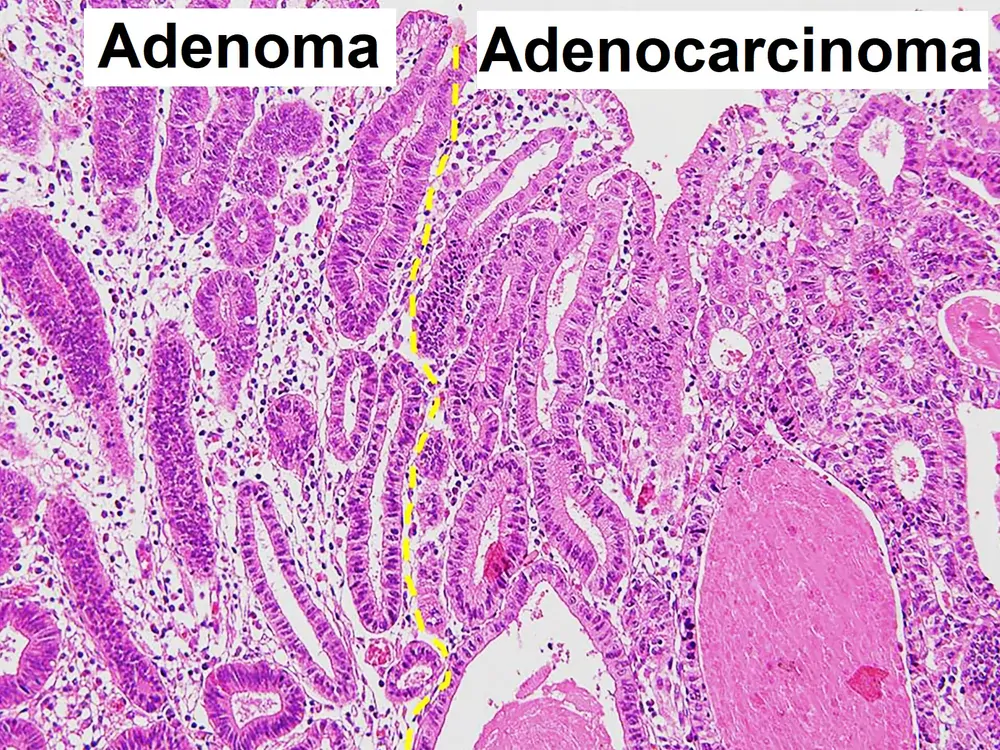
Biopsy establishes tissue type; imaging assesses extent. Endoscopic size alone cannot stage disease. Gastro-oesophageal junction lesions need precise central location, which may affect surgery and pathways.
- Records to check
- Gastroscopy reports and images, complete pathology, original contrast CT or other imaging, and junction lesion location.
- Questions for your doctor
- How deep is the lesion? Are nodes or distant sites involved? Which missing evidence could change the plan?
Medicine choices need complete test results
HER2, mismatch repair (MMR), microsatellite instability (MSI), PD-L1 and other findings may affect medicines. HER2 immunohistochemistry 2+ usually requires further testing. Different positive markers do not establish identical eligibility.
- Records to check
- Methods, scores, full findings and sample dates and sources, with completed molecular reports.
- Questions for your doctor
- Which tests relate to this treatment line? Is the old sample sufficient, and what would additional tests change?
Food intake and weight changes also affect treatment
Recent weight loss, frequent vomiting or liquid-only intake affects surgical and medication tolerance. Explain actual intake, black stools and nutrition support, not only poor appetite.
- Records to check
- Weight trends, eating and vomiting, blood counts, nutrition assessment and all current nutrition and medicines.
- Questions for your doctor
- Must obstruction, bleeding or malnutrition be addressed first? How will they be monitored during treatment?
Treatment options and timing
These regimens explain treatment components and timing; they are not individual prescriptions. A cycle includes recovery and assessment time and cannot be directly treated as the number of days in hospital or in China.
Endoscopic resection: EMR or ESD
Some assessed early lesions with low nodal metastasis risk.
Endoscopic resection: EMR or ESD
Some assessed early lesions with low nodal metastasis risk.
- Treatment details
- Endoscopic removal aims to preserve the stomach. Full specimens still need depth, margin and lymphovascular assessment. Additional surgery may be needed if curative resection criteria are unmet.
- Cycles and timing
- Arrange sampling assessment, procedure, observation, full pathology and reassessment separately. No admission duration fits every lesion. Do not base return travel on the time for one gastroscopy.
Ask about bleeding, perforation, possible additional surgery and where follow-up will take place. Endoscopic removal still requires monitoring; preserving the stomach does not mean stopping checks.
Partial or total gastrectomy with lymph node dissection
Patients assessed as completely resectable and fit for surgery.
Partial or total gastrectomy with lymph node dissection
Patients assessed as completely resectable and fit for surgery.
- Treatment details
- Extent primarily depends on location, invasion and margins: distal, proximal or total gastrectomy may be used. Laparoscopy, robots and open surgery describe approach, not extent or reconstruction.
- Cycles and timing
- Time preparation, admission, eating recovery, pathology and additional treatment separately. For adjuvant chemotherapy, China's 2022 guideline suggests starting after physical and eating recovery and complication improvement, generally about 4 weeks after surgery.
Ask how food passes afterwards, management of reflux or dumping symptoms and anastomotic problems. Allow nutrition and possible extended admission costs in the total budget.
Perioperative or post-operative chemotherapy
Pre-operative treatment for some locally advanced cases or pathology-eligible adjuvant treatment.
Perioperative or post-operative chemotherapy
Pre-operative treatment for some locally advanced cases or pathology-eligible adjuvant treatment.
- Treatment details
- Chinese guideline examples include oxaliplatin with capecitabine (CapeOX/XELOX) or S-1 (SOX). Clarify why medicines come first, when surgery is assessed and whether they continue afterwards.
- Cycles and timing
- The 2022 guideline includes 21-day CapeOX and SOX cycles; some combined adjuvant courses finish within about 6 months. Total cycles depend on regimen, previous pre-operative treatment and tolerance. 6 months is not all inpatient time.
Numbness, diarrhoea, blood count changes and inadequate intake may alter arrangements. Oral medicines still need reassessment. Do not adjust doses or ignore weight changes because there is no infusion.
Chemotherapy, targeted and immune treatment after metastasis or recurrence
Choices by health, previous medicines and tests, as combinations or single agents.
Chemotherapy, targeted and immune treatment after metastasis or recurrence
Choices by health, previous medicines and tests, as combinations or single agents.
- Treatment details
- Some HER2-positive advanced cases may discuss trastuzumab plus chemotherapy. Immune options need relevant markers and current indications. Previous medicines and reasons for stopping affect later choices.
- Cycles and timing
- Intervals vary. Schedule administration and reassessment by the hospital's written cycles. Maintenance or adjustment may follow initial treatment. A few cycles cannot be assumed to complete everything.
Compare adverse reactions, quality of life and future supply alongside benefits. Overseas marketing does not establish the same Chinese hospital indications.
Management of bleeding, obstruction and ascites
When these occur, management may precede or accompany anticancer treatment.
Management of bleeding, obstruction and ascites
When these occur, management may precede or accompany anticancer treatment.
- Treatment details
- Teams may assess endoscopic haemostasis, stents, bypass surgery, radiation, drainage or nutrition support. These may improve eating and symptoms without removing every tumour.
- Cycles and timing
- Timing follows urgency and recovery. Stents and drains still need care, reassessment and possible repeat procedures. One procedure quote cannot represent long-term care.
Vomiting blood, black stools with substantial dizziness or weakness, or persistent vomiting preventing drinking requires prompt local care. Do not wait for China travel or a platform response.
When to discuss a second opinion or MDT
Endoscopy or surgery: review resection risk first
Submit gastroscopy images, pathology and staging for endoscopy, pathology and surgical teams to explain eligibility. After ESD, assess whether the full specimen meets curative resection criteria, not merely procedural success.
Chemotherapy first or immediate surgery?
Give the MDT clinical stage, nutrition, bleeding and obstruction. Ask the rationale for each order, reassessment points and findings changing the plan.
Local surgery or peritoneal treatment after peritoneal metastasis
Ask about goals, eligibility, evidence and alternatives. Heated intraperitoneal treatment and similar approaches cannot be extended from individual cases to everyone. Discuss systemic disease, nutrition and daily life together.
New medicines and other treatment options
Ask whether new target testing changes the current plan
Beyond HER2 and MMR/MSI, teams may propose other targets. Ask for the corresponding medicine or study, sample requirements and indications before deciding additional testing.
Explain trial screening and costs separately
Studies check pathology, treatment lines, organ function and prior medicines. Routine care, travel, accommodation and further treatment may still cost money. Obtain a written scope; free study medicines are not a full budget.
Eating and maintaining weight after gastrectomy
Discharge diet needs an individual plan
Partial and total gastrectomy eating plans may differ. Obtain diet progression, small frequent meals and supplementation instructions. Record bloating, reflux, diarrhoea or palpitations after eating for adjustment, rather than copying another person's menu.
Continue weight and anaemia assessment
Persistent weight loss is not simply normal post-operative thinning. China's 2022 guideline emphasises weight and nutrition. Vitamin B12 and anaemia care after total gastrectomy follow the doctor's plan, with supplementation methods and monitoring explained separately.
Follow-up at home assesses recovery as well as cancer
Summaries should specify resection, reconstruction, pathology, current nutrition and medicines. Report actual intake, weight and bowel function. Persistent vomiting, significant bleeding or inability to maintain fluids needs prompt care.
Which records to organise first
- Gastroscopy reports and images, full biopsy or ESD pathology and existing immune and molecular tests.
- Original staging images and reports and records of suspicious peritoneal, liver or other lesions.
- Surgery and reconstruction, margins and nodes, every medication line and response changes.
- Weight, actual intake, bleeding or vomiting, current nutritional support and all medicines.
First submit the records you already have and identify anything missing. The prospective receiving hospital decides whether additional tests or borrowing slides or paraffin blocks are needed for this assessment.
Common patient questions
Can I eat after removal of the whole stomach?
Total gastrectomy reconstructs the digestive tract, usually retaining a way to eat, but quantities, frequency and supplements may change. Ask about your reconstruction and recovery. Being able to eat is not immediate restoration of the previous diet.
Do falling tumour markers mean cure?
One decline cannot establish that. Doctors also assess symptoms, imaging and phase. Some patients' markers were never substantially raised. Continued treatment and monitoring depend on full assessment.
If I cannot eat, should I simply receive more intravenous nutrition?
Assess the cause and needs first: obstruction, vomiting, digestion, absorption or medicine reactions may be involved. Teams choose oral, tube or intravenous nutrition. Infusions cannot independently replace treatment of the cause.
Must I remain in China throughout medication treatment?
It depends on administration, blood tests, reassessment and symptoms. Before returning, confirm local continuation, oral medicine supply and adverse reaction management. Do not book solely by gaps between administration days.
How SinoCareHub can help
SinoCareHub helps contact hospitals, organise records and coordinate care arrangements. The hospital is responsible for diagnosis and treatment decisions. The specific coordination services and fees are explained to you beforehand.
Organise gastroscopy, pathology and previous treatment
SinoCareHub helps collect records by date, noting location, tests, intake and weight concerns, and follows hospital submissions and translation. Hospitals decide specimen review or further tests.
Arrange endoscopy, surgery and oncology discussion
Contact hospitals about endoscopy adequacy, medicines versus surgery first or recurrence. Coordinate MDT or second opinion applications and check date, format, fees and written response.
Check international department budgets and visits
Follow itemised estimates and bookings, separating endoscopy, surgery, medicines, nutrition and reassessment, and explaining additions. Medical, platform and third-party costs are listed separately.
Connect eating recovery and follow-up at home
Arrange interpreting or accompaniment as agreed, helping record diet, nutrition, medication and follow-up. Follow reconstruction, pathology and treatment summaries for local continuation.
SinoCareHub service prices
Sources and scope
Information checked: 2026-10-13. Treatment information identifies the guideline version; the hospital checks new drug indications and availability against current information. Costs use published international department itemised charges with clearly stated dates.
View medical references and image sources
- National Health Commission · Gastric cancer diagnosis and treatment guideline (2022) ↗ (opens in a new window)National Health Commission / Cancer Hospital, Chinese Academy of Medical Sciences · 2022
- NCI · Stomach Cancer Treatment ↗ (opens in a new window)National Cancer Institute · 2025-04-10
- NCI · Clinical trial participation, costs and safety ↗ (opens in a new window)National Cancer Institute
Micrograph: Green, Choi, Kim et al. / PLOS ONE (2017) / Wikimedia Commons · CC BY 4.0. The original image was resized and compressed to illustrate pathology testing. It is not used to assess an individual's condition.
This page was compiled by SinoCareHub and does not claim review by an external medical expert. General information cannot replace individual diagnosis, prescriptions or emergency care. If an acute change occurs, contact a local medical institution without waiting for a platform response.