
Hospital schedule
How is thalassemia treated in China? From transfusions and iron chelation to transplantation and gene therapy
Clarify whether regular transfusions are needed before planning long-term care or asking a transplant centre for an assessment.
SinoCareHub Content Team13 min
Overview

If your child has needed regular transfusions since six months of age, or you only discovered as an adult that you carry a thalassemia gene, your first questions are likely about whether your type can be cured and what treatment would involve. This guide explains the options currently available in China, the requirements for each and the steps international patients can take to seek care there.
1. Identify the type before considering treatment options
Thalassemia is an inherited haemolytic anaemia caused by defects in globin genes. It is classified as alpha or beta thalassemia according to the affected genes, and as transfusion-dependent (TDT) or non-transfusion-dependent (NTDT) according to whether regular transfusions are needed [1]. The type determines the main approach. TDT is managed with regular transfusions and iron chelation, while NTDT management focuses more on monitoring and treating complications.
China has a high prevalence of thalassemia, particularly in the south. About 24.5% of people in Guangxi and 17.7% in Guangdong are carriers [2].
Diagnosis relies on a complete blood count, haemoglobin analysis and genetic testing. Recent developments in China include an expert consensus on single-molecule real-time sequencing for precise diagnosis [3] and 2025 standards for genetic diagnosis, prevention and control [4]. Establishing the type accurately is particularly important if you are travelling a long way. A misclassification can lead to the wrong treatment plan.
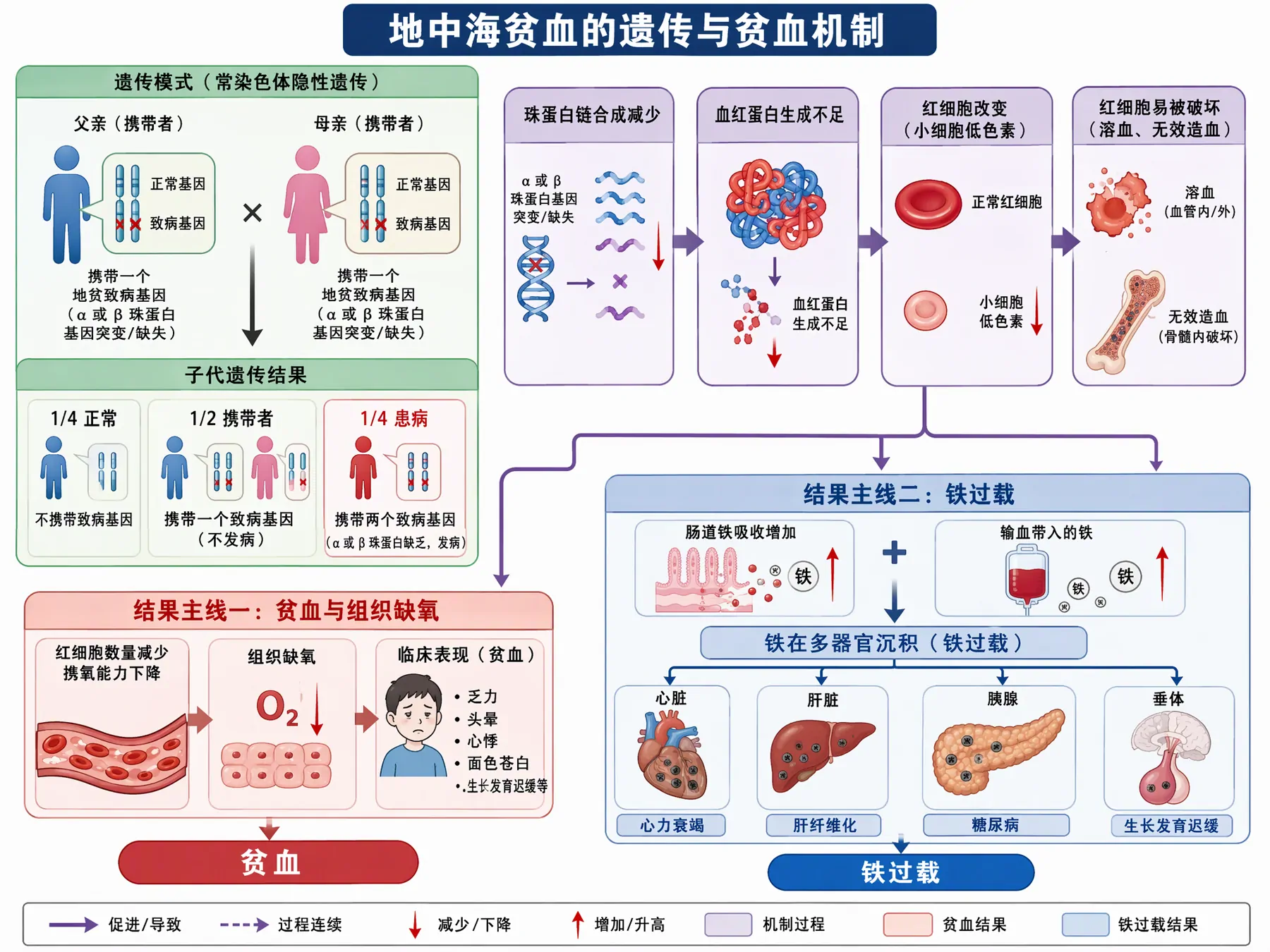
Figure 1. How thalassemia is inherited and how it causes anaemia
2. Iron chelation is central to the outlook for patients on long-term transfusions
People with TDT need regular red blood cell transfusions to keep haemoglobin at the target set by their doctor. A Chinese expert consensus specifically addresses when to transfuse and how to monitor patients with TDT [5]. Transfusion is only part of the treatment.
Repeated transfusions are the main source of iron overload in transfusion-dependent patients. Increased intestinal iron absorption can add to the iron burden. Iron builds up in the heart, liver, pancreas and pituitary gland. Cardiac dysfunction is the main cause of death. Among patients who received regular transfusions without iron chelation, median survival was just 16.5 years [2]. This is why Chinese guidelines address iron chelation.
Monitoring follows a schedule. Serum ferritin is measured at diagnosis to establish a baseline and then every three months. MRI T2* is used to assess iron in the liver and heart muscle. Iron accumulation in the two organs does not occur in parallel, so normal liver iron does not rule out cardiac iron overload. Cardiac iron monitoring is generally recommended after age eight [2].
Chinese iron chelation guidelines recommend three medicines. Deferoxamine requires prolonged subcutaneous or intravenous infusion. Deferasirox and deferiprone are taken by mouth, and deferiprone has an advantage in removing iron deposited in the heart. With a high iron burden or an inadequate response to one medicine, treatment may be intensified according to the patient's risk group. Deferoxamine plus deferiprone is a commonly used combination [2].
3. Red blood cell maturation agents offer another option
Luspatercept is the world's first erythroid maturation agent. It raises haemoglobin by promoting the late stages of red blood cell maturation. In January 2022, China's National Medical Products Administration approved it for adults with beta thalassemia who need regular red blood cell transfusions and receive no more than 15 units in 24 weeks. Research indicates that it can reduce the transfusion burden and that adverse reactions are generally manageable [6].
This medicine can change how much blood a patient needs. It does not cure thalassemia. Whether it is suitable depends on the type, transfusion burden, spleen size and complications. The evidence differs for children and for alpha thalassemia, so the treating doctor must decide. It is best understood as a long-term medicine that can reduce the need for transfusion.
4. Splenectomy is now used more cautiously
Splenectomy was once common and is now considered later in treatment. China's 2026 TDT transplant guideline recommends standard transfusion first to prevent the spleen from enlarging. If severe enlargement persists after several months of high-volume transfusions, splenectomy may be considered before transplantation. The assessment also considers whether transfusion requirements have risen substantially to about 200–220 mL/kg per year and iron burden is still rising despite standard chelation, whether hypersplenism causes low blood cell counts, or whether the enlarged spleen causes pain and early fullness. The guideline does not recommend routine splenectomy before transplantation, as no survival benefit has been found [7].
5. Two approaches with the potential for cure: allogeneic transplantation and autologous gene therapy
Allogeneic haematopoietic stem cell transplantation is one option for a clinical cure in TDT. China's 2026 guideline recommends it for transfusion-dependent beta thalassemia and says it may be considered according to the circumstances in other transfusion-dependent forms, such as haemoglobin E disease and HbH disease. Ages 2–15 are generally considered optimal (1B) [7]. A fully HLA-matched sibling is the first choice, followed by a fully matched unrelated or related donor. Other options include a 9/10 matched unrelated donor, a haploidentical relative or cord blood. Age is not a strict cutoff. Risk category, organ function and the transplant centre's experience all matter.
China makes extensive use of alternative donors. The guideline notes a particularly marked rise in transplants from haploidentical relatives in recent years, alongside new conditioning regimens designed to reduce risk [7]. The G-CSF/ATG haploidentical transplant approach developed by Professor Huang Xiaojun's team at the Peking University Institute of Hematology, Peking University People's Hospital, is widely cited internationally as the Beijing protocol [8]. This matters to families without a fully matched donor.
Transplantation carries risks of graft-versus-host disease, graft failure and other transplant-related complications. It should take place at a centre that treats a high volume of cases. After a successful transplant and once transfusions have stopped, excess iron still needs to be assessed and managed. The guideline lists therapeutic phlebotomy and iron chelation with deferasirox as options. The transplant team considers iron burden, haemoglobin and the patient’s overall condition when deciding which option to use and when to pause or end treatment [7].
Autologous gene therapy uses the patient's own haematopoietic stem cells. The cells are modified outside the body and then reinfused. One approach uses a lentiviral vector to introduce a normal beta-globin gene. The other uses gene editing to reactivate fetal gamma-globin production [9]. Chinese teams have made rapid progress over the past two years. One team reported the first human use of lentiviral alpha-globin gene therapy for transfusion-dependent HbH disease. In a 14-year-old girl, the cells engrafted within three weeks of reinfusion, transfusions stopped from week four, and mean haemoglobin remained around 90 g/L at months 12–24 of follow-up [10]. Early results for the beta thalassemia base-editing product CS-101 have been reported in children with TDT [11]. The CRISPR-based product BRL-101 is also in phase I/II studies in China [12].
In China, gene therapy is currently available mainly through clinical research. It is not a routine treatment that anyone can request. Qualified research centres assess whether someone can participate and which eligibility criteria apply. It still requires myeloablative conditioning. The case above included a serious conditioning-related adverse event, ovarian failure [10]. Using your own cells still carries risks.
6. Why consider seeking treatment in China?
The options above highlight several features of thalassemia care in China.
Case volume and experience. Regions with a high prevalence see many patients. National guidance has been updated frequently in the past five years, including the 2022 TDT diagnosis and treatment guideline, the 2025 iron chelation guideline, the 2026 transplant guideline and the 2025 genetic diagnosis standards. All draw on extensive local experience [1][2][7][4].
Diagnostic tools and practice. MRI T2* quantifies iron overload in individual organs rather than relying only on ferritin. At the genetic level, single-molecule real-time sequencing and other platforms help determine the type accurately [3]. China has separate consensus documents for groups such as pregnant patients and children with NTDT [13][14]. The framework for deciding whether and when to treat is harder to replicate than any single technique.
Efficiency and co-location. At large Grade III Class A hospitals, imaging, laboratory services, pathology, transfusion medicine and transplant wards can be on the same campus, allowing appointments, tests and multidisciplinary consultations to be scheduled in sequence. Waiting times depend on availability and the hospital's schedule. Confirm waiting times with the hospital.
Relative costs. In China, tests, inpatient stays and transplantation are generally less expensive than in developed countries in Europe and North America. The difference depends on the treatment plan, length of stay and management of complications. Ask the hospital for a formal quote.
Early access to new medicines and devices. The Hainan Boao Lecheng International Medical Tourism Pilot Zone has a special authorisation policy for medicines and devices. Imported products urgently needed for clinical care can be used in the zone, with a dual-track regulatory arrangement and real-world data studies [15][16]. This pathway does not guarantee access to any specific new thalassemia medicine. Check the product and its availability with the medical facility.
7. Centres and clinical teams whose details can be checked
These institutions and experts can be verified in public documents, primarily the corresponding author and expert lists of China's 2026 TDT transplant guideline and publications on transplant programmes. The list is organised by role in care and does not represent a ranking.
- Nanning · Department of Hematology, First Affiliated Hospital of Guangxi Medical University · Team or specialist: Chief Physician Lai Yongrong · Supporting source: Corresponding author of China's 2026 TDT transplant guideline [7]
- Guangzhou · Department of Pediatrics, Nanfang Hospital, Southern Medical University · Team or specialist: Chief Physician Wu Xuedong · Supporting source: Corresponding author of the same guideline and member of the team associated with the recommended NF-08-TM conditioning regimen [7]
- Shenzhen · Department of Hematology and Oncology, Shenzhen Children's Hospital · Team or specialist: Chief Physician Liu Sixi · Supporting source: Corresponding author of the same guideline [7]
- Chengdu · West China Second University Hospital, Sichuan University · Team or specialist: Zhu Yiping and Yang Xue · Supporting source: Members of the expert review panel for the same guideline [7]
- Guangzhou · Sun Yat-sen Memorial Hospital, Sun Yat-sen University · Team or specialist: Fang Jianpei · Supporting source: Member of the expert review panel for the same guideline [7]
- Beijing · Peking University Institute of Hematology, Peking University People's Hospital · Team or specialist: Professor Huang Xiaojun's team · Supporting source: G-CSF/ATG haploidentical transplant approach, the Beijing protocol [8]
- Beijing · Peking Union Medical College Hospital · Team or specialist: Hematology, cardiology, endocrinology, hepatology and other specialties · Supporting source: Suitable for comprehensive assessment of adults with organ complications, subject to the hospital's outpatient arrangements
- Shanghai · Ruijin Hospital, Shanghai Jiao Tong University School of Medicine · Team or specialist: Department of Hematology · Supporting source: Comprehensive care for adults with TDT and complications, subject to the hospital's outpatient arrangements
- Qionghai · Boao Lecheng International Medical Tourism Pilot Zone · Team or specialist: Medical facilities in the zone · Supporting source: Special authorisation policy for medicines and devices and access to urgently needed imported medicines [15]
Two points to keep in mind. Specialists' schedules and the patients they can see may change, so check the hospital's official channels. Adults often have heart, endocrine, bone or fertility problems. A general hospital's multidisciplinary capabilities and a transplant centre's technical expertise often need to be assessed separately.
8. Four steps from considering treatment to arranging a visit
Follow the steps in order. First, explain what you need help with, including your diagnosis, main symptoms, past treatments, current medicines and expected travel dates. Next, gather pathology and imaging records, test reports and records of transfusions and medicines. Then have the service assisting you submit the records, contact the hospital or department and follow up. The hospital and doctors decide whether to accept the case and what additional tests are needed. Once those details are clear, apply for a visa, book flights and accommodation, and arrange medical interpreting and accompaniment.
This is how SinoCareHub (Huayitong) works with international patients. Depending on your needs, it can combine remote video consultations, record organisation and translation, hospital and specialist matching, appointment coordination, medical interpreting and accompaniment, and remote second opinions. It provides information and coordination, and does not give individual treatment advice. The hospital and treating doctors decide whether to accept the case, appointment availability, inpatient admission and what treatment to offer. An enquiry does not confirm an appointment. Costs are separated into hospital charges, coordination fees, and accommodation and transport. Before services begin, clarify who receives each payment, what it covers and the cancellation terms.
For families affected by thalassemia, wait for the hospital's remote assessment before booking tickets that cannot be refunded or changed.
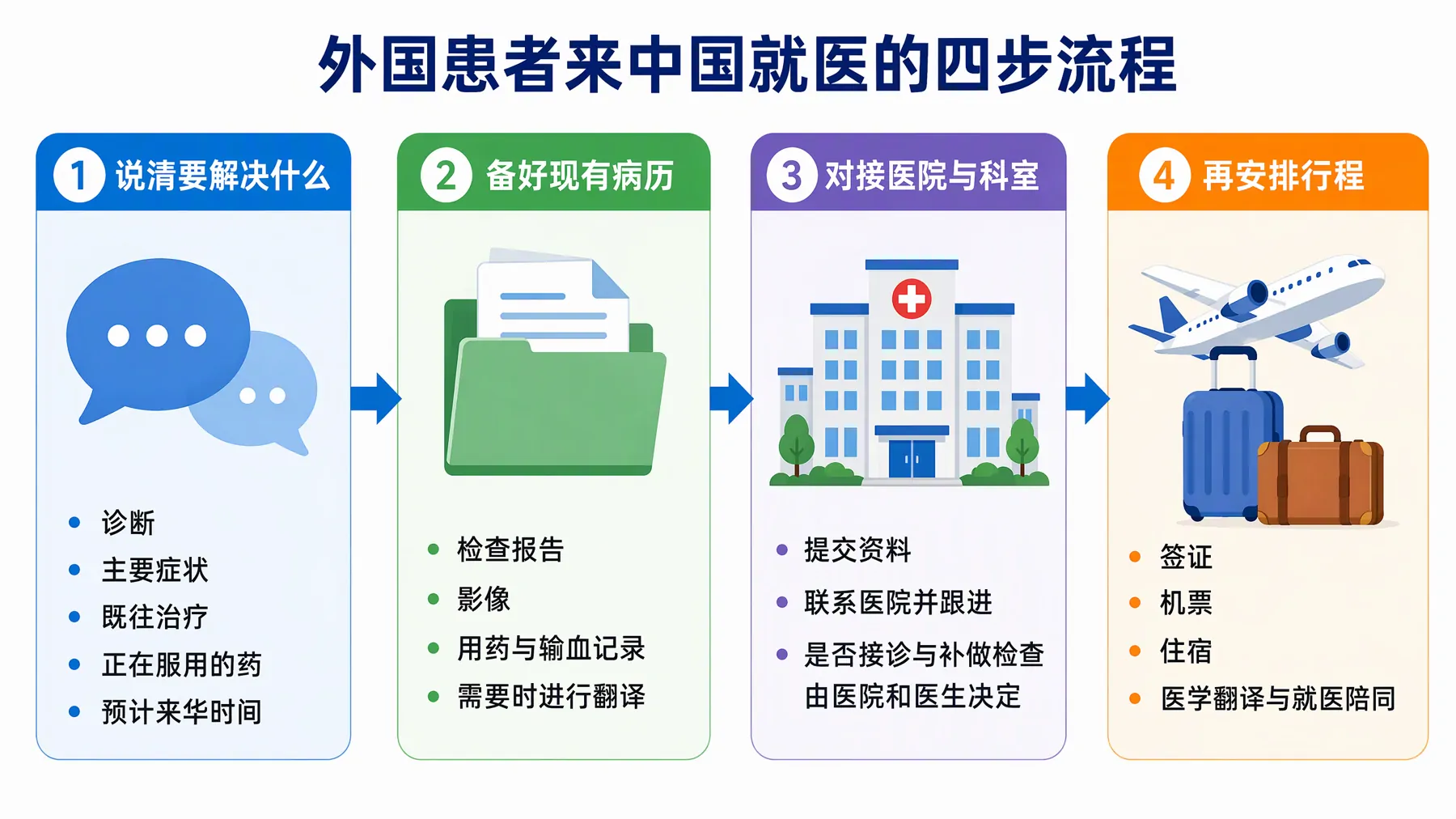
Figure 4. Four steps for international patients seeking care in China
9. Three things to keep in mind
First, no centre can promise a cure. Transplantation and gene therapy have probabilities of success, eligibility requirements and risks. Outcomes depend on the type of thalassemia, age and organ function.
Second, investigational treatment and a treatment already on the market are different. In China, gene therapy is currently available mainly through clinical research, with strict eligibility requirements.
Third, long-term management continues well beyond the treatment itself. Plan for iron chelation, cardiac monitoring, endocrine and fertility concerns, and follow-up after you return home. These are the arrangements doctors most want patients to consider before travelling.
References
[1] Red Cell Disorders (Anaemia) Group, Chinese Society of Hematology, Chinese Medical Association. Chinese Journal of Hematology. 2022. DOI: 10.3760/cma.j.issn.0253-2727.2022.11.002
[2] Chinese guideline on iron chelation therapy in thalassemia
[3] Expert consensus on the clinical use of single-molecule real-time sequencing for precision prevention and control of thalassemia (2025 edition)
[4] Standards for genetic diagnosis, prevention and control of thalassemia (2025)
[5] Chinese expert consensus on clinical transfusion in patients with transfusion-dependent thalassemia (TDT)
[6] Zhang Shanshan et al. Chinese Journal of New Drugs. 2024. 33(11): 1098–1101. DOI: 10.3969/j.issn.1003-3734.2024.11.005
[7] Chinese guideline on allogeneic haematopoietic stem cell transplantation for transfusion-dependent thalassemia (2026)
[8] Zheng-Li Xu, et al. Blood Rev. 2023. 62: 101035. PMID: 36404244
[9] Chen Hui et al. Journal of Guangxi Medical University. 2024. 41(1): 1–10. DOI: 10.16190/j.cnki.45-1211/r.2024.01.001
[10] Xiaolin Yin, et al. Blood Adv. 2026. 10(14): 5153-5160. PMID: 42200456
[11] Li Z., et al. ESBMT 2025. L649421031. 10.1038/s41409-025-02650-x.
[12] NCT05577312. https://www.clinicaltrials.gov/search?term=NCT05577312
[13] Chinese Society of Perinatal Medicine, Chinese Medical Association, et al. Chinese Journal of Perinatal Medicine. 2020. DOI: 10.3760/cma.j.cn113903-20200401-00293
[14] Thalassemia Prevention and Control Committee, China Maternal and Child Health Association, et al. Chinese Journal of Pediatrics. 2025. DOI: 10.3760/cma.j.cn112140-20250421-00358
[15] Chang Limei et al. Chinese Pharmaceutical Affairs. 2022. DOI: 10.16153/j.1002-7777.2022.10.002
[16] Xu Beiming et al. China Food and Drug Administration Magazine. 2025. DOI: 10.3969/j.issn.1673-5390.2025.06.005
Need help?
Tell us about your situation and needs. Incomplete records are welcome.
Related reading
Sources and references
- Hunan Health Commission: thalassemia information
- TIF guidelines for transfusion-dependent beta thalassemia (2025)
- Chinese guidelines on donor stem cell transplantation for transfusion-dependent thalassemia (2026)
- ClinicalTrials.gov: thalassemia gene therapy study NCT05577312
- Cover · Arek Socha · CC0 1.0 · cropped and converted to WebP
- Image licence · CC0 1.0
- Chinese guideline on iron chelation in thalassemia (2025)