
Visit preparation
Rotator cuff tear: can I start with rehabilitation?
For adults with a symptomatic small to medium full-thickness rotator cuff tear, both rehabilitation and surgical repair may improve function. Whether to try rehabilitation first depends on how the injury happened, how high you can lift your arm now, the condition of the tendon and muscle, and which activities you want to return to.
Compare the scan report with how you lift your arm
The rotator cuff is a group of tendons around the shoulder joint that help you lift and rotate your arm. A “full-thickness” tear goes through the entire thickness of the tendon. Your doctor also needs to know how large the tear is and which tendon it affects. Whether repair is worthwhile also depends on a physical examination. When you reach for something on a high shelf, for example, does pain make you stop, or does your arm lack the strength? If you suddenly cannot lift your arm after a fall, seek medical assessment locally as soon as possible. A rehabilitation plan for long-standing shoulder pain should not be used as a template in this situation. [1,2]
Keep track of strength as pain improves
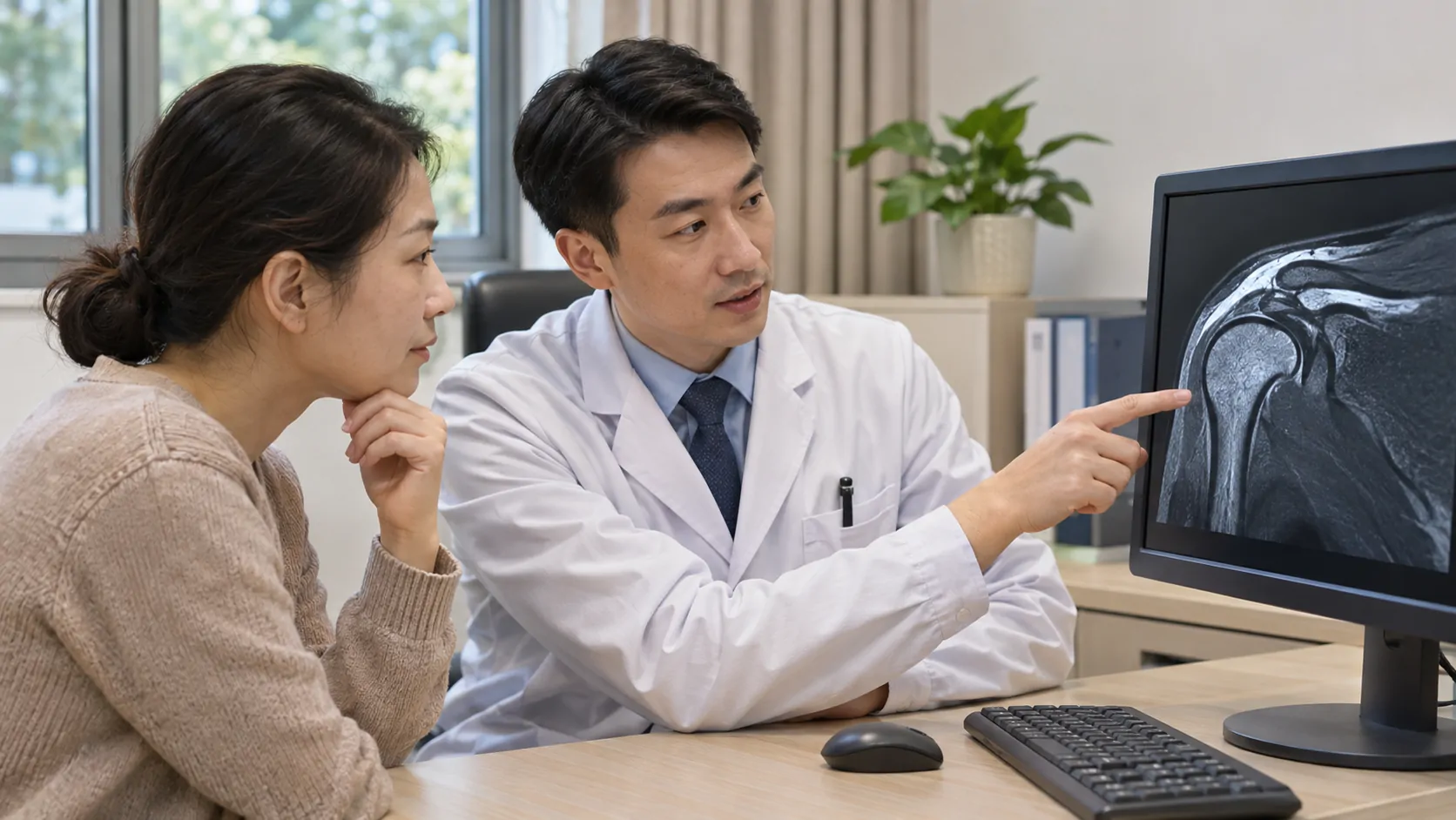
For some small to medium full-thickness tears, rehabilitation aims to improve movement and reduce pain. Even if daily activities get easier, the tear may enlarge over time, and some patients may develop muscle wasting. If you start with rehabilitation, agree with your doctor on which function to monitor, such as how high you can reach to pick something up or how steadily you can hold a light object. At follow-up, your care team will decide whether further imaging is needed based on changes in your strength and symptoms. [1]
Arthroscopic repair reattaches the torn tendon to the bone. After surgery, the repair needs protection. You gradually resume movement and put more load on the arm as healing progresses. The repair may fail to heal or the tendon may tear again. When comparing the two options, consider the potential for pain relief alongside your work and caregiving responsibilities and whether you can keep up with rehabilitation afterwards. [1,2]
What to bring to a follow-up visit in China
You can see a sports medicine or shoulder specialist. Bring any original magnetic resonance imaging (MRI) or ultrasound scans and reports, the date your symptoms began or the injury occurred, and details of the exercises you have done and how they worked for you. Ask your doctor, “Could the tear in the report explain the weakness I feel now? If I start with rehabilitation, what changes would mean we should reconsider repair?” If you are being treated away from home, use the guide to arranging follow-up after treatment in China to list your brace, activity restrictions and who will handle follow-up. [1,2]
Need help?
Tell us about your situation and needs. Incomplete records are welcome.