
Visit preparation
Do I still need surgery if no rectal tumor is visible after treatment?
After neoadjuvant treatment for low rectal cancer, some people with a complete clinical response can discuss watch and wait after a multidisciplinary assessment. The decision depends on all the follow-up results and a plan for close monitoring and for dealing with any abnormal findings.
Why doctors review three tests together
After neoadjuvant treatment for low rectal cancer, some people who have a complete clinical response (cCR) can discuss watch and wait with a multidisciplinary team. An endoscopy report that says “no obvious mass seen” is only one part of that assessment. [1,2]
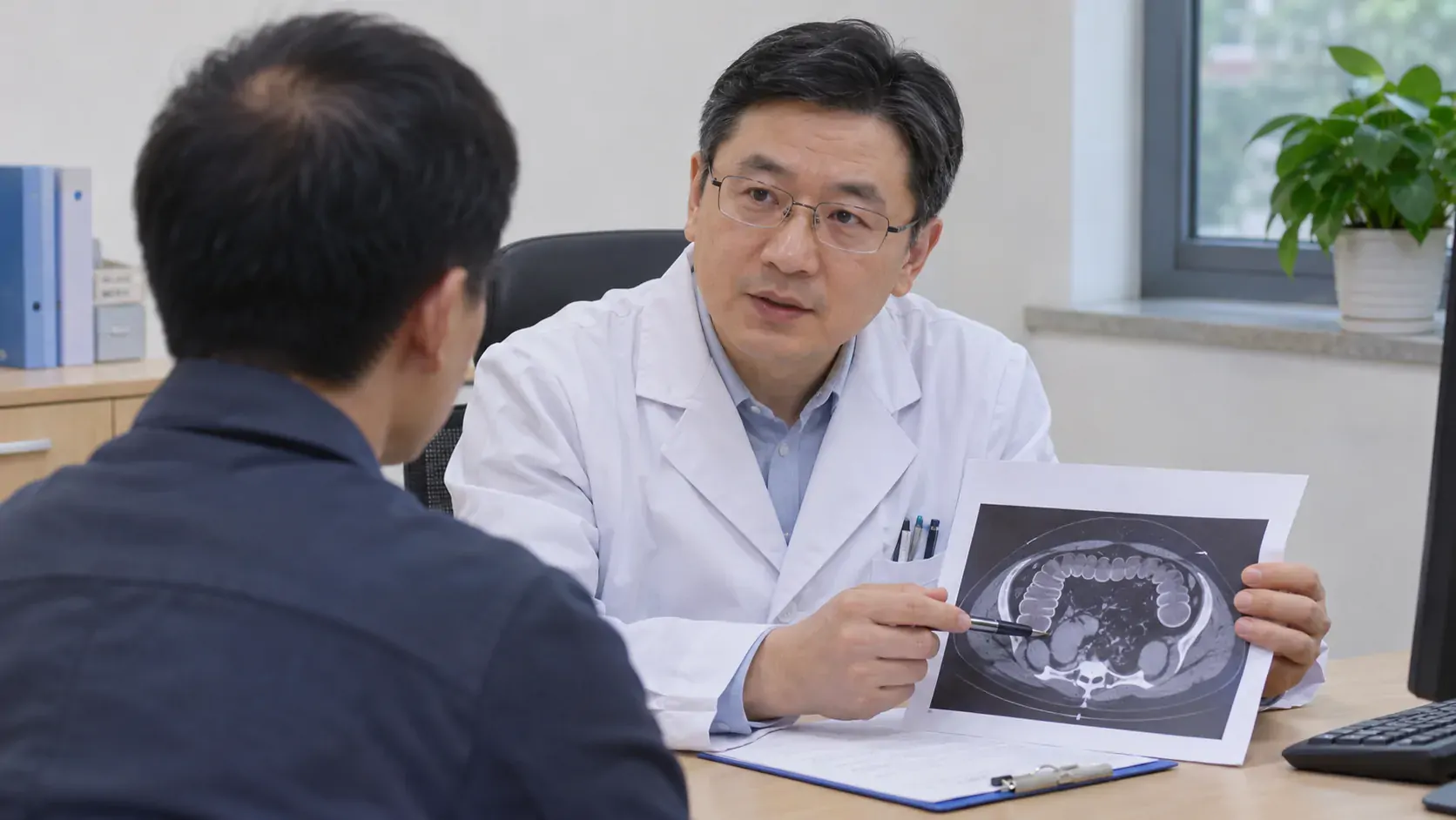
During a digital rectal examination, the doctor feels for an abnormality at the original tumor site. Endoscopy shows the lining inside the rectum, and magnetic resonance imaging (MRI) of the rectum can assess the bowel wall and surrounding tissue. The doctor considers all three results together. A complete clinical response means current tests show no definite evidence of remaining tumor. A complete pathological response is a separate finding that requires examination of tissue by a pathologist. One negative surface biopsy on its own cannot rule out tumor remaining deeper in the tissue. [1,2]
What makes a response nearly complete?
A Chinese expert consensus on low rectal cancer lists a near-complete clinical response as a separate category. For example, endoscopy may still show a shallow ulcer or an area of uneven lining. The doctor interprets this alongside the rectal examination, MRI, and other findings. Look beyond the last line of the report. You can ask the team whether their concern is about the inner surface of the rectum, the bowel wall, or surrounding tissue, and what finding would change their recommendation. [2]
What do doctors check during watch and wait?
Watch and wait may allow you to keep your rectum and requires close follow-up under a plan set by your treatment team. At follow-up, rectal examinations, endoscopy, and MRI help the team check for changes at the original tumor site. If the team suspects local regrowth, they reassess whether surgery is suitable. [1–3]
Long-term follow-up from the OPRA study gives one concrete example. Of the 123 participants who entered watch and wait and were assessed as having a complete clinical response, 27 developed local tumor regrowth. This finding comes from a group that followed a specific treatment and monitoring plan. Your risk also depends on your initial cancer stage, response to treatment, and current test results. It helps explain why follow-up arrangements should be in place before you decide whether to choose watch and wait. [2,3]
How to compare two treatment opinions
First, check whether both teams reviewed the same records, including the original pathology report, staging images, treatment history, and post-treatment MRI, endoscopy, and digital rectal examination findings. Then ask the doctors to point out what supports a complete response and what remains uncertain. [1,2]
If both options are open for discussion, ask the surgeon to explain the proposed operation, how it might affect bowel movements, and whether you may need a stoma. If you are considering watch and wait, ask who would assess you if regrowth were suspected and how they would decide whether surgery was still possible. [2,3]
Who takes over when you return home?
If you have your assessment in China and plan to continue follow-up at home, identify three contacts before you decide. You need a local hospital that will perform the tests, a doctor who will compare past and new results, and a treatment team you can reach if something abnormal is found. Where possible, keep the original MRI and endoscopy images, the reports, and your doctor's written follow-up plan for the handover. Ask the doctor taking over your care to confirm whether the required tests can be done on schedule. [2]
SinoCareHub can help you organize your records and questions before a video consultation with a specialist. Patients and their treating team discuss watch and wait or surgery together, based on the examination results and the follow-up arrangements.
Need help?
Tell us about your situation and needs. Incomplete records are welcome.