
Medication
Blood glucose is not high but HbA1c is: more medication?
If home glucose readings are not high but HbA1c is, first check monitoring times and possible test interference. Your doctor can then decide whether medication needs adjusting.
Recent readings do not represent three months
Glycated hemoglobin (HbA1c) reflects average blood glucose over time. A health article reprinted by the Fujian Provincial Health Commission in November 2026 explains that it mainly reflects the 8–12 weeks before testing. A finger-prick reading, by contrast, shows glucose at the time of sampling. [1]
So “my fasting readings have not been high these past few days” and “my HbA1c is still high” can both be true. When treatment has just started, diet has recently improved or the treatment plan has changed, new records cover too little time to rule out higher glucose in earlier weeks. NIDDK explains that glucose over the most recent 30 days has a greater effect on HbA1c, but HbA1c does not show every temporary rise or fall. [2]
Before follow-up, establish the timeline: when HbA1c was measured, when home records began, and when treatment or lifestyle changed. This helps the doctor distinguish an effect of earlier glucose from abnormalities under the current plan that have not yet been recorded. Do not bring only a few screenshots of recent “normal” values.
Fasting-only checks can miss part of the picture
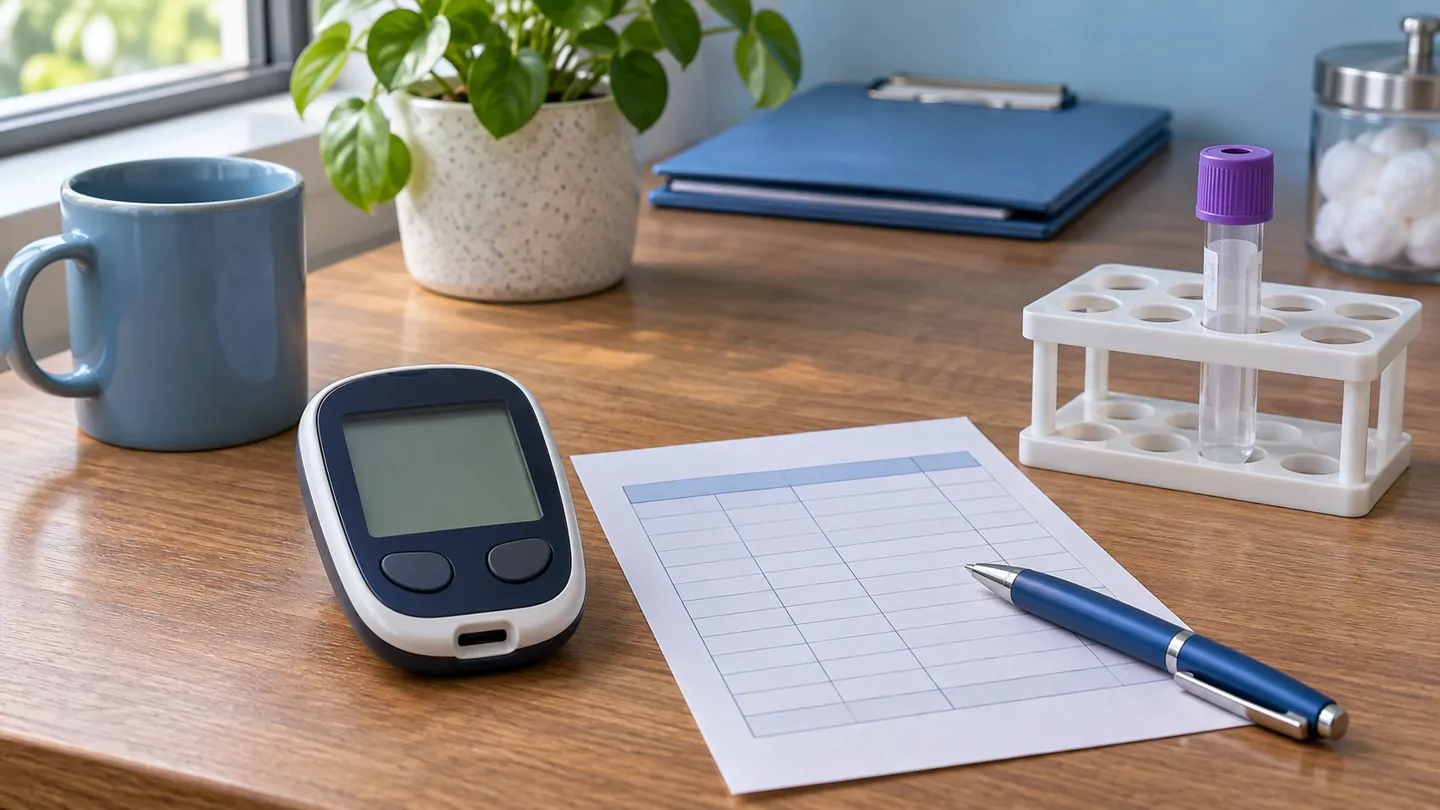
An article published by China’s National Healthcare Security Administration and written by a doctor at West China Second University Hospital, Sichuan University, explains that fasting glucose concerns the baseline state, while post-meal glucose concerns changes after eating. They cannot replace one another. [3] If you only test after waking, the record contains no post-meal information.
If the doctor needs post-meal data, the team should explain when to measure and how to record it. Label readings as fasting or post-meal rather than providing dates and numbers alone. This prevents “tested every day” from being mistaken for “stable all day”. It also explains why the doctor may first request more glucose data before discussing medication changes.
These two review pathways answer different questions. Some patients may need both:
| Review pathway | Main question | Records to bring | What it cannot answer alone |
|---|---|---|---|
| Complete spot glucose records | Did earlier records miss post-meal or other periods? | Original readings with times and meal labels | A few readings cannot represent an 8–12-week average |
| Recheck HbA1c and possible interference | Does the value misrepresent actual glucose? | Original HbA1c reports and history such as anemia or transfusion | Repeating HbA1c alone cannot reconstruct each glucose fluctuation |
The first pathway addresses differences in the periods measured; the second addresses effects involving red blood cells or hemoglobin. [1–3] The table explains testing purposes; it is not a decision tree for choosing medication yourself.
Can anemia distort HbA1c?
Yes, but different types of anemia do not affect it in the same direction. The article reprinted by Fujian’s health commission explains that hemolytic anemia can produce a falsely low HbA1c, while more severe iron-deficiency anemia can produce a falsely high result. [1] An anemia diagnosis alone does not establish that your HbA1c is falsely high.
Recent blood loss, transfusion, kidney disease and some hemoglobin variants may also affect results. [2] Give the doctor existing diagnoses, test results and treatment records, rather than a “corrected HbA1c” you have worked out from a chart. Mention relevant history, including thalassemia.
When HbA1c and glucose remain substantially inconsistent, the doctor may use other glucose tests and, if necessary, consider markers such as glycated albumin. [1] This does not mean everyone needs an extra panel of tests. Whether interference is present or a different method is needed depends on the history and testing conditions. Repeatedly changing testing facilities to obtain a preferred number is not recommended.
What should you bring to follow-up in China?
For someone taking diabetes medication, this visit should address two questions: are the current glucose data sufficient, and what individual treatment target follows from them? NIDDK states that HbA1c targets should take account of diabetes history, overall health and hypoglycemia risk. [2] A laboratory reference range is not automatically a threshold for increasing everyone’s medication.
If you are preparing for care in Beijing, see Dr Ning Zhiwei’s published profile. His currently listed clinical areas include diabetes, and the record preparation section includes fasting glucose and HbA1c. Organize existing reports, original home readings and your current medication list together. Include records of anemia, transfusion or kidney disease if applicable. Do not bring only translated conclusions while omitting dates, values and units.
At the consultation, ask: “Do the two results cover the same period?” “Which times are missing from my records?” “Should possible HbA1c interference be investigated?” The answers help explain additional or repeat testing, rather than focusing only on whether the dose is sufficient.
For language or appointment assistance, SinoCareHub medical coordination can help organize records and coordinate appointments and interpreting. Your treating doctor decides on tests, prescriptions and individual medication adjustments. The platform does not guarantee treatment outcomes.
Frequently asked questions
Do I need to fast for an HbA1c test alone?
Usually not for HbA1c alone. If you are also having fasting glucose or other tests, follow the preparation instructions for your testing appointment. [1]
Is eAG on an HbA1c report the glucose level that day?
No. Estimated average glucose (eAG) is calculated from HbA1c, not a separate measurement. It should not be expected to equal that day’s finger-prick reading. [2]
If diabetes has not been diagnosed, can an abnormal HbA1c justify starting medication myself?
Do not start medication yourself. If there are no symptoms but a test is abnormal, doctors usually need repeat or additional testing to confirm the diagnosis. [1,2]
Need help?
Tell us about your situation and needs. Incomplete records are welcome.
Related doctors

Related reading
Sources and references
- [1] Fujian Provincial Health Commission: Understanding HbA1c (2026-11-12; reprinted from Health News; author from the endocrinology and diabetes department of the First Affiliated Hospital of Xiamen University). Sources checked 2026-11-23.
- [2] NIDDK: The A1C Test & Diabetes (last reviewed April 2018). Used only for basic principles, interference and individualized targets. Checked 2026-11-23.
- [3] National Healthcare Security Administration: Fasting glucose, post-meal glucose, HbA1c and glucose tolerance (2024-09-15; author from West China Second University Hospital, Sichuan University). Checked 2026-11-23.