
Visit preparation
Your first acupuncture session in China: how to describe aching, fullness and discomfort
Needling may cause a brief prick and sensations of aching, numbness, fullness or heaviness. Tell the doctor immediately about persistent discomfort, palpitations or dizziness so the team can respond.
Describe your symptoms before deciding whether to have acupuncture
Preparation guidance from Chuiyangliu Hospital (垂杨柳医院), shared by the Beijing Municipal Health Commission, reminds patients to disclose heart disease, bleeding disorders, pregnancy, and whether they are very hungry or exhausted.[1] This information affects the doctor's assessment of treatment that day. If an interpreter accompanies you, include these details among the information that needs to be conveyed accurately.
Start with the specific problem you hope to improve: where it hurts, which movements are limited, and which investigations you have already had. The first consultation should help you understand whether the doctor recommends acupuncture for this problem and what changes they plan to monitor. A “one-off experience” should not replace a discussion of care for an existing condition.
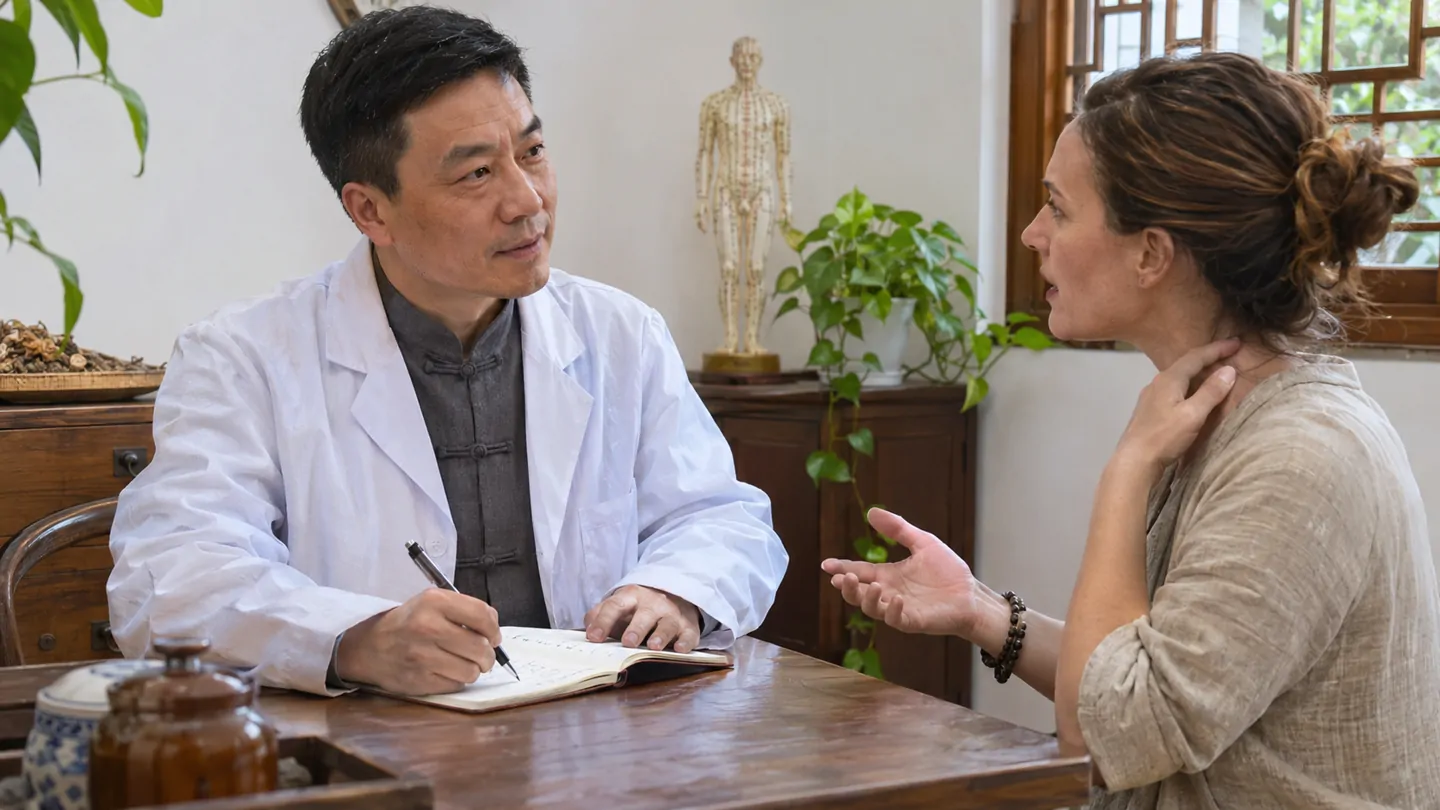
Describe aching, numbness, fullness and heaviness—and speak up about discomfort
Patient information from Huairou Hospital of Beijing Hospital of Traditional Chinese Medicine (北京中医医院怀柔医院) describes the use of sterile, single-use needles. Insertion may cause a momentary prick, and manipulation may produce aching, numbness, fullness or heaviness.[2] Telling the doctor where the sensation is, how long it lasts and how strong it is is more useful for assessment than simply saying “pain”.
| What you feel | How to describe it to the team | Who decides what happens next |
|---|---|---|
| Local aching or fullness, numbness or heaviness | Point to the area; explain whether it is tolerable and whether it is changing | The acupuncture doctor assesses the stimulation and your position |
| Persistent, significant pain or an intolerable sensation | Explain immediately; do not wait until treatment ends | The on-site team assesses and responds |
| Palpitations, shortness of breath or dizziness | Call the doctor immediately and say when it started | The on-site medical team responds promptly |
Beijing Friendship Hospital (北京友谊医院) explicitly advises calling the doctor immediately if palpitations, shortness of breath or dizziness occur during acupuncture.[3] As an international patient, agree beforehand on a phrase you can say and the team understands, such as “I feel unwell, please come”, and confirm how to call staff while the needles remain in place.
Do not use pain intensity as a measure of effectiveness
Huairou Hospital's guidance lists needling sensations, but it does not establish that “more pain means better results” for an individual patient.[2] More useful notes for follow-up concern changes in the symptoms that originally bothered you: whether a particular movement is easier, whether pain affects your sleep, and whether any new discomfort occurs after treatment. Ask the responsible doctor which outcomes they plan to use to decide whether to continue.
For treatment involving the neck, shoulders, lower back or legs, Chuiyangliu Hospital recommends loose clothing that allows access to the treatment area, and advises against arriving very hungry or overly full.[1] These preparations support that session. If you have special dietary or medication requirements, tell the receiving team beforehand.
Visiting China briefly? Ask how treatment fits around your return journey
Friendship Hospital explains that treatment frequency and course length vary between conditions.[3] Before booking flights, explain how long you can stay and ask whether the initial consultation may require further assessment, how follow-up is expected to work, and which symptoms to record after returning home to support later decisions. Do not predict the results of a full course from the sensations of one session.
If you need help coordinating care or communication in China, you can submit your symptoms and travel requirements to SinoCareHub. An adviser can explain the available assistance; the hospital confirms treatment choices and the treatment course.[4]
Frequently asked questions
I am very nervous about my first acupuncture session. Should I tell the doctor before needling?
Yes. Also mention any previous fainting during acupuncture or similar experiences, and agree beforehand on how to call staff during treatment.
I only have time for one session while travelling. Can I ask for more needles that day?
Explain your available time and goals first. The doctor decides the appropriate plan and treatment intensity. Do not increase stimulation yourself based on the time available.
Need help?
Tell us about your situation and needs. Incomplete records are welcome.